
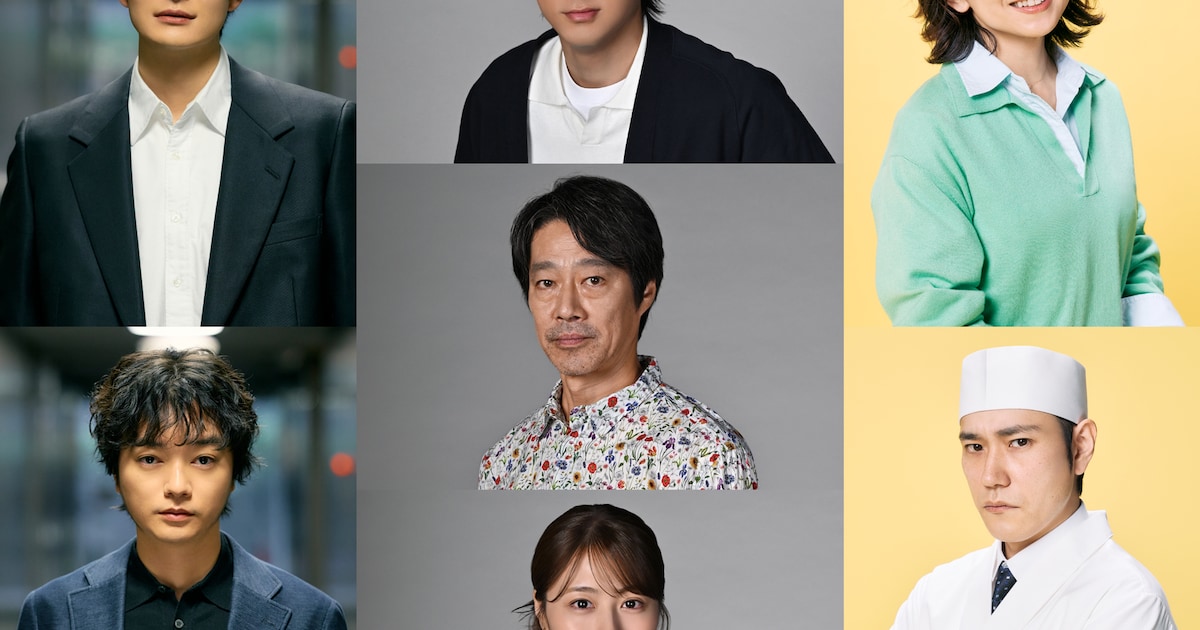
On March 21, 2026, it was revealed that major TBS drama stars including Tsutsumi Shinichi, Okada Masaki, Someya Shota, and Nagasaku Hiromi will appear together on the upcoming 「オールスター感謝祭'26春」 (Oru Sutā Kanshasai ’26 Haru), a massive live variety special.
The announcement confirmed that cast members from three different TBS dramas will 集結 (shuuketsu, gather together) for the event—bringing some of the biggest names of the 2026 spring drama season onto one stage.
TBS Drama Stars Gather for a Live Special
The program will air on April 4 from 6:30 p.m. to 11:50 p.m. as a 生放送 (nama housou, live broadcast).
It was revealed that the following actors will 出演する (shutsuen suru, appear):
- From the Sunday drama 「GIFT」: Tsutsumi Shinichi, Yamada Yuki, Arimura Kasumi, Honda Kyoya
- From the Friday drama 「田鎖ブラザーズ」 (Tasagari Burazāzu): Okada Masaki, Someya Shota, Nakajo Ayami, Igawa Haruka
- From the Tuesday drama 「時すでにおスシ!?」 (Toki Sude ni Osushi!?): Nagasaku Hiromi, Matsuyama Kenichi, First Summer Uika, Nakazawa Motoki
The phrase used in the original article is:
出演することがわかった。 Shutsuen suru koto ga wakatta. “It was revealed that they will appear.”
You’ll see this structure constantly in Japanese news reporting.
What Is “All-Star Thanksgiving”?
「オールスター感謝祭」 is a long-running TBS variety special where actors, comedians, and athletes answer quizzes and participate in special challenges. It’s known for its marathon-length format and fast-paced trivia segments.
Besides quiz battles, the show includes various entertainment segments—notice the grammar pattern 〜ほか (hoka), meaning “besides” or “in addition to,” which is used in the description:
クイズに答えるほか、さまざまな企画に参加する。 Kuizu ni kotaeru hoka, samazama na kikaku ni sanka suru. “In addition to answering quizzes, they participate in various projects.”
One highlight is a 視聴者参加型 (shichousha sanka gata, viewer-participation type) event called the 「dボタン生クイズバトル」. Through a TV remote or smartphone, viewers can answer the same questions as the celebrities. Prizes are awarded by 抽選 (chuusen, lottery drawing).
This interactive format reflects how Japanese TV often blends live broadcasting with audience participation.
Spring 2026 Dramas to Watch
Here’s a quick look at the featured dramas:
Sunday Drama: 「GIFT」
- Starts April 2026
- Airs Sundays at 9:00 p.m.
- Starring Tsutsumi Shinichi, Yamada Yuki, Arimura Kasumi, and more
Friday Drama: 「田鎖ブラザーズ」
- Starts April 17, 2026
- Airs Fridays at 10:00 p.m.
- First episode 拡大 (kakudai, extended) to 69 minutes
- Starring Okada Masaki and Someya Shota
Tuesday Drama: 「時すでにおスシ!?」
- Starts April 2026
- Airs Tuesdays at 10:00 p.m.
- Starring Nagasaku Hiromi and Matsuyama Kenichi
The article also references earlier promotional reveals—for example, when a drama poster is officially released, Japanese media often use the word 解禁 (kaikin, official reveal or lifting of a ban). You’ll see this term frequently in entertainment news.
Cultural Context: Why This Matters
In Japan, seasonal dramas (春ドラマ, haru dorama) are a major television tradition. Networks compete each season with new lineups, and variety specials like オールスター感謝祭 serve as large-scale promotional events.
Bringing casts together creates buzz, encourages cross-viewership, and lets fans see their favorite actors outside their drama roles. It’s part marketing, part competition, and part celebration of the new TV season.
If you follow Japanese entertainment, you’ll notice how interconnected variety shows and dramas are. Appearing on these specials is almost a rite of passage for major casts.
Learn Japanese from This Article
Key Vocabulary
| Japanese | Romaji | Meaning |
|---|---|---|
| 集結 | shuuketsu | gathering; coming together |
| 生放送 | nama housou | live broadcast |
| 出演する | shutsuen suru | to appear (on TV, stage, etc.) |
| 抽選 | chuusen | lottery; drawing |
| 視聴者参加型 | shichousha sanka gata | viewer-participation type |
| 拡大 | kakudai | extended; expanded |
| 解禁 | kaikin | official reveal; lifting of a ban |
Try spotting these words in other entertainment headlines—they appear constantly.
Grammar Spotlight
1. 〜することがわかった
Meaning: “It was revealed that…” / “It has been learned that…”
Structure: Verb (dictionary form) + ことがわかった
Example from this article:
- 出演することがわかった。 Shutsuen suru koto ga wakatta. It was revealed that they will appear.
More examples:
- 新ドラマが4月に始まることがわかった。 Shin dorama ga shigatsu ni hajimaru koto ga wakatta. It was revealed that the new drama will start in April.
This structure is extremely common in news writing.
2. 〜ほか
Meaning: besides; in addition to
Structure: Verb (plain form) + ほか
Example:
- クイズに答えるほか、企画に参加する。 Kuizu ni kotaeru hoka, kikaku ni sanka suru. Besides answering quizzes, they participate in special segments.
This pattern helps you connect multiple actions smoothly.
Useful Expression
生放送で出演する Nama housou de shutsuen suru “To appear on a live broadcast”
番組に集結する Bangumi ni shuuketsu suru “To gather on a program”
These collocations sound very natural in Japanese entertainment news.
Continue Learning
To understand more about entertainment, explore our Basic Vocabulary Building: Embracing Words Without Latin Ties
Working on your reading skills? Our Introduction to Kanji: Pictorial Foundations of Japanese Script lesson is a great next step.
And if you want to master the many katakana words used in TV and media, check out: Katakana Essentials: Adapting Global Words to Japanese
Seasonal drama news is one of the best ways to train your reading skills in real, modern Japanese. Keep an eye on headlines—you’ll start recognizing these patterns everywhere.
これからもよろしくお願いします。 Kore kara mo yoroshiku onegaishimasu.