
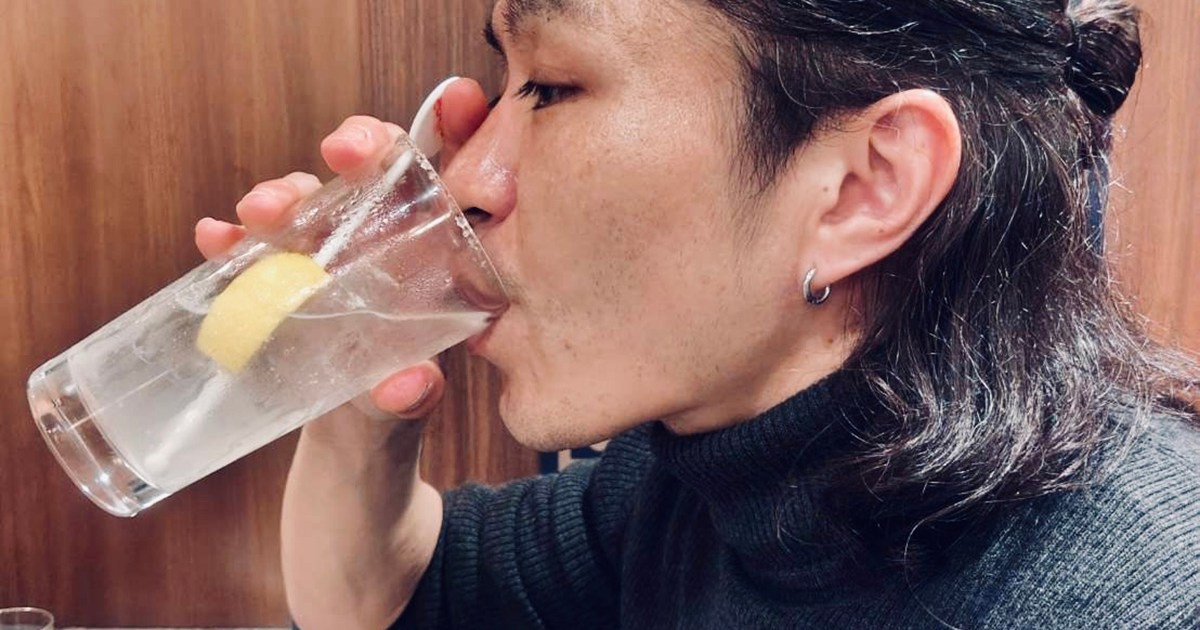
That’s how this Rocket News writer begins his story. After a long-awaited night out with a trusted friend, he shook hands and said, “I’m really glad we talked.” The food was great. The conversation was heated—in a good way. It was, by all accounts, a perfect evening.
And yet, he decided he might never 飲み交わす (nomi kawasu)—drink alcohol together—with that friend again.
Why?
なぜなら (nazenarā)—because—their first ノンアル (non-aru) drinking party was simply too good.
Two Editors, One Problem
The writer and his friend are both editors, close in age, and have walked similar life paths. They share many acquaintances and even the same hobby: professional wrestling. They also both practice martial arts—kickboxing for the writer, Brazilian jiu-jitsu for his friend.
That’s exactly why meeting up for a traditional “drinking party” (飲み会, nomikai) wasn’t easy.
Alcohol hits hard the next day. Training becomes impossible.
So at some point, they casually said to each other, “Let’s try a ノンアル飲み会 (non-aru nomikai) someday.” A non-alcoholic drinking party.
This time, they finally did it.
Can You Really 盛り上がる Without Alcohol?
He admits he was nervous. Would it 盛り上がる (moriagaru)—get lively and exciting—without alcohol?
The answer surprised him.
It felt exactly the same as when they were drinking. No—actually, it was better.
Because their heads were clear, the conversation went deeper. Unexpected topics came up. They laughed a lot. At one point, while talking about wrestling dropkicks, they instantly remembered a specific wrestler’s name—a sign their minds were sharp.
The restaurant they randomly chose turned out to have excellent food. The non-alcoholic options were plentiful. One drink—something “salty-something,” as he describes it—was so good he ordered two.
Before they knew it, the energy felt just like a normal drinking party.
But this time, their discussion felt more 建設的 (kensetsu-teki)—constructive.
The bill came to 12,000 yen for two people. They split it evenly, or 割り勘 (warikan), paying 6,000 yen each. Considering their satisfaction, it felt like a bargain.
The Morning After… Without Regret
The biggest difference came the next day.
The writer went to his usual kickboxing practice.
Even though he had “gone out drinking” the night before, his body felt great. It moved sharply and powerfully.
He imagines his friend probably went straight to jiu-jitsu practice and had a 充実した (juujitsu shita)—fulfilling—day as well.
If they had consumed alcohol, that wouldn’t have been possible. Morning training would have been out of the question. The alcohol would likely linger until evening, lowering work performance too.
Their first non-alcoholic drinking party exceeded expectations.
They parted ways after 誓い合う (chikai au)—promising each other—“Let’s do this again.”
They’ll continue going out together.
Just not with alcohol.
Cultural Context: The Meaning of 飲み会
In Japan, a 飲み会 (nomikai) is more than just “grabbing drinks.” It’s often where coworkers bond, friends open up, and honest conversations happen. Alcohol traditionally plays a central role in helping people relax and speak freely.
That’s why this article is striking.
The writer discovered that alcohol wasn’t the key to connection. In fact, being clear-headed allowed for deeper, more constructive conversations.
There’s also a growing awareness in Japan around health, productivity, and balance. Choosing ノンアル options reflects a subtle shift in social habits—without giving up the joy of gathering together.
Learn Japanese from This Article
Key Vocabulary
| Japanese | Romaji | Meaning |
|---|---|---|
| 飲み交わす | nomi kawasu | to drink together (exchange drinks) |
| ノンアル | non-aru | non-alcoholic (drink) |
| 割り勘 | warikan | splitting the bill |
| 盛り上がる | moriagaru | to get excited; to become lively |
| 建設的 | kensetsu-teki | constructive |
| 充実した | juujitsu shita | fulfilling; substantial |
| 誓い合う | chikai au | to promise each other |
Grammar Spotlight
1️⃣ 〜ことはない
Meaning: “There is no need to…” or “It will not happen that…”
In the article, the writer says:
もう彼と酒を飲み交わすことはない。 Mou kare to sake o nomi kawasu koto wa nai. “I will not drink alcohol with him anymore.”
Structure:
- Verb (dictionary form) + ことはない
Examples:
- 心配することはない。 Shinpai suru koto wa nai. “There’s no need to worry.”
- 急ぐことはない。 Isogu koto wa nai. “There’s no need to rush.”
It can express reassurance—or firm determination.
2️⃣ なぜなら〜から
Meaning: “Because…”
Used to explain a reason clearly and logically.
Example from the article’s structure:
なぜなら、ノンアル飲み会が最高だったから。 Nazenarā, non-aru nomikai ga saikou datta kara. “Because the non-alcoholic drinking party was the best.”
Structure:
- なぜなら
- explanation + から
This pattern feels slightly formal and is common in writing.
Useful Expressions
- 飲みに行く (nomi ni iku) — to go out for drinks
- 頭がクリア (atama ga kuria) — one’s head is clear
- またやろうぜ (mata yarou ze) — “Let’s do it again” (casual, masculine tone)
Notice how casual phrases like やろうぜ reflect close friendship. This isn’t textbook politeness—it’s natural, everyday Japanese between trusted friends.
If you’d like to better understand verb forms like 行く and how they change in polite speech, check out our lesson on Masu Form: Mastering Polite Everyday Speech.
For more foundational word-building strategies, see Basic Vocabulary Building: Embracing Words Without Latin Ties.
Clear heads. Deep conversation. Morning training without regret.
This story shows something important: connection doesn’t require alcohol. Sometimes, it just requires time—and the right person across the table.
Continue Learning
📚 Want to understand the verb forms used here? Check out Masu Form: Mastering Polite Everyday Speech.
📚 To understand more about lifestyle, explore our Greetings and Self-Introductions: Authentic Entry Phrases lesson.
📚 Curious about the Japanese used here? Our Basic Vocabulary Building: Embracing Words Without Latin Ties lesson covers this in depth.
Basic Vocabulary Building: Embracing Words Without Latin Ties
これからもよろしくお願いします。 Kore kara mo yoroshiku onegaishimasu.