
On March 19, 2026, the Japan Meteorological Agency announced that Tokyo’s cherry blossoms have officially started blooming. With that declaration, the city has effectively entered full cherry blossom viewing season — or as the article puts it, 本格的な花見シーズンに突入する (honkakuteki na hanami shīzun ni totsunyuu suru).
That means one thing: 花見 (hanami) season is here.
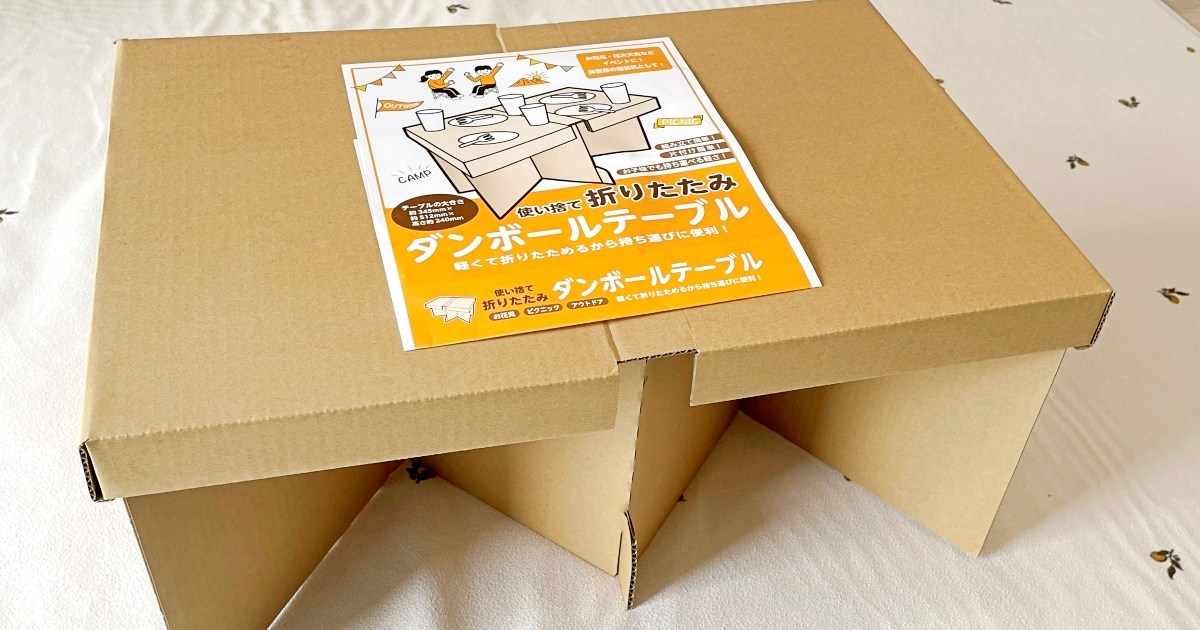
But along with excitement comes a very practical question. If you're planning to sit under the sakura trees, eat, and relax, wouldn’t a small, easy table be useful? The writer of this Rocket News article thought so — and realized they might already own the perfect solution.
A Disaster-Prep Item That Might Be Perfect for Hanami
The product in question wasn’t originally bought for cherry blossom viewing at all. It was purchased for 防災 (bousai), meaning disaster prevention.
The item is called 折りたたみダンボールテーブル (oritatami danbōru tēburu) — a foldable cardboard table made by the company Artnap.
The writer had bought it earlier on Amazon “just in case” as part of a disaster-preparedness kit. But now, with sakura season starting, they had a realization:
“Maybe that could work.”
In Japanese, this feeling of possibility is often expressed with:
- 〜かもしれない (〜kamo shirenai) — “might” or “maybe”
So when the writer thinks:
- 使えるかもしれない。 Tsukaeru kamo shirenai. “It might be usable.”
It shows uncertainty — but hopeful possibility.
Surprisingly Compact — and Cheap
As the name suggests, the table is made of cardboard. Before assembly, it’s about the size of a B4 sheet of paper and around 4.5 cm thick — roughly the size of a book. That makes it easy to slip into an emergency backpack.
And the price?
As of March 19, 2026, it costs 税込487円 (zeikomi yonhyaku hachijuu nana en) on Amazon — 487 yen including tax.
The article describes this as:
- ワンコイン以下 (wankoin ika) — less than “one coin”
In Japan, ワンコイン (wankoin) usually refers to a single 500-yen coin. So something under 500 yen feels inexpensive and low-risk — the kind of thing you might buy casually.
The writer even says they ordered it:
- 「とりあえず買っておくか」と何かのついでにポチっておいた。 “Toriaezu katte oku ka,” to nanika no tsuide ni poche tte oita. “I thought, ‘Well, I’ll just buy it for now,’ and clicked purchase while I was at it.”
Here, ついでに (tsuide ni) means “while you’re at it” or “incidentally.” It captures that very Japanese feeling of adding something to your cart because… why not?
It Was Designed for Events All Along
Interestingly, the package itself includes the message:
- 「お花見・花火大会などイベントに!」 “Ohanami・hanabi taikai nado ibento ni!” “For cherry blossom viewing, fireworks festivals, and other events!”
In other words, it turns out this table was meant for exactly this kind of occasion.
The writer concludes that it might be just the right size to bring along for outdoor leisure activities. What started as a 防災 (bousai) item might actually be a highly capable disposable table for spring gatherings.
Cultural Context: Why Portable Tables Matter in Japan
During 花見 (hanami), people often gather in parks under blooming cherry trees. Groups bring food, drinks, and plastic sheets to sit on. Since public parks don’t usually provide seating, people bring everything themselves.
That’s why lightweight, portable items are popular in Japan — especially ones that can be folded small and carried easily on trains.
There’s also a cultural logic at play. When the article says the season has begun —
- 本格的な花見シーズンに突入するわけだ。 Honkakuteki na hanami shīzun ni totsunyuu suru wake da. “That means we’re entering full-fledged hanami season.”
The grammar 〜わけだ (〜wake da) expresses a natural conclusion based on facts. The cherry blossoms have bloomed, so naturally, hanami season begins.
It’s a very Japanese way of stating cause and effect.
Learn Japanese from This Article
Key Vocabulary
| Japanese | Romaji | Meaning |
|---|---|---|
| 開花 | kaika | flowering; blooming |
| 花見 | hanami | cherry blossom viewing |
| 突入する | totsunyuu suru | to enter into; to plunge into |
| 防災 | bousai | disaster prevention |
| 税込 | zeikomi | tax included |
| ワンコイン | wankoin | one coin (around 500 yen) |
| ついでに | tsuide ni | while you're at it; incidentally |
| 折りたたみ | oritatami | folding; foldable |
| ダンボール | danbōru | cardboard |
Grammar Spotlight
1️⃣ 〜わけだ (〜wake da)
Meaning: So that means; no wonder; naturally (explaining a reason/result)
Structure: Plain form + わけだ
Example from the article:
- 花見シーズンに突入するわけだ。 Hanami shīzun ni totsunyuu suru wake da. “That means we’re entering hanami season.”
You use 〜わけだ when you’re drawing a logical conclusion from known facts.
2️⃣ 〜かもしれない (〜kamo shirenai)
Meaning: Might; maybe; possibly
Structure: Plain form + かもしれない
Examples:
使えるかもしれない。 Tsukaeru kamo shirenai. “It might be usable.”
便利かもしれない。 Benri kamo shirenai. “It might be convenient.”
This is perfect for expressing uncertainty or soft speculation.
Useful Expression
- とりあえず買っておくか。 Toriaezu katte oku ka. “I’ll just buy it for now.”
The pattern 〜ておく (〜te oku) means “do something in advance” or “do something for future use.” It’s extremely common in daily Japanese.
Continue Learning
📚 Want to understand the verb forms used here? Check out Masu Form: Mastering Polite Everyday Speech.
📚 Ready to dive deeper? Our lesson on Greetings and Self-Introductions: Authentic Entry Phrases will help you master these concepts.
📚 Want to learn more about lifestyle? Check out our lesson on Basic Vocabulary Building: Embracing Words Without Latin Ties.
Basic Vocabulary Building: Embracing Words Without Latin Ties
これからもよろしくお願いします。 Kore kara mo yoroshiku onegaishimasu.