
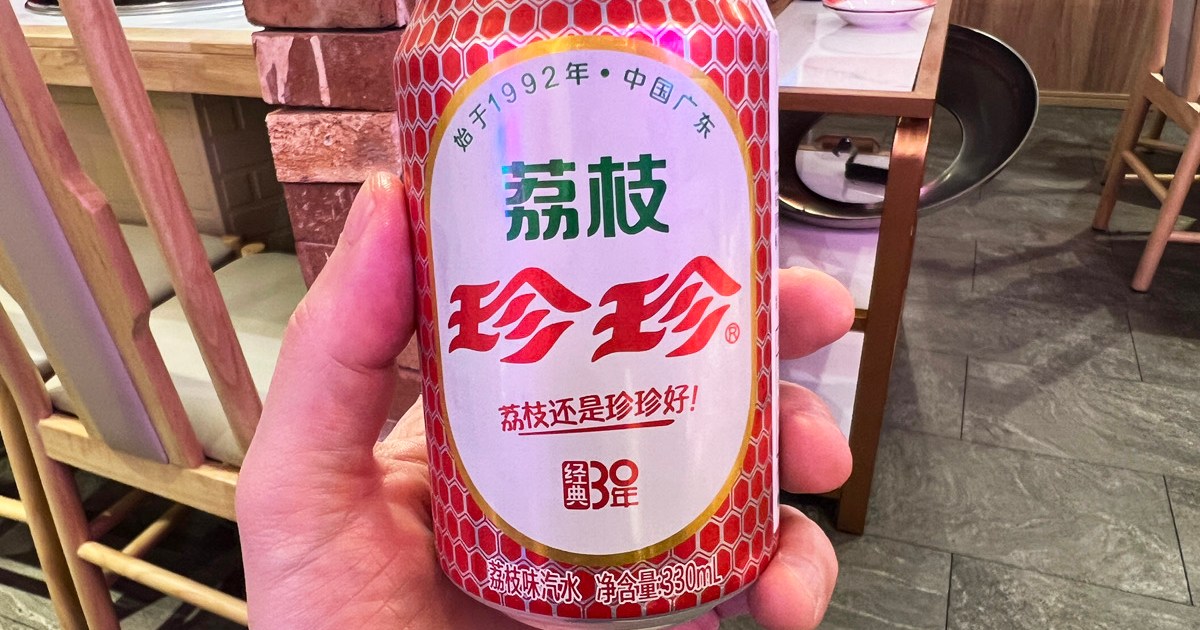
In China, there’s a bright red, polka-dotted soda called 珍珍 (Zhēn Zhēn)—and according to one Japanese writer, you need to be careful even pronouncing its name.
Although China and Japan are both in Asia, their cultures can feel completely different. That difference shows up clearly in something as everyday as drinks. In China, for example, there’s a 国民的 (kokuminteki)—nationally loved—drink called 王老吉(ワンラオジー) (Wáng Lǎojí). Its flavor is described as sweet oolong tea, about as sweet as Pocari Sweat.
But this story isn’t about Wanglaoji. It’s about another drink: Zhen Zhen.
An Unexpected Invitation—and a New Drink
Previously, the writer was 招待する (shoutai suru)—invited—by Kawabe, the owner of a “serious” Chinese restaurant in Ikebukuro called 大豊収鉄鍋炖 池袋西口店.
The writer doesn’t drink much alcohol, so that evening he kept ordering Wanglaoji instead. Watching this, Kawabe brought out a different drink: 珍珍 (Zhēn Zhēn), pronounced “Chen Chen.”
Here’s where it gets interesting.
The name in pinyin is written “Zhēn Zhēn.” It starts with a rolled “zh” sound, closer to “jen” than “zen,” repeated twice. The writer even warns readers to be careful with the pronunciation.
Language learners, take note: sometimes even reading the label becomes a mini pronunciation lesson.
A Retro Design with a Strong Pop
Zhen Zhen comes in a red can covered in white polka dots. The design feels nostalgic—almost like Japan’s Showa era (1926–1989). According to the package, the drink was first created in 1992. That makes it 34 years old.
When the writer opened the pull tab, it went “Pshuu!” with real force. He says he had to 細心の注意を払う (saishin no chuui o harau)—pay extremely close attention—when tasting it.
The first sensation? A tingling tongue.
This isn’t just any sweet drink. It’s 微炭酸 (bitansan), lightly carbonated.
What Does It Taste Like?
The flavor spreads across the mouth with lychee aroma and a syrupy sweetness. The sweetness feels a bit cheap and candy-like, combined with gentle fizz—something kids might love.
Interestingly, the writer couldn’t think of any Japanese drink that tastes similar. That’s where the cultural difference becomes clear. Even when two countries both love soda, the flavor profiles can be completely different.
Is Zhen Zhen Popular in China?
So, is Zhen Zhen trendy right now?
According to Kawabe, it’s not a trend. It’s 定番 (teiban)—a long-standing classic.
He compared its position in China to something like Mitsuya Cider in Japan. In other words, not flashy or new, but something you can find anywhere. “It feels like it’s sold everywhere,” he said.
At the Ikebukuro restaurant, Zhen Zhen costs 363 yen 税込 (zeikomi), meaning tax included.
The writer also checked Amazon and found a 24-can pack selling for 3,650 yen 税込 (zeikomi), which works out to about 152 yen per can. However, it appears to be sold only in multi-can sets like packs of 10 or 24.
Cultural Context: “National Drinks” and Everyday Classics
The word 国民的 (kokuminteki) is powerful in Japanese. It doesn’t just mean “popular.” It means loved across generations—by the whole nation.
In Japan, drinks like Mitsuya Cider or Pocari Sweat might be described this way. In China, Wanglaoji and Zhen Zhen seem to fill a similar role.
Notice how Kawabe describes Zhen Zhen as 流行というより昔からある定番—“rather than a trend, it’s a classic that’s been around for a long time.”
That phrase pattern is something you’ll hear often in Japanese.
Learn Japanese from This Article
Let’s break down the key vocabulary and grammar you saw.
Vocabulary
| Japanese | Romaji | Meaning |
|---|---|---|
| 国民的 | kokuminteki | national; loved by the whole nation |
| 招待する | shoutai suru | to invite |
| 珍しい | mezurashii | rare; unusual |
| 定番 | teiban | standard; classic; staple |
| 細心の注意を払う | saishin no chuui o harau | to pay extremely close attention |
| 税込 | zeikomi | tax included |
| 微炭酸 | bitansan | lightly carbonated |
Try making your own sentence with 定番 (teiban). For example:
- これは日本の定番のお菓子です。 Kore wa Nihon no teiban no okashi desu. This is a classic Japanese snack.
Grammar Spotlight
1. 〜というより〜
Meaning: Rather than…, more like…
From the article:
- 流行というより昔からある定番 Ryūkō to iu yori mukashi kara aru teiban Rather than a trend, it’s a long-standing classic.
Structure:
- Noun + というより
- Noun
- Phrase + というより
- Phrase
Examples:
犬というよりオオカミみたいだ。 Inu to iu yori ōkami mitai da. It’s more like a wolf than a dog.
甘いというより辛い。 Amai to iu yori karai. It’s more spicy than sweet.
This pattern is very common in casual conversation.
2. 〜くらい
Meaning: About; approximately; to the extent of
From the article:
- ポカリスエットくらい甘い Pokari Suetto kurai amai About as sweet as Pocari Sweat.
Structure:
- Noun + くらい
Examples:
5分くらい待ってください。 Go-fun kurai matte kudasai. Please wait about five minutes.
子供が好きなくらい甘い。 Kodomo ga suki na kurai amai. It’s sweet enough that kids would like it.
Useful Expression
- 細心の注意を払う Saishin no chuui o harau To be extremely careful
You’ll often hear this in news reports or formal speech.
Continue Learning
📚 Want to understand the verb forms used here? Check out Masu Form: Mastering Polite Everyday Speech.
📚 To understand more about lifestyle, explore our Greetings and Self-Introductions: Authentic Entry Phrases lesson.
📚 Ready to dive deeper? Our lesson on Basic Vocabulary Building: Embracing Words Without Latin Ties will help you master these concepts.
Basic Vocabulary Building: Embracing Words Without Latin Ties
これからもよろしくお願いします。 Kore kara mo yoroshiku onegaishimasu.