
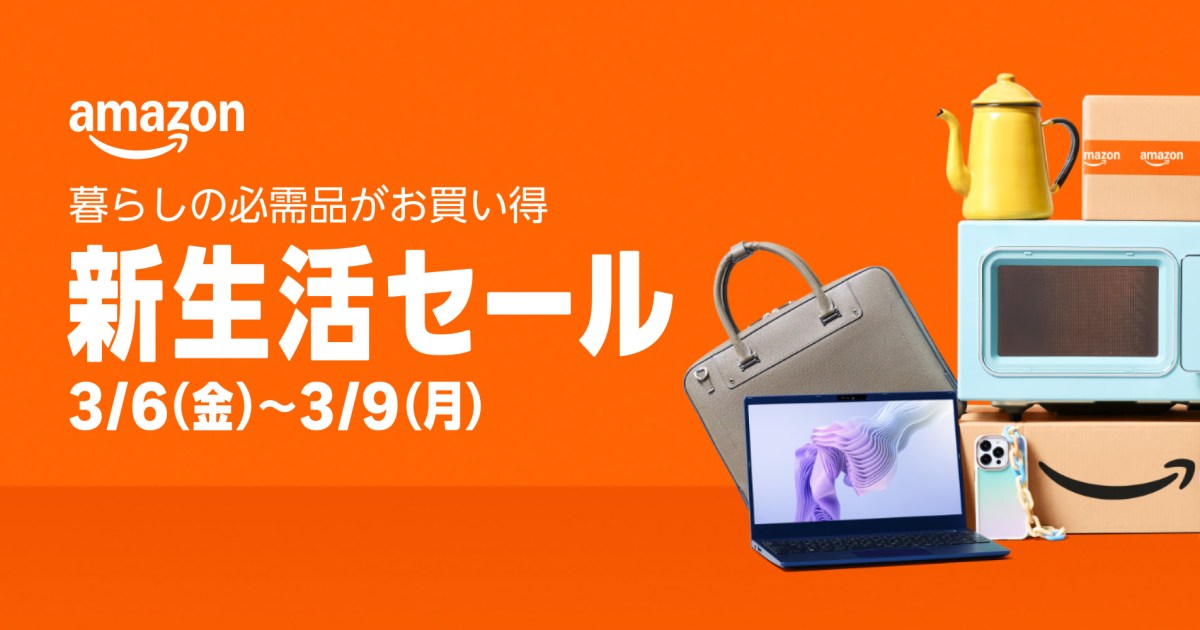
On March 4, 2026, Amazon is in the middle of a massive bargain event called the 新生活(先行)セール (shin seikatsu (senkō) sēru)—the “New Life (Early Access) Sale.” And right now, 72 carefully selected items are selling for 半額以下 (hangaku ika), or less than half price.
Let’s take a closer look at what’s happening—and pick up some real, everyday Japanese along the way.
Amazon’s “New Life (Early Access) Sale” Is Now On
The article reports that Amazon is currently 開催している (kaisai shite iru) a major sale event. The verb 開催する (kaisai suru) means “to hold” or “to host” an event.
So when the article says:
Amazonで開催されている大バーゲン Amazon de kaisai sarete iru dai bāgen “A big bargain sale being held on Amazon”
the grammar 〜ている shows that the event is ongoing—it’s happening right now.
This sale is called the 新生活(先行)セール (shin seikatsu (senkō) sēru).
- 新生活 (shin seikatsu) = “new life”
- 先行 (senkō) = “early” or “in advance”
In Japan, “new life” sales are common in spring. April marks the beginning of the school year and the business year, so many people move, start university, or begin new jobs. Retailers respond with discounts on furniture, appliances, and daily necessities.
72 Items at Less Than Half Price
The article highlights 半額以下で買える注目アイテムを72点:
- 半額 (hangaku) = half price
- 以下 (ika) = less than
- 注目アイテム (chūmoku aitemu) = noteworthy items
So these are 72 notable products you can buy for less than half their original price.
The writer says the products were 厳選してみた (gensen shite mita)—carefully selected.
- 厳選 (gensen) means “careful selection” or “hand-picked.”
In other words, this isn’t just a random list. The items were chosen deliberately.
Categories in the Table of Contents
The article includes a 目次 (mokuji), or table of contents, dividing the deals into categories:
- 家具 (kagu) — furniture
- 家電 (kaden) — home appliances
- ヘルスケア (herusukea) — healthcare
- 飲食品 (inshokuhin) — food and drinks
- アパレル (apareru) — apparel
- おもちゃ・ゲーム (omocha・gēmu) — toys and games
Even just reading the categories is a great vocabulary exercise. Notice how many loanwords (like アパレル) sit next to traditional kanji-based words like 家具.
Example Item
Under the furniture section, one example is:
2310円 → 1141円(51%オフ) 『山崎実業』マスク収納ケース
This means:
- 2310 yen reduced to 1141 yen
- 51% off
- A mask storage case by Yamazaki Jitsugyo
That’s more than 半額—exactly the kind of dramatic discount the article is highlighting.
Important Notes About Pricing
The article also includes two important disclaimers.
First:
価格や割引率は2026年3月4日時点のものです。 Kakaku ya waribikiritsu wa 2026-nen 3-gatsu 4-ka jiten no mono desu. “Prices and discount rates are as of March 4, 2026.”
Here’s key vocabulary:
- 価格 (kakaku) — price
- 割引率 (waribikiritsu) — discount rate
- 時点 (jiten) — point in time
Second, it warns that:
完売、もしくは割引率(クーポンを含む)が変動する可能性もあります。 Kanbai, moshikuwa waribikiritsu (kūpon o fukumu) ga hendō suru kanōsei mo arimasu. “There is also the possibility that items may be sold out or that discount rates (including coupons) may change.”
Two useful words here:
- 完売 (kanbai) — sold out
- 可能性がある (kanōsei ga aru) — there is a possibility that…
This is very typical in Japanese retail writing—clear, careful language that manages expectations.
Cultural Context: Why “New Life” Sales Matter
In Japan, spring isn’t just about cherry blossoms. It’s the start of something new.
The school year and fiscal year both begin in April. That means:
- Students move out for university.
- New employees relocate for jobs.
- Families reorganize their living spaces.
Retailers respond with 新生活セール—“new life sales”—focused on practical goods like furniture and appliances. Seeing words like 家具 and 家電 grouped together in a sale is a seasonal sign that spring is coming.
Learning these seasonal retail patterns helps you understand real-life Japanese beyond textbooks.
Learn Japanese from This Article
Vocabulary
| Japanese | Romaji | Meaning |
|---|---|---|
| 開催 | kaisai | to hold (an event) |
| 特別価格 | tokubetsu kakaku | special price |
| 半額 | hangaku | half price |
| 割引率 | waribikiritsu | discount rate |
| 厳選 | gensen | carefully selected |
| 完売 | kanbai | sold out |
| 目次 | mokuji | table of contents |
Try saying this phrase naturally:
特別価格で手に入れるチャンスが到来中だ。 Tokubetsu kakaku de te ni ireru chansu ga tōraichū da. “The chance to get it at a special price has arrived.”
Grammar Spotlight
1. 〜ている (Ongoing State)
Example from the article:
開催されている kaisai sarete iru “is being held”
Structure:
- Verb (て-form) + いる
This expresses:
- An action in progress
- Or a current ongoing state
More examples:
セールを開催している。 Sēru o kaisai shite iru. “They are holding a sale.”
商品が売れている。 Shōhin ga urete iru. “The product is selling (well).”
Want to understand verb forms like this more deeply? Check out Masu Form: Mastering Polite Everyday Speech.
2. 〜可能性がある (There Is a Possibility That…)
Example:
変動する可能性もあります。 Hendō suru kanōsei mo arimasu. “There is also the possibility that it may change.”
Structure:
- Verb (dictionary form) + 可能性がある
More examples:
完売する可能性がある。 Kanbai suru kanōsei ga aru. “There is a possibility it will sell out.”
価格が上がる可能性がある。 Kakaku ga agaru kanōsei ga aru. “There is a possibility the price will increase.”
This is extremely common in news, business writing, and official notices.
Useful Expressions for Shopping in Japan
半額以下です。 Hangaku ika desu. “It’s less than half price.”
割引率は何%ですか。 Waribikiritsu wa nan-pāsento desu ka? “What is the discount rate?”
もう完売です。 Mō kanbai desu. “It’s already sold out.”
Even if you’re just browsing Japanese websites, recognizing these phrases makes the experience much more authentic.
Continue Learning
📚 Want to understand the verb forms used here? Check out Masu Form: Mastering Polite Everyday Speech.
📚 Ready to dive deeper? Our lesson on Greetings and Self-Introductions: Authentic Entry Phrases will help you master these concepts.
📚 Ready to dive deeper? Our lesson on Basic Vocabulary Building: Embracing Words Without Latin Ties will help you master these concepts.
Basic Vocabulary Building: Embracing Words Without Latin Ties
これからもよろしくお願いします。 Kore kara mo yoroshiku onegaishimasu.