
SEO Title: MangaONE Removes Popular Titles, Refunds Under Review Meta Description: Shogakukan’s MangaONE app removes major titles like Frieren and Maison Ikkoku. Learn what happened—and key Japanese terms from the story.
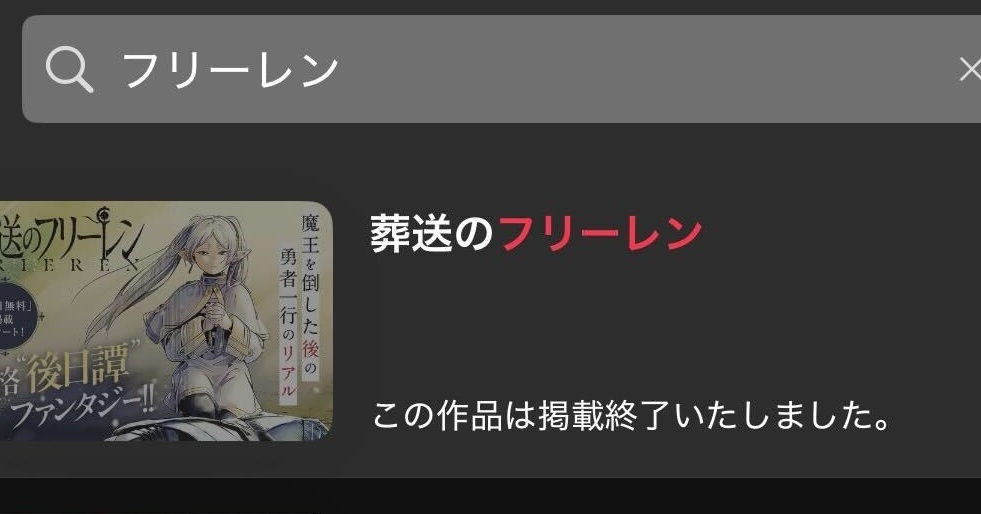
On March 1, several major manga titles suddenly became unavailable on Shogakukan’s manga distribution サービス (saabisu), MangaONE. Readers who tried to open works like 「葬送のフリーレン」 (Sousou no Furīren, Frieren: Beyond Journey’s End) were met with the message: 「この作品は掲載終了いたしました」 (kono sakuhin wa keisai shuuryou itashimashita), “This work has finished publication.”
The titles could not be viewed either on the smartphone アプリ (apuri) or the Webサービス (webu saabisu).
What Happened on MangaONE?
By March 1, it became clear that several popular works were in a state of being unreadable — in Japanese, 読めない状態になっている (yomenai joutai ni natte iru).
The affected titles include:
- 「葬送のフリーレン」 (Sousou no Furīren)
- 「めぞん一刻(新装版)」 (Maison Ikkoku – new edition)
- 「らんま1/2(新装版)」 (Ranma 1/2 – new edition)
- 「機動警察パトレイバー」 (Kidou Keisatsu Patlabor)
- 「MAJOR」
- 「土竜の唄」 (Mogura no Uta)
- 「アオイホノオ」 (Aoi Honoo)
- 「吼えろペン」 (Hoero Pen)
All displayed the same notice that publication had ended.
According to Shogakukan, even users who had already purchased the manga cannot read it if they bought it by individual episode — that is, by エピソード (episoodo).
Refunds are currently 「検討中」 (kentou-chuu), meaning “under consideration.”
However, users who purchased entire collected volumes — 単行本 (tankoubon) — can continue to access those editions.
Why Are Titles Being Removed?
The issue surrounding MangaONE goes beyond technical trouble.
The original author of the manga 「堕天作戦」 (Daten Sakusen), Shoichi Yamamoto, was arrested and summarily indicted for violating Japan’s child prostitution and pornography law (production). Despite this, he later changed his pen name to 一路一 (Ichiro Ichi) and was appointed as the original author of another manga, 「常人仮面」 (Joujin Kamen).
This happened 〜にもかかわらず (~ni mo kakawarazu) — “despite” the fact that he had been arrested and indicted.
The decision drew criticism on SNS (esu en esu), meaning social networking services.
On February 27, the MangaONE editorial department released a 声明 (seimei), an official statement, within the app. They admitted there were problems with both the decision to hire the author and their internal review system, and they apologized.
However, further criticism arose because:
- The initial statement appeared only inside the app, not on social media.
- The statement did not explain the details of the author’s charges.
- A separate statement issued under the president’s office name was later 削除 (sakujo), or deleted.
As a result, manga artists who had works published in Shogakukan magazines began announcing they would withdraw their works from the company, citing distrust in its response. This appears to be connected to the sudden disappearance of titles from MangaONE.
Cultural Context: Why This Is Significant
Shogakukan is one of Japan’s major publishing companies. Manga distribution サービス (saabisu) like MangaONE allow readers to buy chapters digitally, often one エピソード (episoodo) at a time.
In Japan, buying by episode is common in digital manga apps. That makes this situation especially sensitive: readers paid for specific chapters, yet those chapters are now inaccessible.
The distinction between:
- エピソード購入 (episoodo kounyuu) — purchasing individual chapters
- 単行本購入 (tankoubon kounyuu) — purchasing full collected volumes
is important both legally and culturally in Japan’s digital publishing world.
It also highlights how companies in Japan issue formal 声明 (seimei) and how public trust can shift quickly through SNS (esu en esu).
Learn Japanese from This Article
Key Vocabulary
| Japanese | Romaji | Meaning |
|---|---|---|
| サービス | saabisu | service (digital/platform service) |
| アプリ | apuri | app |
| Webサービス | webu saabisu | web service |
| エピソード | episoodo | episode |
| 単行本 | tankoubon | collected volume |
| 声明 | seimei | official statement |
| SNS | esu en esu | social networking service |
| 削除 | sakujo | deletion |
| 検討中 | kentou-chuu | under consideration |
Notice how many of these are written in katakana. These are loanwords adapted into Japanese pronunciation — a key skill for reading tech and media news.
Grammar Spotlight
1️⃣ 〜になっている
Meaning: has become / is in a state of
Structure: Verb (dictionary form) + ない状態になっている
Example from this article: 読めない状態になっている。 Yomenai joutai ni natte iru. “It has become a state where it cannot be read.”
More examples:
利用できない状態になっている。 Riyou dekinai joutai ni natte iru. “It has become unavailable.”
公開停止になっている。 Koukai teishi ni natte iru. “It is currently suspended.”
This pattern is very common in news reporting.
2️⃣ 〜にもかかわらず
Meaning: despite / although
Structure: Noun + にもかかわらず
Example from this case:
- 逮捕・起訴されたにもかかわらず、起用された。 Taiho / kiso sareta ni mo kakawarazu, kiyou sareta. “Despite being arrested and indicted, he was appointed.”
This expression is slightly formal and often appears in news articles.
Useful Expression
この作品は掲載終了いたしました。 Kono sakuhin wa keisai shuuryou itashimashita. “This work has finished publication.”
- 掲載 (keisai) = publication / posting
- 終了 (shuuryou) = end / termination
- いたしました = very polite form of “did”
You’ll often see this kind of formal language in corporate announcements.
Continue Learning
Working on your reading skills? Our Katakana Essentials: Adapting Global Words to Japanese lesson is a great next step.
Want to learn more about tech? Check out our lesson on Basic Vocabulary Building: Embracing Words Without Latin Ties.
To understand more about tech, explore our Reading and Writing in Japanese II: Hiragana and Katakana lesson.
Digital manga is a huge part of modern Japanese reading culture, and stories like this show how language, technology, and trust all intersect. By reading real news like this, you're learning Japanese the way it’s actually used today.
これからもよろしくお願いします。 Kore kara mo yoroshiku onegaishimasu.