
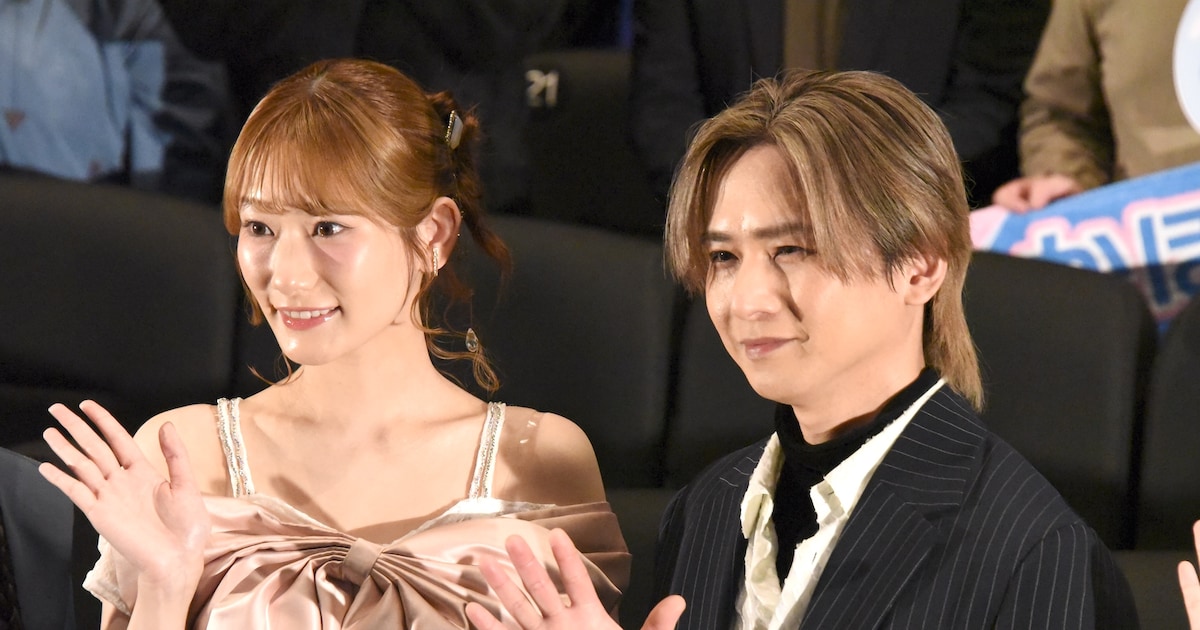
On February 28, the cast of That Time I Got Reincarnated as a Slime the Movie: Tears of the Blue Sea Arc gathered at Tokyo’s Marunouchi Piccadilly for a 公開記念舞台挨拶 (koukai kinen butai aisatsu)—a celebratory stage greeting marking the film’s release. There, Koichi Domoto publicly apologized to a goblin, and Saori Onishi proudly declared that being an otaku is the best.
Let’s take a closer look at what happened—and what you can learn from it.
A New Chapter in the “Tensura” World
The film, which 封切られた (fuu kirareta, premiered) on February 27, continues the story of 「転生したらスライムだった件」 (Tensei Shitara Slime Datta Ken), often called “Tensura.”
Originally created by Fuse (story), Taiki Kawakami (manga adaptation), and Mitz Vah (character design), the series follows Rimuru Tempest, a former office worker reincarnated as a slime. Together with his companions, he works to build an ideal nation.
In Tears of the Blue Sea Arc, trouble arises in the underwater kingdom of Kaien, where a water dragon is worshipped as a guardian deity. The shrine maiden Yura travels to the surface seeking help—where she encounters Rimuru and his friends, who are enjoying a short vacation after the founding festival of the Jura Tempest Federation.
“I Can Finally Talk About It!”
At the stage greeting, Miho Okasaki (Rimuru) shared her excitement about the release:
She explained that during promotional interviews she often had to stop herself from revealing spoilers, thinking, “I can’t say that!” Now that the movie is out, she said she’s happy she can finally speak freely.
When asked about reactions from people around her, she laughed and said she hasn’t received many yet, encouraging fans in the audience to spread the word.
Stage greetings like this are a uniquely Japanese movie culture tradition. After a premiere, cast members appear in person, greet the audience, and share behind-the-scenes stories. The term 舞台挨拶 (butai aisatsu) literally means “stage greeting.”
Gobta’s Big Moment—and an On-Stage Apology
Asuna Tomari, who plays Gobta—one of Rimuru’s Four Heavenly Kings—expressed her happiness at finally being able to share the film with fans.
Gobta apparently has a 大活躍 (daikatsuyaku), meaning he plays a major, active role in the story. Tomari said she hopes audiences will tell her which scenes they loved most.
Saori Onishi, who voices Yura, mentioned checking social media reactions. Many viewers were surprised that Gobta felt like the main character. She read comments such as:
“まさかゴブタに泣かされるとは……” Masaka Gobuta ni nakasareru to wa… “I can’t believe Gobta made me cry…”
That phrase 〜とは (~ to wa) expresses surprise—something we’ll look at more closely in the learning section.
Then came one of the funniest moments of the event.
Koichi Domoto, who plays Zodon—a key minister in the underwater kingdom—turned to Tomari and said:
“ゴブタが大活躍されましたが……そんなゴブタに『この虫ケラが!』って言って本当にすみません。”
He apologized for calling Gobta 虫ケラ (mushikera, “worm” or “insignificant insect”) in the film. The word is a harsh insult, often used by villains. Domoto noted that this was his first time playing such a strong ヒール役 (hiiru yaku, villain role), and he hopes audiences will watch the film multiple times and enjoy the world of Tensura.
From Superfan to Cast Member
Hinatazaka46 members Nao Kosaka and Kaho Fujishima also appeared. They play the maids Mio and Yori, who protect Yura from pursuers.
Kosaka, a longtime fan of the series, shared:
“I was planning to see the movie for sure when it was announced—まさか自分が携われることになるとは。”
Masaka jibun ga tazusawareru koto ni naru to wa. “I can’t believe I would actually get to be involved in it.”
Fujishima added that her mother watched the film the day before and told her it was fun, which made her very happy.
“Otaku Activities Are the Best”
In a segment inspired by the series’ title structure (“~だった件”), the cast shared recent events in their lives using the format “〇〇だった件” (“The Case of ~”).
Saori Onishi announced:
「オタク楽しい件」
She explained that she has recently rediscovered the joy of オタ活 (otakatsu, fan activities). She talked about using the money she earns from working in the industry to support it as a fan as well—helping “circulate the economy.”
Domoto agreed, joking that otaku keep the economy moving. Onishi smiled and concluded, “Otaku activities are the best!”
In Japan, オタク (otaku) culture is not just about anime and games—it’s a powerful economic force, supporting events, merchandise, concerts, and films like this one.
Cultural Context: Why Stage Greetings Matter
Movie 舞台挨拶 (butai aisatsu) are a cherished part of Japanese film promotion. Unlike typical Western premieres focused mainly on press, Japanese premieres often include live talk sessions directly with ticket-holding fans.
It’s common for actors to:
- Apologize jokingly for harsh lines
- Thank fans for support
- Share spoiler-free anecdotes
- Express gratitude using humble language
You’ll often hear phrases like 参加させていただきました (sanka sasete itadakimashita), a humble way of saying “I was allowed to participate.”
Understanding this culture helps you appreciate not just the language, but the relationships between creators and fans in Japan.
Learn Japanese from This Article
Key Vocabulary
| Japanese | Romaji | Meaning |
|---|---|---|
| 舞台挨拶 | butai aisatsu | stage greeting (cast appearance at screening) |
| 封切られる | fuu kirareru | to premiere (a film) |
| 大活躍 | daikatsuyaku | great performance; major role |
| ヒール役 | hiiru yaku | villain role |
| オタ活 | otakatsu | fan activities |
| まさか〜とは | masaka ~ to wa | I can’t believe that… |
| 虫ケラ | mushikera | worm; insignificant insect (insult) |
Grammar Spotlight
1️⃣ 〜とは (Expressing Surprise)
Pattern: > まさか + clause + とは
Used to express shock or unexpected realization.
Example from the event: > まさかゴブタに泣かされるとは。 > Masaka Gobuta ni nakasareru to wa. > “I can’t believe Gobta made me cry.”
Another example: > まさか自分が出演するとは思いませんでした。 > Masaka jibun ga shutsuen suru to wa omoimasen deshita. > “I never imagined I would appear in it.”
This structure is extremely common in interviews and reactions.
2️⃣ 〜させていただく (Humble Expression)
Pattern: > Verb (causative) + させていただく
Used to humbly say “to be allowed to do (something).”
Example: > 参加させていただきました。 > Sanka sasete itadakimashita. > “I had the privilege of participating.”
You’ll hear this constantly in formal Japanese, especially at events and press conferences.
Useful Expression
〇〇だった件
Literally: “The case of ~”
This phrasing comes from online culture and light novel titles like 転生したらスライムだった件.
Example: > オタク楽しい件 > “The case of otaku being fun”
It adds a playful, storytelling tone to everyday experiences.
Continue Learning
- Want to learn more about entertainment? Check out our lesson on Basic Vocabulary Building: Embracing Words Without Latin Ties.
- Working on your reading skills? Our Katakana Essentials: Adapting Global Words to Japanese lesson is a great next step.
- Interested in the deeper roots of Japanese writing? Explore Introduction to Kanji: Pictorial Foundations of Japanese Script.
The world of Tensura continues to grow—not just on screen, but through the language fans use to talk about it. By paying attention to expressions like まさか〜とは and cultural moments like a heartfelt 舞台挨拶, you're learning Japanese the way it lives and breathes in real life.
これからもよろしくお願いします。 Kore kara mo yoroshiku onegaishimasu.