
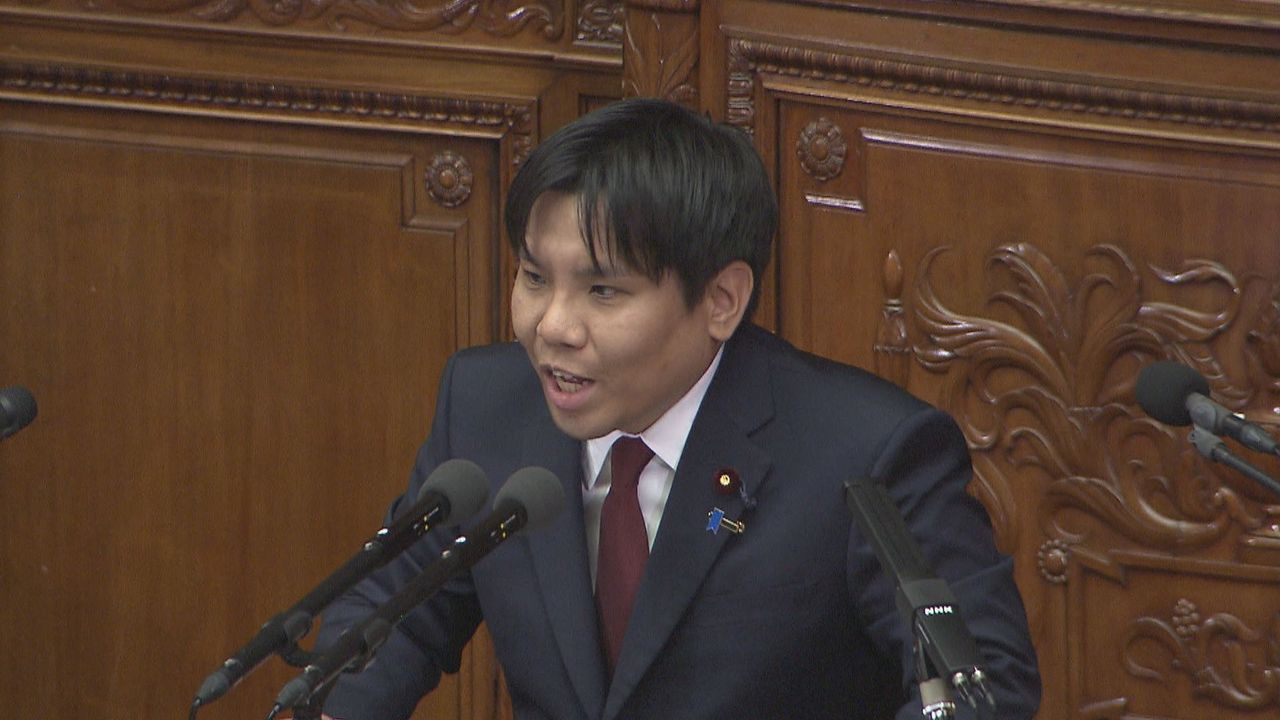
In Japan’s national parliament, a newly successful political group raised a question that many countries are now facing: What happens to jobs in the age of artificial intelligence?
Following strong gains in the recent 衆議院選挙 (shūgiin senkyo, House of Representatives election), Team Mirai (チームみらい) made its first 代表質問 (daihyo shitsumon, formal representative questioning) in the Diet. During this session, the party asked Prime Minister Takaiichi for her official 見解 (kenkai, view or stance) on the AI(エーアイ)による失業問題 (ē ai ni yoru shitsugyō mondai) — the unemployment problem caused by AI.
A First Parliamentary Question
After its recent 躍進 (yakushin, rapid progress or major advance) in the election, Team Mirai stepped into a new role in national politics. One of the most important opportunities for a political party in Japan’s parliament is the 代表質問 (daihyo shitsumon).
A 代表質問 is a formal session where representatives of political parties question the government, often addressing the Prime Minister directly. In this case, the question was directed at the 総理大臣 (sōri daijin, Prime Minister), Takaiichi.
The focus? The growing 失業問題 (shitsugyō mondai, unemployment problem) related to artificial intelligence.
In Japanese, this was expressed as:
- AIによる失業問題について見解を求めました。 Ē ai ni yoru shitsugyō mondai ni tsuite kenkai o motomemashita. “They asked for the Prime Minister’s view regarding the unemployment problem caused by AI.”
Notice how compact and precise this sentence is — something you’ll see often in Japanese political reporting.
Why This Matters in Japanese Context
Artificial intelligence is commonly written in Japanese as AI(エーアイ) (ē ai), using katakana. Katakana is typically used for foreign loanwords, especially in technology and business.
By raising the issue of AIによる失業問題, Team Mirai highlighted concerns about how technological change might affect workers. Even in short news reports, Japanese media often combine:
- The political action (asking a question)
- The formal setting (representative questioning)
- The issue (AI-related unemployment)
- The authority addressed (the Prime Minister)
Understanding this structure helps you read real Japanese news more confidently.
Learn Japanese from This Article
Let’s break down the key vocabulary and grammar so you can use it yourself.
Key Vocabulary
| Japanese | Romaji | Meaning |
|---|---|---|
| 衆議院選挙 | shūgiin senkyo | House of Representatives election |
| 躍進 | yakushin | great advance; rapid progress |
| 代表質問 | daihyo shitsumon | representative interpellation (formal questioning in parliament) |
| AI(エーアイ) | ē ai | artificial intelligence |
| 失業問題 | shitsugyō mondai | unemployment problem |
| 総理大臣 | sōri daijin | Prime Minister |
| 見解 | kenkai | view; opinion; official stance |
Try reading this full phrase aloud:
- 衆議院選挙で躍進したチームみらい Shūgiin senkyo de yakushin shita Chīmu Mirai “Team Mirai, which made major gains in the House of Representatives election”
Notice how Japanese places descriptive information before the noun — a key reading skill.
Grammar Spotlight 1: 〜による (caused by / due to / by means of)
Structure: Noun + による + Noun
It shows cause, source, or means.
From this article:
- AIによる失業問題 Ē ai ni yoru shitsugyō mondai “The unemployment problem caused by AI”
More examples:
地震による被害 Jishin ni yoru higai “Damage caused by an earthquake”
インターネットによる変化 Intānetto ni yoru henka “Changes brought about by the internet”
This pattern is very common in news writing.
Grammar Spotlight 2: 〜について (about / regarding)
Structure: Noun + について
Used when discussing a topic.
From the article:
- 失業問題について見解を求めました。 Shitsugyō mondai ni tsuite kenkai o motomemashita. “They asked for a view regarding the unemployment problem.”
More examples:
日本の経済について話します。 Nihon no keizai ni tsuite hanashimasu. “I will talk about Japan’s economy.”
AIについて勉強しています。 Ē ai ni tsuite benkyō shiteimasu. “I am studying about AI.”
You’ll see 〜について constantly in formal speech, essays, and news reports.
Useful Expression
- 見解を求める Kenkai o motomeru “To ask for someone’s official view”
This is a very formal expression, often used in political or business contexts.
Continue Learning
Working on your reading skills? Our Katakana Essentials: Adapting Global Words to Japanese lesson is a great next step.
Want to learn more about tech? Check out our lesson on Basic Vocabulary Building: Embracing Words Without Latin Ties
To strengthen your foundation, explore: Reading and Writing in Japanese II: Hiragana and Katakana
Political news may look dense at first, but once you break down patterns like 〜による and 〜について, you’ll start to see how systematic and logical Japanese reporting really is. Step by step, you’re training yourself to read the language the way it’s used in Japan every day.
これからもよろしくお願いします。 Kore kara mo yoroshiku onegaishimasu.