
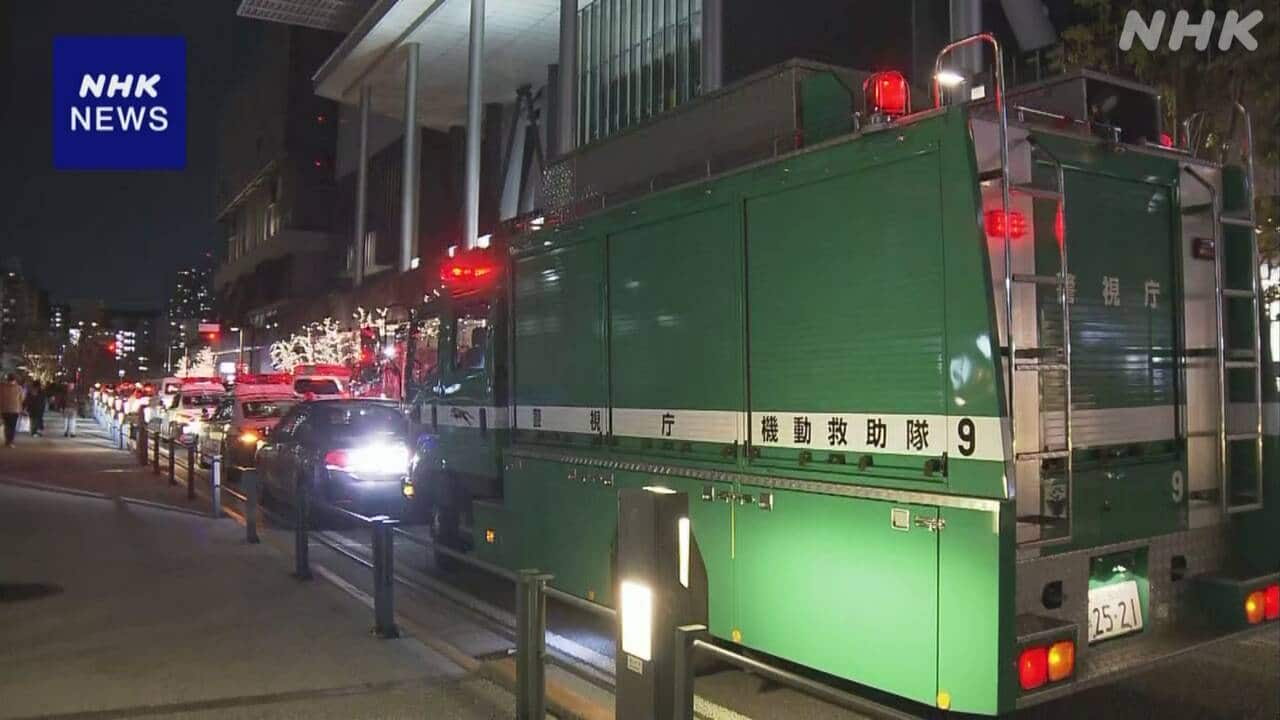
On the night of the 22nd, an elevator at Tokyo Skytree 突然 (totsuzen) stopped, leaving 20 people — including children — trapped inside. After more than five and a half hours, at around 2:00 a.m. on the 23rd, 全員 (zen’in) were safely rescued.
Elevator Suddenly Stops at Tokyo Skytree
According to NHK, the incident occurred at 東京スカイツリー (Tōkyō Sukai Tsurī), one of Japan’s most famous landmarks. An elevator carrying passengers 突然停止し (totsuzen teishi shi) — suddenly stopped.
Inside were 20 people, children 含む (fukumu) — meaning “including” children. The passengers were 閉じ込められていました (tojikomerarete imashita), “were trapped,” inside the elevator.
It took 5時間半余りがたった (go-jikan han amari ga tatta) — more than five and a half hours passed — before help arrived. At around 2:00 a.m., rescue workers completed the 救助 (kyūjo), and 全員 (zen’in), everyone, was brought out safely.
The source article also mentions 別のエレベーター (betsu no erebētā), meaning “another elevator,” though no additional details are provided in the excerpt.
Why This News Matters in Japan
Tokyo Skytree is not just a tourist attraction; it’s a symbol of modern Japan. Standing at 634 meters, it’s the tallest structure in Japan and a major broadcasting tower. Because of its height, elevators are essential for visitors.
Japan is known for strict safety standards and punctual, reliable infrastructure. When something like an elevator 停止 (teishi, stop) happens — especially in such a prominent location — it becomes national news. The fact that children were 含む (fukumu, included) also heightens public concern.
At the same time, the report emphasizes that 全員救助 (zen’in kyūjo) — everyone was rescued — highlighting a successful emergency response.
Learn Japanese from This Article
Let’s break down key vocabulary and grammar that appear in this report.
Key Vocabulary
| Japanese | Romaji | Meaning |
|---|---|---|
| 突然 | totsuzen | suddenly |
| 停止 | teishi | stop; suspension |
| 含む | fukumu | to include |
| 閉じ込められる | tojikomerareru | to be trapped; to be locked in |
| 余り | amari | more than; over (time/amount) |
| 救助 | kyūjo | rescue |
| 全員 | zen’in | everyone; all members |
Notice how compact Japanese news headlines are. For example:
- 20人全員救助 20-nin zen’in kyūjo “All 20 people rescued.”
No verbs are needed in the headline — just key nouns. This is very common in Japanese news writing.
Grammar Spotlight 1: 〜がたった (After time has passed)
In the article:
- 5時間半余りがたった Go-jikan han amari ga tatta “More than five and a half hours passed.”
Pattern: > Time expression + がたった
Examples:
3日がたった。 Mikka ga tatta. Three days have passed.
10年がたちました。 Jū-nen ga tachimashita. Ten years have passed.
This structure is very common in news reports to show how much time passed before something happened.
Grammar Spotlight 2: 〜れていました (Passive Progressive in News)
The article says:
- 閉じ込められていました Tojikomerarete imashita “(They) were trapped.”
This is:
Passive form + 〜ていました
It describes a continuing state in the past.
More examples:
ドアが閉められていました。 Doa ga shimerarete imashita. The door was closed (and remained closed).
多くの人が集められていました。 Ōku no hito ga atsumera rete imashita. Many people had been gathered.
In Japanese news, this structure is extremely common because it neutrally describes situations without emphasizing who performed the action.
Useful Expression: 〜を含む
From the article:
- 子どもを含む20人 Kodomo o fukumu nijū-nin “20 people, including children”
Pattern: > Noun + を含む + number/group
Example:
- 留学生を含む100人 Ryūgakusei o fukumu hyaku-nin 100 people, including international students.
This is a very useful pattern for formal writing and news-style Japanese.
Continue Learning
Curious about the Japanese scripts used in this article? Our Reading and Writing in Japanese II: Hiragana and Katakana lesson covers this in depth.
Working on your reading skills? Our Introduction to Kanji: Pictorial Foundations of Japanese Script lesson is a great next step.
Want to expand your everyday word knowledge? Check out Basic Vocabulary Building: Embracing Words Without Latin Ties.
Incidents like this give you a real window into how Japanese news reports events — concise, factual, and focused on outcomes like 全員救助 (zen’in kyūjo). By studying authentic materials, you’re learning Japanese the way it’s actually used in Japan.
これからもよろしくお願いします。 Kore kara mo yoroshiku onegaishimasu.