
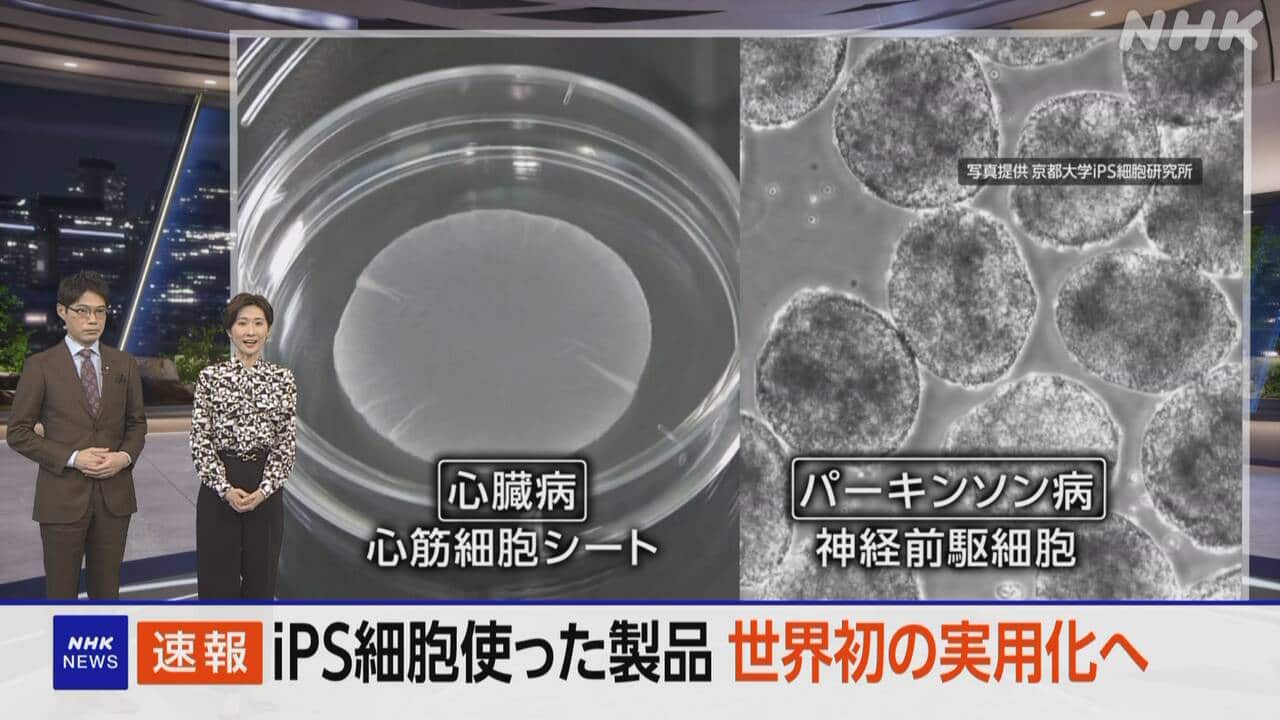
Japan has taken a major step toward the world’s first practical use of iPS cell–based treatments. An expert panel at the 厚生労働省 (kōsei rōdōshō, Ministry of Health, Labour and Welfare) has approved two regenerative medicine products—one for 心臓病 (shinzōbyō, heart disease) and one for パーキンソン病 (pākinson-byō, Parkinson’s disease)—on the condition that their effectiveness is further verified within seven years.
Conditional Approval for iPS Cell Treatments
The treatments use iPS細胞 (iPS saibō), or induced pluripotent stem cells. These special cells can be created from adult cells and then developed into different types of body tissue. Because of this flexibility, they are central to the field of 再生医療 (saisei iryō, regenerative medicine).
According to the 専門家部会 (senmonka bukai, expert panel) of the Ministry of Health, the two products may proceed to 製造販売 (seizō hanbai, manufacture and sale). However, this approval comes 〜ことを条件に (…koto o jōken ni)—on the condition that their 有効性 (yūkōsei, effectiveness) will be further examined within seven years.
In other words, the treatments can move forward, but continued research and verification are required.
Why This Matters
The diseases targeted are serious and often difficult to treat.
- 心臓病 (shinzōbyō) refers to heart disease, a broad term that includes conditions affecting the heart’s function.
- パーキンソン病 (pākinson-byō) is a neurological disorder that affects movement and progressively worsens over time.
Regenerative medicine offers hope because it aims not just to manage symptoms, but to repair or replace damaged cells. If these iPS-based treatments prove effective, they could mark a historic shift in medical care.
Cultural Context: Japan and iPS Cells
Japan has been at the forefront of iPS cell research for years. Government oversight plays a crucial role in approving advanced medical treatments. The involvement of the 厚生労働省 (kōsei rōdōshō) and its 専門家部会 (senmonka bukai) shows how carefully new therapies are reviewed before reaching patients.
The phrase used in the article—7年以内にさらに有効性を検証することを条件に (shichi-nen inai ni sara ni yūkōsei o kenshō suru koto o jōken ni) “on the condition that effectiveness is further verified within seven years”—reflects a cautious but forward-looking approach. Japan is willing to innovate, but with structured oversight.
Understanding these expressions helps you see how Japanese news often balances progress with responsibility.
Learn Japanese from This Article
Key Vocabulary
| Japanese | Romaji | Meaning |
|---|---|---|
| 心臓病 | shinzōbyō | heart disease |
| パーキンソン病 | pākinson-byō | Parkinson’s disease |
| 再生医療 | saisei iryō | regenerative medicine |
| 厚生労働省 | kōsei rōdōshō | Ministry of Health, Labour and Welfare |
| 専門家部会 | senmonka bukai | expert panel |
| 有効性 | yūkōsei | effectiveness, efficacy |
| 製造販売 | seizō hanbai | manufacture and sale |
| 条件 | jōken | condition |
Grammar Spotlight
1️⃣ 〜について — “regarding; about”
Structure: Noun + について
Example from this topic:
iPS細胞の再生医療製品について検討しました。 iPS saibō no saisei iryō seihin ni tsuite kentō shimashita. “They examined the regenerative medicine products using iPS cells.”
心臓病について研究しています。 shinzōbyō ni tsuite kenkyū shite imasu. “I am researching heart disease.”
This pattern is extremely common in news reports when introducing a topic.
2️⃣ 〜ことを条件に — “on the condition that”
Structure: Verb (dictionary form) + ことを条件に
Example from the article:
- 7年以内に有効性を検証することを条件に、製造販売を了承しました。 shichi-nen inai ni yūkōsei o kenshō suru koto o jōken ni, seizō hanbai o ryōshō shimashita. “They approved manufacture and sale on the condition that effectiveness is verified within seven years.”
Another example:
- データを提出することを条件に、許可します。 dēta o teishutsu suru koto o jōken ni, kyoka shimasu. “Permission will be granted on the condition that data is submitted.”
This structure is common in legal, governmental, and formal announcements.
Useful Expression
- 了承しました (ryōshō shimashita) — “approved” / “accepted”
This formal expression appears frequently in official statements and government decisions.
Continue Learning
Working on your reading skills? Our Introduction to Kanji: Pictorial Foundations of Japanese Script lesson is a great next step.
Ready to dive deeper? Our lesson on Reading and Writing in Japanese II: Hiragana and Katakana will help you master these concepts.
To understand more about general vocabulary, explore our Basic Vocabulary Building: Embracing Words Without Latin Ties lesson.
Medical innovation and careful regulation often go hand in hand in Japan. By reading real news like this, you’re not just learning vocabulary—you’re seeing how Japanese communicates responsibility, progress, and precision.
これからもよろしくお願いします。 Kore kara mo yoroshiku onegaishimasu.