
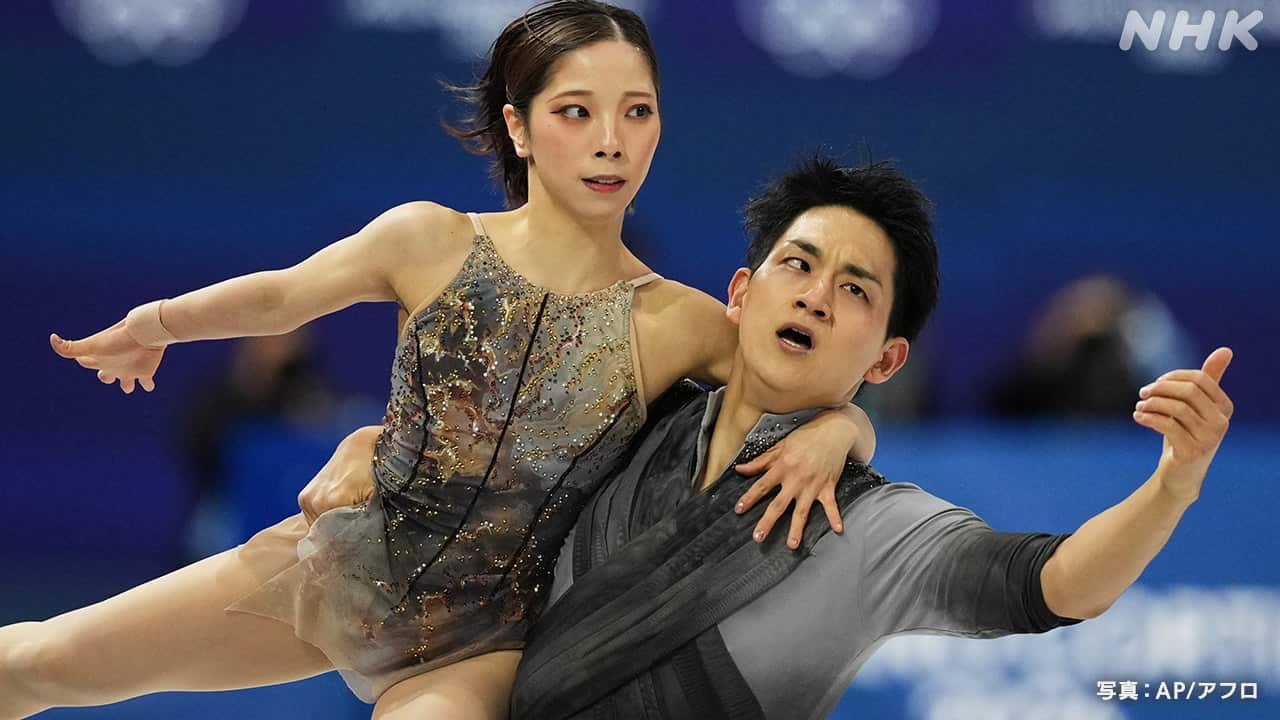
At the Milano–Cortina 2026 Olympics, Japan made history in figure skating. In the ペア (pea, pairs) event, Miura Riku and Kihara Ryuichi—known together as “Rikuryu”—won the gold medal with a dramatic 逆転 (gyakuten), or comeback victory.
Even more remarkable, it was the 初めて (hajimete, first time) that 日本勢 (nihonzei, Japanese athletes) have ever won a medal in this Olympic 種目 (shumoku, event/category).
A Historic Gold for “Rikuryu”
Miura Riku and Kihara Ryuichi are both 選手 (senshu, athletes), competing together in the pairs discipline of figure skating. At the Milano–Cortina Olympics, they achieved a stunning 逆転での金メダル (gyakuten de no kin medaru), a gold medal earned through a comeback.
The phrase 逆転での金メダル uses the pattern Nでの + N, meaning “a gold medal by means of a comeback” or “a gold medal in a comeback victory.” This kind of phrasing is common in formal Japanese news writing.
Their gold medal was not only a personal triumph—it was historic. According to the report, オリンピックのこの種目で日本勢がメダルを獲得したのは初めて (Orinpikku no kono shumoku de nihonzei ga medaru o kakutoku shita no wa hajimete) “It was the first time that Japanese athletes won a medal in this Olympic event.”
The key verb here is 獲得 (kakutoku), which means “to obtain” or “to win,” especially something significant like a medal, title, or right.
Why This Matters in Japan
Figure skating is extremely popular in Japan, with strong traditions in singles competition. However, pairs skating has historically been less developed compared to powerhouse countries.
That’s why this result stands out so strongly. The fact that 日本勢 (nihonzei) won a medal—let alone gold—in the Olympic pairs 種目 (shumoku) for the first time marks a major milestone for Japanese figure skating.
For Japanese fans, this wasn’t just another medal. It was a breakthrough moment.
Learn Japanese from This Article
Let’s break down the key vocabulary and grammar so you can use this news to level up your Japanese.
Key Vocabulary
| Japanese | Romaji | Meaning |
|---|---|---|
| 逆転 | gyakuten | comeback; reversal |
| 獲得 | kakutoku | to obtain; to win (a prize, medal, rights) |
| 種目 | shumoku | event; category (in sports) |
| 日本勢 | nihonzei | Japanese team/athletes |
| 初めて | hajimete | for the first time |
| ペア | pea | pair (skating category) |
| 選手 | senshu | athlete; player |
Try reading this sentence again:
日本勢がメダルを獲得したのは初めてです。 Nihonzei ga medaru o kakutoku shita no wa hajimete desu. “It is the first time that Japanese athletes have won a medal.”
Notice how compact and powerful Japanese news sentences can be.
Grammar Spotlight 1: Vたのは〜(だ)
Pattern: Verb (past plain) + のは + (emphasis) + だ/です
This pattern emphasizes a particular fact. It’s similar to saying, “It is/was ~ that…”
From the article:
日本勢がメダルを獲得したのは初めてです。 “It is the first time that Japanese athletes have won a medal.”
More examples:
彼が優勝したのは去年です。 Kare ga yūshō shita no wa kyonen desu. “It was last year that he won.”
私が日本に来たのは2020年です。 Watashi ga Nihon ni kita no wa 2020-nen desu. “It was in 2020 that I came to Japan.”
This structure is very common in news reports when highlighting historic moments.
Grammar Spotlight 2: Nでの + N
Pattern: Nでの + N “in/at; by means of ~” (used to modify a noun, often in formal writing)
From the article:
逆転での金メダル A gold medal by means of a comeback
More examples:
決勝での勝利 Kesshō de no shōri “A victory in the final”
大会での経験 Taikai de no keiken “Experience at a tournament”
You’ll often see this structure in headlines and formal reports.
Useful Expressions
金メダルを獲得する Kin medaru o kakutoku suru “To win a gold medal”
初めての〜 Hajimete no ~ “The first ~”
〜選手 ~ senshu Used after a name to mean “athlete” (e.g., 三浦璃来選手, Miura Riku senshu).
Continue Learning
Curious about the Japanese writing you saw in this article?
- Reading and Writing in Japanese II: Hiragana and Katakana: Curious about the Japanese used here? Our Reading and Writing in Japanese II: Hiragana and Katakana lesson covers this in depth.
- Introduction to Kanji: Pictorial Foundations of Japanese Script: Working on your reading skills? Our Introduction to Kanji: Pictorial Foundations of Japanese Script lesson is a great next step.
- Basic Vocabulary Building: Embracing Words Without Latin Ties: To understand more about general, explore our Basic Vocabulary Building: Embracing Words Without Latin Ties lesson.
Historic moments like this are powerful not just for sports fans—but for language learners too. When you read real Japanese news, you’re seeing how the language is actually used in Japan.
これからもよろしくお願いします。 Kore kara mo yoroshiku onegaishimasu.