
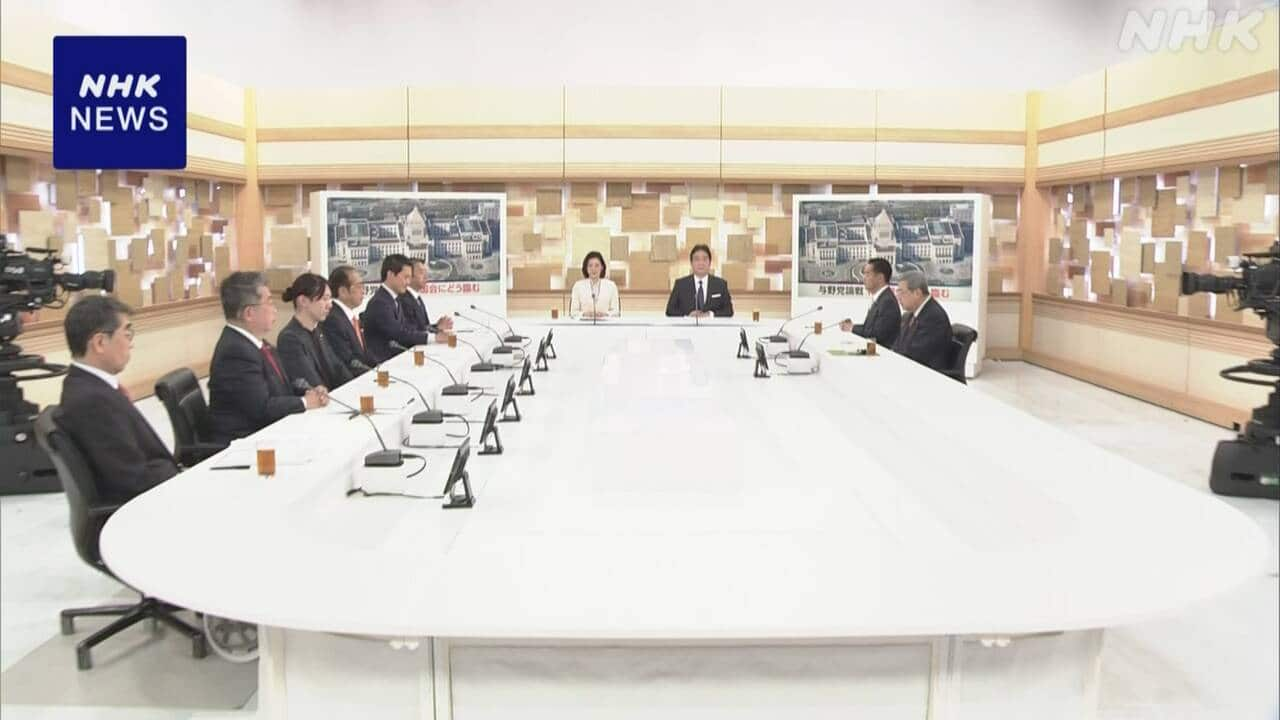
Japan’s special parliamentary session will be convened on the 18th, and ahead of it, senior leaders from both ruling and opposition parties appeared on NHK’s Sunday debate program to exchange views on how the Diet should operate.
The program, 「日曜討論」 (Nichiyō Tōron, “Sunday Debate”), featured 与野党 (yotō) 幹部 (kanbu)—executives from both the ruling and opposition parties. The discussion came 衆議院選挙を受けて (shūgiin senkyo o ukete), in response to the recent House of Representatives election, and focused on preparations for the upcoming 特別国会 (tokubetsu kokkai), a special session of the Diet.
A Special Diet Session on February 18
The 特別国会 (tokubetsu kokkai) will be 召集 (shōshū, convened) on the 18th of this week. In Japan, a special Diet session is typically called after a general election for the House of Representatives. It is an important constitutional step that sets the stage for the new parliamentary term.
Ahead of this session—召集されるのを前に (shōshū sareru no o mae ni, before it is convened)—party leaders discussed how the Diet should respond under the new political balance.
Two-Thirds Majority in the House of Representatives
A key point in the debate was the current distribution of 議席 (giseki, parliamentary seats). The Liberal Democratic Party (LDP) now holds more than two-thirds of the seats in the House of Representatives.
With a single party exceeding this threshold, questions naturally arise about how legislation will be handled and how the ruling and opposition parties will interact. On the program, leaders from both sides 意見を交わしました (iken o kawashimashita), meaning they “exchanged opinions,” about how to proceed in the Diet under these circumstances.
The discussion centered on how the Diet should function with this balance of power, highlighting the dynamics between the ruling party and the opposition.
Cultural Context: How Japan’s Diet Works
Japan’s national legislature is called the 国会 (kokkai, the National Diet). It has two houses:
- 衆議院 (shūgiin) – House of Representatives
- 参議院 (sangiin) – House of Councillors
After a 衆議院選挙 (shūgiin senkyo, House of Representatives election), a 特別国会 (tokubetsu kokkai) is convened. This session is constitutionally required and marks the formal start of the new parliamentary term.
The phrase 与野党 (yotō) is especially common in political reporting. It combines:
- 与党 (yotō) – ruling party
- 野党 (yatō) – opposition party
You’ll see this compound often in news headlines, where space is limited but meaning must be precise.
Learn Japanese from This Article
Let’s break down the key vocabulary and grammar you can start using right away.
Key Vocabulary
| Japanese | Romaji | Meaning |
|---|---|---|
| 衆議院選挙 | shūgiin senkyo | House of Representatives election |
| 特別国会 | tokubetsu kokkai | special Diet session |
| 召集 | shōshū | convocation; calling together |
| 与野党 | yotō | ruling and opposition parties |
| 幹部 | kanbu | executive; senior official |
| 議席 | giseki | parliamentary seat |
| 意見を交わす | iken o kawasu | to exchange opinions |
Notice how many of these words are built from kanji that clearly reflect their meanings. For example:
- 議 relates to discussion or deliberation.
- 席 means seat.
Understanding these components will help you decode political vocabulary more efficiently.
Grammar Spotlight
1. 〜を受けて (~o ukete)
Meaning: in response to; following
Structure: Noun + を受けて
From the article:
- 衆議院選挙を受けて shūgiin senkyo o ukete “In response to the House of Representatives election”
More examples:
地震を受けて、会議が延期されました。 Jishin o ukete, kaigi ga enki saremashita. “In response to the earthquake, the meeting was postponed.”
結果を受けて、新しい方針が発表されました。 Kekka o ukete, atarashii hōshin ga happyō saremashita. “Following the results, a new policy was announced.”
This pattern is extremely common in news Japanese.
2. 〜のを前に (~no o mae ni)
Meaning: before (an event); in anticipation of
Structure: Verb (dictionary or passive form) + のを前に
From the article:
- 召集されるのを前に shōshū sareru no o mae ni “Before it is convened”
More examples:
試験を受けるのを前に、よく勉強しました。 Shiken o ukeru no o mae ni, yoku benkyō shimashita. “I studied hard before taking the exam.”
出発するのを前に、家族と話しました。 Shuppatsu suru no o mae ni, kazoku to hanashimashita. “I spoke with my family before departing.”
You’ll often hear this in formal contexts like news, ceremonies, or official events.
Useful Expression
- 意見を交わす (iken o kawasu) – to exchange opinions
Example:
- 与野党の幹部が意見を交わしました。 Yotō no kanbu ga iken o kawashimashita. “Senior officials from the ruling and opposition parties exchanged opinions.”
This expression is more formal than simply saying 話す (hanasu, to talk), and it’s common in political or business contexts.
Continue Learning
📚 Ready to dive deeper? Our lesson on Reading and Writing in Japanese II: Hiragana and Katakana will help you master these concepts.
📚 Working on your reading skills? Our Introduction to Kanji: Pictorial Foundations of Japanese Script lesson is a great next step.
Introduction to Kanji: Pictorial Foundations of Japanese Script
📚 Want to learn more about general? Check out our lesson on Basic Vocabulary Building: Embracing Words Without Latin Ties.
Basic Vocabulary Building: Embracing Words Without Latin Ties
これからもよろしくお願いします。 Kore kara mo yoroshiku onegaishimasu.