
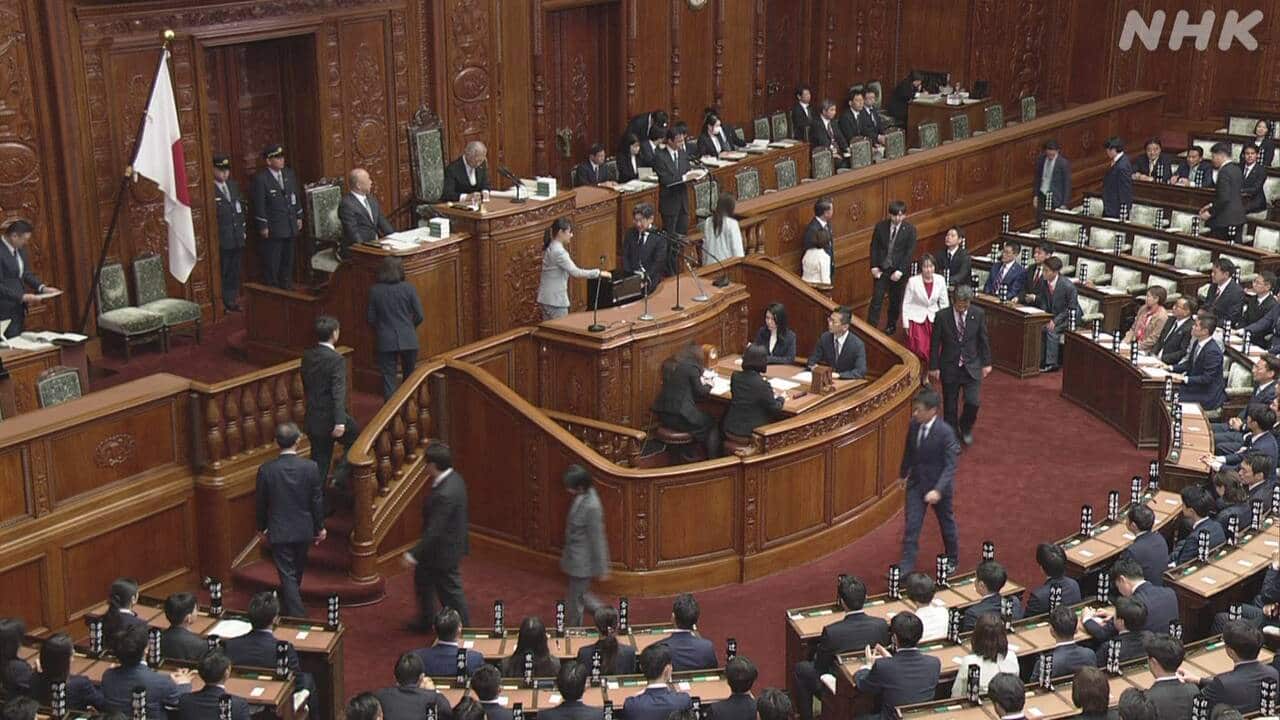
On February 18, 2026, Japan’s National Diet convened a plenary session in the House of Representatives, where Prime Minister Takaiichi is set to be nominated as the 105th Prime Minister of Japan.
The session is being reported with live updates as political developments unfold.
Prime Minister Nomination in the National Diet
Japan’s parliament is called the 国会 (kokkai), known in English as the National Diet. According to NHK, a plenary session of the 衆議院 (shuugiin), the House of Representatives, is currently being held.
In this 本会議 (honkaigi), lawmakers are conducting the 総理大臣指名選挙 (souri daijin shimei senkyo), the formal election in which the Prime Minister is nominated by the Diet.
The report states that Prime Minister Takaiichi is expected to be 指名される (shimei sareru), “nominated,” as the 105th Prime Minister. The article uses the formal news expression 〜運びです (〜hakobi desu), which signals that arrangements are proceeding toward that outcome.
NHK notes that updates are being provided as needed, described in Japanese as 随時更新 (zuiji koushin), meaning “updated continuously” or “live updates.”
New Speaker of the House
In addition to the Prime Minister nomination, the article reports:
衆議院議長に自民 森英介氏 Shuugiin gichou ni Jimintou Mori Eisuke shi “Liberal Democratic Party member Mori Eisuke appointed as Speaker of the House of Representatives.”
Here, 議長 (gichou) means “chairperson” or “speaker,” the person who presides over proceedings in the chamber.
Cultural Context: How Japan Chooses a Prime Minister
Unlike some countries where citizens directly vote for a prime minister, Japan’s Prime Minister is chosen by members of the National Diet.
The process happens through the 総理大臣指名選挙 (souri daijin shimei senkyo), a formal vote within the parliament. The use of precise and formal language—such as 〜運びです—is typical of Japanese political reporting. It reflects a careful, procedural tone rather than dramatic or emotional language.
You’ll often see expressions like 〜ていて to describe ongoing situations in news reports, creating a sense of events unfolding in real time.
Understanding this style helps you read Japanese news the way native readers do—paying attention not just to what is said, but how it is framed.
Learn Japanese from This Article
Key Vocabulary
| Japanese | Romaji | Meaning |
|---|---|---|
| 国会 | kokkai | National Diet (Japan’s parliament) |
| 衆議院 | shuugiin | House of Representatives |
| 本会議 | honkaigi | plenary session |
| 総理大臣指名選挙 | souri daijin shimei senkyo | Prime Minister nomination election |
| 指名される | shimei sareru | to be nominated/designated |
| 随時更新 | zuiji koushin | updated as needed / live updates |
| 議長 | gichou | chairperson / speaker (of the house) |
Try reading this sentence again with your new vocabulary knowledge:
国会では衆議院本会議が開かれていて、総理大臣指名選挙で、高市総理大臣が第105代の総理大臣に指名される運びです。 Kokkai de wa shuugiin honkaigi ga hirakarete ite, souri daijin shimei senkyo de, Takaiichi souri daijin ga dai 105-dai no souri daijin ni shimei sareru hakobi desu. “In the National Diet, a plenary session of the House of Representatives is being held, and in the Prime Minister nomination election, Prime Minister Takaiichi is set to be nominated as the 105th Prime Minister.”
Grammar Spotlight
1. 〜ていて (ongoing situation/background)
Structure: Verb (て-form) + いて
Example from the article: 本会議が開かれていて honkaigi ga hirakarete ite “A plenary session is being held (and…)”
This form describes an ongoing state or background condition. It’s very common in news writing to set the scene before giving the main action.
Another example:
- 国会が続いていて、重要な法案が議論されています。 Kokkai ga tsuzuite ite, juuyou na houan ga giron sarete imasu. “The Diet is continuing, and important bills are being debated.”
2. 〜運びです (formal: it is arranged/expected that…)
Structure: Verb (dictionary or passive form) + 運びです
Example:
- 指名される運びです。 Shimei sareru hakobi desu. “It is expected to be nominated.” / “Arrangements are in place for nomination.”
This expression is common in formal announcements and news. It sounds more official and procedural than simply saying 〜ことになりました.
Useful Expression
- 随時更新しています。 Zuiji koushin shite imasu. “We are providing updates as needed.”
You’ll see this phrase on news websites during elections, natural disasters, or major political events.
Continue Learning
- Reading and Writing in Japanese II: Hiragana and Katakana: Want to learn more about general? Check out our lesson on Reading and Writing in Japanese II: Hiragana and Katakana.
- Introduction to Kanji: Pictorial Foundations of Japanese Script: Working on your reading skills? Our Introduction to Kanji: Pictorial Foundations of Japanese Script lesson is a great next step.
- Basic Vocabulary Building: Embracing Words Without Latin Ties: Curious about the Japanese used here? Our Basic Vocabulary Building: Embracing Words Without Latin Ties lesson covers this in depth.
By reading real political news like this, you’re not just learning words—you’re learning how Japanese institutions are described in authentic language used every day in Japan.
これからもよろしくお願いします。 Kore kara mo yoroshiku onegaishimasu.