
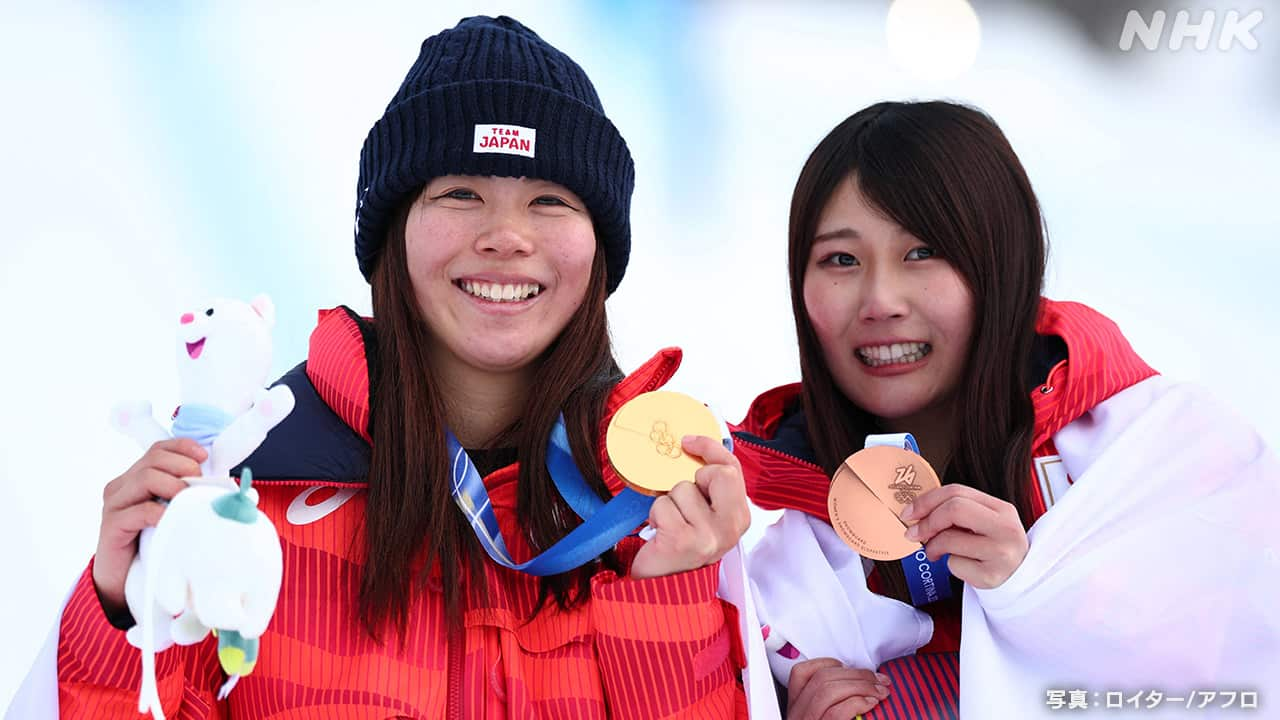
Nineteen-year-old 深田茉莉選手 (Fukada Mari senshu) captured the 金メダル (kin medaru, gold medal) at the Milano-Cortina 2026 Olympics, becoming the 最年少 (sainenshou, youngest) Japanese woman ever to win gold at a Winter Games.
In the women’s snowboard slopestyle event, Japan celebrated a double podium finish: 深田茉莉選手 (Fukada Mari senshu) won gold, while 村瀬心椛選手 (Murase Kokomo senshu) earned the 銅メダル (dou medaru, bronze medal).
Gold and Bronze in Women’s Slopestyle
The competition took place at the Milano-Cortina Olympics, part of the 冬季 (touki, winter season) Olympic Games. In the 女子 (joshi, women’s) snowboard slopestyle event, both Japanese 選手 (senshu, athletes*) delivered medal-winning performances.
According to the report, Fukada achieved the 金メダル獲得 (kin medaru kakutoku, winning of the gold medal), while Murase secured the bronze. The word 獲得 (kakutoku) means “acquisition” or “winning,” and is often used in sports news when talking about titles, medals, or awards.
For 19-year-old Fukada, this victory was historic: she became the youngest Japanese woman ever to win a gold medal at a Winter Olympic Games.
Why “Youngest” Matters in Japan
In Japanese sports reporting, the word 最年少 (sainenshou, youngest) carries strong emotional weight. Achieving something at the youngest age highlights both talent and future potential. When you see phrases like:
- 冬のオリンピックで日本女子最年少での金メダル獲得 (fuyu no orinpikku de Nihon joshi sainenshou de no kin medaru kakutoku) “Winning a gold medal at the Winter Olympics as the youngest Japanese woman”
…it emphasizes not only the medal itself but also the historical significance.
Winter sports have become an area of growing strength for Japan, and record-breaking performances by young athletes often inspire nationwide attention.
Learn Japanese from This Article
Let’s break down key vocabulary and grammar you can use in your own Japanese.
Key Vocabulary
| Japanese | Romaji | Meaning |
|---|---|---|
| 獲得 | kakutoku | acquisition; winning (a prize/medal) |
| 金メダル | kin medaru | gold medal |
| 銅メダル | dou medaru | bronze medal |
| 最年少 | sainenshou | the youngest |
| 女子 | joshi | women; female (category) |
| 選手 | senshu | athlete; player |
| 冬季 | touki | winter season |
Notice how many of these words are commonly used in news headlines. Japanese headlines tend to be compact and noun-heavy, often leaving out particles.
Grammar Spotlight: Nで (Location/Event で)
The particle で (de) marks the place or event where something happens.
Pattern: N + で + action
Example from this topic:
- オリンピックで金メダルを獲得しました。 Orinpikku de kin medaru o kakutoku shimashita. “(She) won a gold medal at the Olympics.”
Here, オリンピックで means “at the Olympics.”
Grammar Spotlight: Nでの + N
When you want to modify a noun with a location or event, you use:
Nでの + N
This means “in/at N” describing a following noun.
Example:
- 冬のオリンピックでの金メダル獲得 Fuyu no orinpikku de no kin medaru kakutoku “Winning a gold medal at the Winter Olympics”
The phrase での turns the event into a modifier for the noun 金メダル獲得.
You’ll see this structure frequently in formal writing and news articles.
Useful Expressions from Sports News
金メダルを獲得する kin medaru o kakutoku suru to win a gold medal
銅メダルを獲得する dou medaru o kakutoku suru to win a bronze medal
最年少で〜する sainenshou de ~ suru to do something as the youngest
Example:
- 19歳で最年少で金メダルを獲得しました。 Juukyuu-sai de sainenshou de kin medaru o kakutoku shimashita. “At 19, she won a gold medal as the youngest (ever).”
Continue Learning
Curious about the Japanese used in sports headlines and news articles? Build a stronger foundation with these lessons:
- Reading and Writing in Japanese II: Hiragana and Katakana: Want to learn more about general? Check out our lesson on Reading and Writing in Japanese II: Hiragana and Katakana.
- Introduction to Kanji: Pictorial Foundations of Japanese Script: Working on your reading skills? Our Introduction to Kanji: Pictorial Foundations of Japanese Script lesson is a great next step.
- Basic Vocabulary Building: Embracing Words Without Latin Ties: Curious about the Japanese used here? Our Basic Vocabulary Building: Embracing Words Without Latin Ties lesson covers this in depth.
Moments like this show how powerful a single word—like 最年少 or 獲得—can be in telling a story. By reading real Japanese news, you’re not just learning vocabulary; you’re learning how history is written in Japanese.
これからもよろしくお願いします。 Kore kara mo yoroshiku onegaishimasu.