
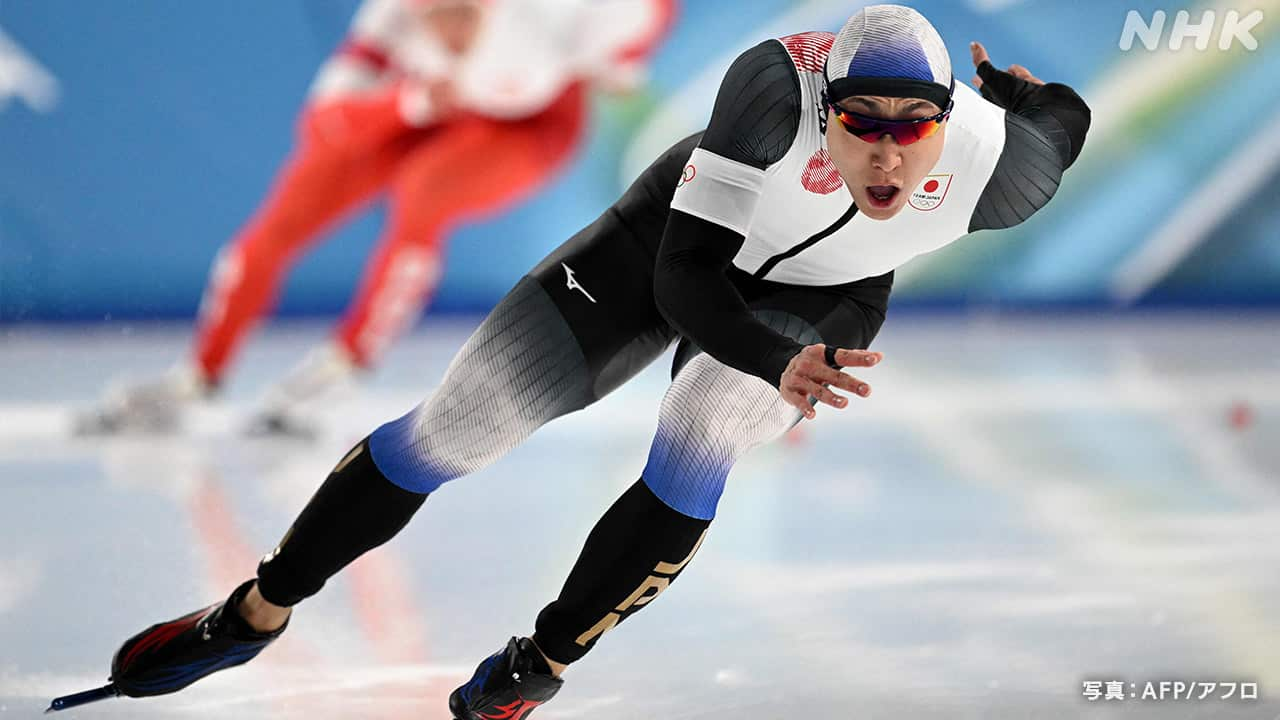
At the Milano–Cortina Olympics, Japan’s Shinhamada Tatsuya finished sixth in the men’s 500-meter speed skating event, earning a place among the top competitors in the world. Meanwhile, American skater Jordan Stolz claimed the 金メダル (kin medaru, gold medal), achieving a remarkable double victory.
Shinhamada Finishes 6th in Men’s 500m
In the men’s 500 meters で (de, at/in the event), Shinhamada Tatsuya secured 6位入賞 (roku-i nyuushou), meaning he placed within the top ranks of the competition. The word 入賞 (nyuushou) is often used in Japan to describe finishing high enough in a contest to be officially recognized — not just participating, but truly standing out.
To 果たす (hatasu) means “to accomplish” or “to achieve.” In this context, Shinhamada 入賞を果たしました (nyuushou o hatashimashita), “accomplished a placing,” highlighting the achievement itself.
Other Japanese skaters also competed in the event:
- Morishige Wataru finished 10th.
- Kuratsubo Katsunori finished 19th.
A Double Crown for Jordan Stolz
The gold medal went to American skater Jordan Stolz. This victory in the 500 meters came 男子1000メートルに続く (danshi sen-meetoru ni tsuzuku, following the men’s 1000 meters), where he had already won.
Because of this, he achieved 2冠達成 (nikan tassei), meaning he secured two titles at the same Olympics — often translated as a “double crown.”
- 2冠 (nikan) literally means “two crowns” or “two titles.”
- 達成 (tassei) means “achievement” or “accomplishment.”
In Japanese sports reporting, expressions like 〜に続く〜 (ni tsuzuku) are common to show momentum — one victory continuing into another.
Cultural Context: What Does 入賞 Mean in Japan?
In English-language sports coverage, we often focus only on medalists. In Japan, however, the concept of 入賞 (nyuushou) carries special weight. Even finishing sixth, as Shinhamada did, is recognized as a meaningful accomplishment at the Olympic level.
This reflects a broader cultural appreciation for effort and achievement, not just first place. The phrasing 入賞を果たす emphasizes completing a goal through dedication and hard work.
Learn Japanese from This Article
Key Vocabulary
| Japanese | Romaji | Meaning |
|---|---|---|
| 入賞 | nyuushou | to place (in a competition), to win a prize |
| 果たす | hatasu | to accomplish, to achieve |
| 金メダル | kin medaru | gold medal |
| 続く | tsuzuku | to follow, to come after |
| 2冠 | nikan | two titles, double crown |
| 達成 | tassei | achievement, accomplishment |
| 入賞を果たす | nyuushou o hatasu | to achieve a placing |
Grammar Spotlight
1. 〜で(場所・状況)
This particle shows where or in what context something happens.
スピードスケートの男子500メートルで、新濱立也選手が6位入賞を果たしました。 Supīdo sukēto no danshi gohyaku mētoru de, Shinhamada Tatsuya senshu ga roku-i nyuushou o hatashimashita. “In the men’s 500-meter speed skating event, Shinhamada Tatsuya placed sixth.”
Here, で marks the event as the setting where the action occurred.
2. 〜に続く〜(following ~)
This pattern connects one event to another, showing continuation.
男子1000メートルに続く2冠達成です。 Danshi sen-meetoru ni tsuzuku nikan tassei desu. “It is a double crown following the men’s 1000 meters.”
Structure:
- A に続く B B follows A / B comes after A
Example:
- 優勝に続く入賞です。 Yuushou ni tsuzuku nyuushou desu. “It’s a placing following a victory.”
Useful Sports Expression
〜位入賞 (~i nyuushou) Used to describe finishing in a certain place.
- 6位入賞 (roku-i nyuushou) — placing 6th
- 10位入賞 (juu-i nyuushou) — placing 10th
You’ll see this pattern often in Japanese news reports about competitions.
Continue Learning
- Reading and Writing in Japanese II: Hiragana and Katakana: Want to learn more about general? Check out our lesson on Reading and Writing in Japanese II: Hiragana and Katakana.
- Introduction to Kanji: Pictorial Foundations of Japanese Script: Working on your reading skills? Our Introduction to Kanji: Pictorial Foundations of Japanese Script lesson is a great next step.
- Basic Vocabulary Building: Embracing Words Without Latin Ties: Want to learn more about general? Check out our lesson on Basic Vocabulary Building: Embracing Words Without Latin Ties.
By reading real Olympic coverage like this, you’re not just learning words — you’re seeing how Japanese sports journalism highlights achievement, effort, and momentum. That’s the kind of authentic exposure that helps you think in Japanese, not just translate.
これからもよろしくお願いします。 Kore kara mo yoroshiku onegaishimasu.