
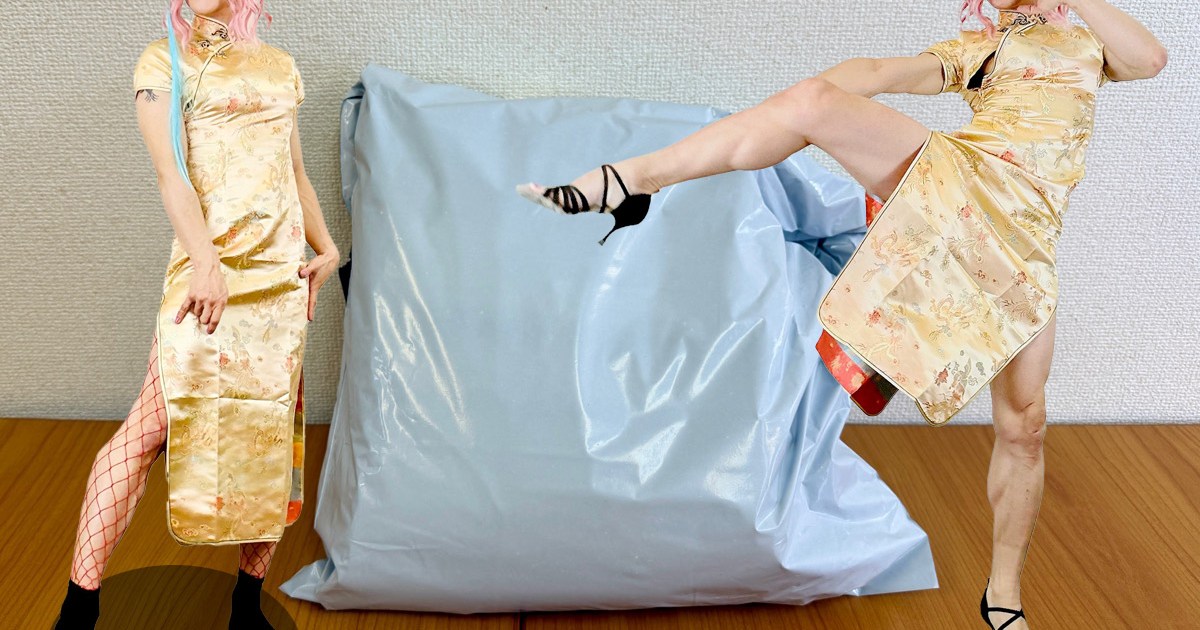
Channeling Chun-Li: A Kickboxer’s Cosplay Journey in Japan
If you’ve ever been captivated by classic video games, there’s a good chance 春麗 (Chun-Li), the iconic fighter from Street Fighter, has left a mark on your memory. Her strength, style, and lightning-fast kicks are legendary. But for one amateur kickboxer in Japan, Chun-Li isn’t just a character—she’s a source of real-life inspiration. In a fun and fascinating story from Rocket News, this fighter shares their journey of slipping into a “China Cosplay Lucky Bag” to embody their idol, discovering a surprising connection to Chun-Li’s signature kicking prowess along the way. Let’s dive into this quirky tale and see what it teaches us about Japanese culture and language!
A Kickboxer’s Deep Admiration for Chun-Li
This isn’t your average fan story. The kickboxer behind this tale is 現役 (gen’eki), meaning “active” or “currently competing,” with an impressive record of 4 wins, 3 losses, and 1 draw over 8 matches. Last year alone, they achieved 好成績 (kouseiseki), or “excellent performance,” going undefeated with 3 wins and 1 draw. What’s their secret weapon? A powerful kick inspired by Chun-Li’s famous 百裂脚 (Hyakuretsukyaku), translated as “Hundred Rending Legs,” a rapid-fire technique that defines her in the gaming world. They call it their 得意技 (tokuiwaza), their “specialty move.” Their admiration, or 憧れる (akogareru), for Chun-Li runs so deep that even their name, Rei, shares the kanji 麗 (rei), meaning “beautiful” or “graceful.” Talk about a personal connection!
The “China Cosplay Lucky Bag” Adventure
What happens when fandom meets a bargain? Enter the チャイナコス福袋 (Chaina Kosu Fukubukuro), a “China Cosplay Lucky Bag” found on Rakuten Market for just 3,000 yen. If you’re new to the term, a 福袋 (fukubukuro) is a beloved New Year’s tradition in Japan—a mystery bag filled with discounted items. This particular bag promised a China dress reminiscent of Chun-Li’s iconic outfit, plus six mystery extras. The kickboxer couldn’t resist the chance to transform into their hero, thinking, 運が良ければ (un ga yokereba), “if lucky,” they might truly channel Chun-Li’s spirit. The real revelation, though, wasn’t just the costume—it was realizing why Chun-Li’s kicks feel so natural in that outfit. They tease a “convincing reason” with infectious enthusiasm, leaving us to imagine the magic of that moment.
Cultural Context: Tradition Meets Pop Culture
To truly appreciate this story, let’s unpack a couple of uniquely Japanese elements. First, the 福袋 (fukubukuro) isn’t just a sale—it’s a cultural ritual tied to the New Year, symbolizing renewal and good fortune. On January 1st, shoppers line up early to grab these mystery bags, hoping for a lucky haul of anything from clothes to gadgets. A cosplay-themed fukubukuro shows how modern pop culture seamlessly blends with tradition in Japan. Second, the obsession with 春麗 (Chun-Li) reflects a deeper appreciation for video game characters as cultural icons. Street Fighter, often called ストⅡ (Suto Tsū, short for Street Fighter II), isn’t just a game; it’s a shared memory for many who grew up in the ‘90s. Characters like Chun-Li inspire real-world passions, from gaming to martial arts. This story captures that intersection of play and dedication, a value deeply rooted in Japanese culture where mastering a craft—whether in a dojo or an arcade—is celebrated.
Learn Japanese from This Article
Ready to pick up some authentic Japanese from this story? Here at “Japanese from Japan,” we’re all about learning the way native speakers do, with real-world context. Let’s break down some key vocabulary and grammar points inspired by this kickboxer’s journey.
Key Vocabulary
| Japanese | Romaji | Meaning |
|---|---|---|
| 憧れる | akogareru | to admire, to long for |
| 得意技 | tokuiwaza | specialty move, signature technique |
| 福袋 | fukubukuro | lucky bag, mystery bag |
| 現役 | gen’eki | active, currently serving |
| 好成績 | kouseiseki | good results, excellent performance |
| 運が良ければ | un ga yokereba | if lucky, with luck |
These words aren’t just useful for this story—they’re part of everyday Japanese. For example, you might 憧れる (akogareru) to a role model, or describe your own 得意技 (tokuiwaza) in a hobby or sport. Try using them in your next conversation!
Grammar Spotlight: 〜はずがない and 〜でしょ
Let’s look at two grammar patterns that pop up in casual, expressive Japanese like the kind you’d hear in a story like this.
〜はずがない: “There is no way that ~” or “Cannot possibly ~” This structure expresses strong disbelief or impossibility. It’s built by attaching はずがない to the dictionary form of a verb or adjective.
- こんな安い福袋が良いもののはずがない。 (Konna yasui fukubukuro ga ii mono no hazu ga nai.) “There’s no way such a cheap lucky bag could have good stuff.”
- 春麗に勝てるはずがない! (Chun-Li ni kateru hazu ga nai!) “There’s no way I could beat Chun-Li!” Use this when you want to emphasize something feels completely unlikely, often with a dramatic or playful tone.
〜でしょ: “Isn’t it?” or “Right?” A casual tag question often used to seek agreement or confirm something. It’s a shortened form of でしょう.
- このコスチューム、春麗みたいでしょ? (Kono kosuchūmu, Chun-Li mitai desho?) “This costume looks like Chun-Li, doesn’t it?”
- 福袋って楽しいでしょ? (Fukubukuro tte tanoshii desho?) “Lucky bags are fun, right?” Throw this into conversations to sound more natural and engaging with native speakers.
Useful Expression
Here’s a bonus phrase from the vocab list that you’ll hear often: 運が良ければ (un ga yokereba), meaning “if lucky” or “with luck.” It’s a handy way to express hope or possibility, like wishing for a good deal in a 福袋 (fukubukuro) or success in a match. Try saying, 運が良ければ、いいものが見つかるよ。 (Un ga yokereba, ii mono ga mitsukaru yo.) – “If lucky, you’ll find something good!”
Continue Learning
Want to dive deeper into the building blocks of Japanese used in this story? Check out these lessons from “Japanese from Japan” to keep your learning journey going:
- Verb Basics: Harnessing the Dictionary Form: Want to understand the verb forms used here? Check out Verb Basics: Harnessing the Dictionary Form.
- Wa vs. Ga: Emphasizing Importance in Sentences: Want to learn more about は? Check out our lesson on Wa vs. Ga: Emphasizing Importance in Sentences.
- Introduction to Kanji: Pictorial Foundations of Japanese Script: Working on your reading skills? Our Introduction to Kanji: Pictorial Foundations of Japanese Script lesson is a great next step.
これからもよろしくお願いします。 Kore kara mo yoroshiku onegaishimasu.