
Winter Road Tragedy: Learning Japanese Through Real News
If you’ve ever wondered how weather shapes life in Japan, this heartbreaking news story from Gunma Prefecture offers a powerful glimpse into the challenges of winter—and a chance to learn authentic Japanese as it’s used in real contexts. On December 26th, a devastating multi-vehicle accident on the Kanetsu Expressway in Minakami Town unfolded due to icy roads, reminding us of the hidden dangers lurking beneath the snow. As we dive into this story, you’ll discover not only the details of the tragedy but also the language and cultural insights that bring it to life. Let’s explore together.
A Tragic Accident on Icy Roads
Picture this: it’s a freezing night on the Kanetsu Expressway, snow piling up, and temperatures dropping fast. Near the Mizukami Interchange exit in Gunma Prefecture, a medium-sized truck loses control due to a スリップ (surippu, slip or skid) on icy roads. Before it can recover, a larger truck crashes into it with a 追突 (tsuitotsu, rear-end collision), triggering a catastrophic chain of collisions. Eyewitnesses described the road as a ブラックアイスバーン (burakku aisu bān, black ice)—a thin, nearly invisible layer of ice that looks like wet pavement but is deadly for drivers. This phenomenon, combined with 路面凍結 (romen tōketsu, road surface freezing) and heavy 積雪 (sekisetsu, snow accumulation), created a perfect storm for disaster.
The aftermath of this tragedy serves as a grim reminder of winter’s grip on Japan. As the nation braces for more severe cold through December 29th, the Japan Meteorological Agency issued its first 低温注意報 (teion chūihō, low-temperature warning) for areas as far south as Kyushu—a region not typically hit by such extreme weather. With sub-zero temperatures and a brutal 冷え込み (hie komi, cold snap) expected across much of the country, experts warn that icy roads will remain a major risk, especially in shaded areas and near tunnel entrances.
Winter Weather Across Japan
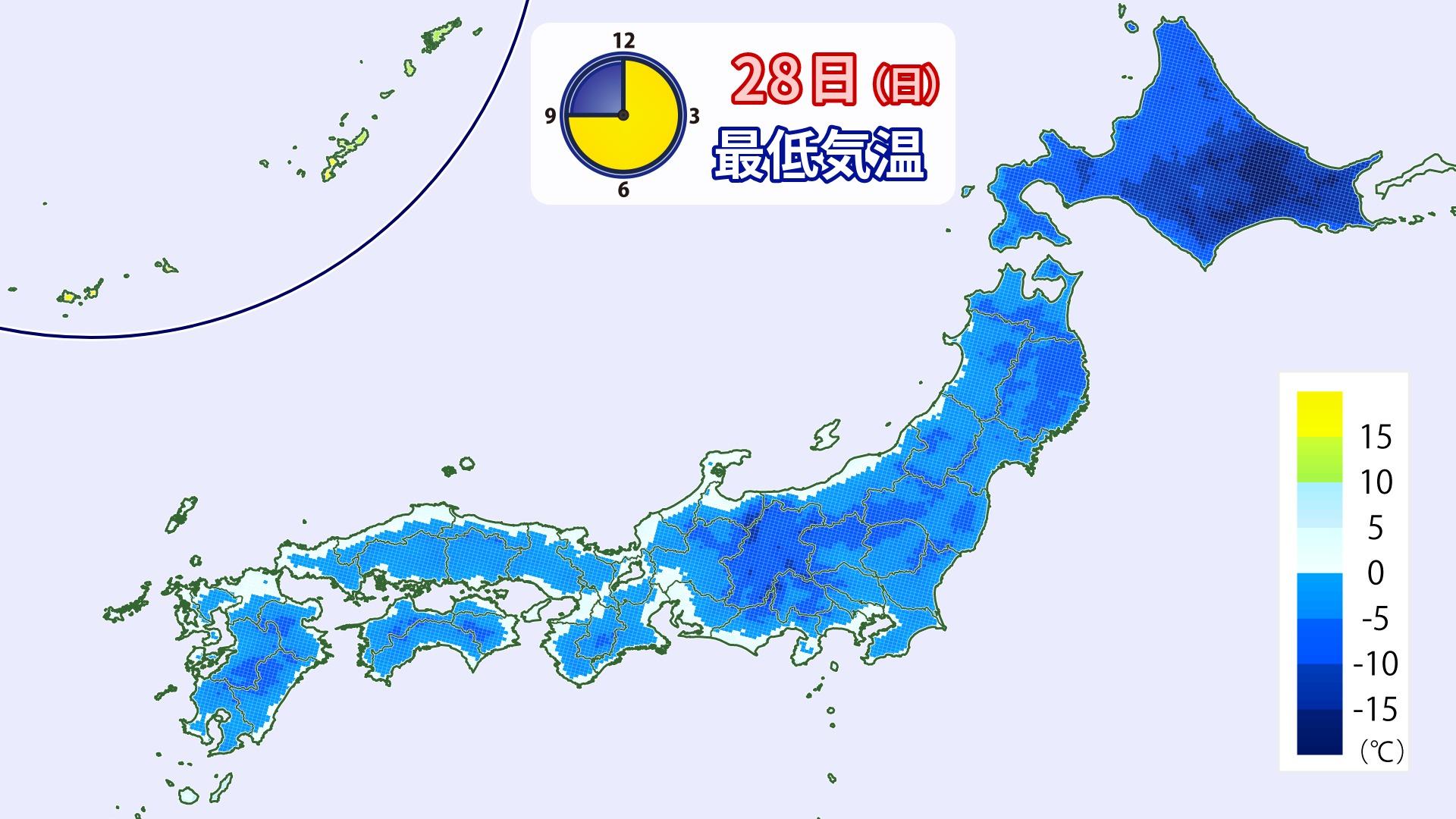
This accident isn’t just an isolated event—it’s part of a larger weather pattern sweeping Japan. On December 28th, while fierce winds are expected to calm down, a phenomenon called 放射冷却 (hōsha reikyaku, radiative cooling) will intensify the cold by allowing heat to escape from the ground. Forecasts suggest that around 600 of Japan’s 900 weather observation points will see sub-zero temperatures that morning, sparing only coastal areas and remote islands. For drivers, the risks are far from over, and local news outlets like MRT Miyazaki Broadcasting are urging everyone to avoid sudden maneuvers on the road—anything associated with the word 急 (kyū, sudden or abrupt).
Cultural Context: Winter’s Deep Impact
Winter in Japan isn’t just about snow and cold—it’s a force that shapes how people live, think, and speak. The term ブラックアイスバーン (burakku aisu bān) isn’t just jargon; it reflects a shared understanding among Japanese drivers of the invisible threats on winter roads. Similarly, a 低温注意報 (teion chūihō) isn’t just a weather alert—it’s a signal for communities to band together, whether by salting roads or checking on elderly neighbors. For many Japanese, winter evokes a sense of resilience and mutual care, something you’ll often hear echoed in local news reporting.
This story also highlights Japan’s regional diversity. While northern areas like Gunma are used to heavy snow, a low-temperature warning in Kyushu feels almost surreal. As a learner, noticing these differences helps you understand how geography influences everyday conversations in Japanese. Weather isn’t just small talk in Japan—it’s a topic that carries real weight and urgency.
Learn Japanese from This Article
Let’s turn this real-world news into a learning opportunity. Below, you’ll find key vocabulary, grammar patterns, and useful expressions straight from the story. These are words and structures Japanese people use every day, especially during winter.
Key Vocabulary
| Japanese | Romaji | Meaning |
|---|---|---|
| スリップ | surippu | slip, skid |
| 路面凍結 | romen tōketsu | road surface freezing |
| 積雪 | sekisetsu | snow accumulation |
| 低温注意報 | teion chūihō | low-temperature warning |
| 追突 | tsuitotsu | rear-end collision |
| ブラックアイスバーン | burakku aisu bān | black ice (thin, nearly invisible ice on roads) |
| 冷え込み | hie komi | cold snap, drop in temperature |
Grammar Spotlight: 〜やすい (Easy to, Prone to)
The pattern 〜やすい (~yasui) is used to describe something that is “easy to do” or “prone to happening.” Attach it to the stem form of a verb (drop the ます from the polite form) to express likelihood or tendency, often in warnings or observations.
- Structure: Verb (stem) + やすい
- Example 1: 滑りやすいです。 (Suberi yasui desu.) - It’s easy to slip. / It’s prone to slipping.
- Example 2: 事故が起こりやすい場所です。 (Jiko ga okori yasui basho desu.) - This is a place where accidents are likely to happen.
- Example 3: ブラックアイスバーンは見えにくいので、滑りやすいです。 (Burakku aisu bān wa mie nikui node, suberi yasui desu.) - Black ice is hard to see, so it’s easy to slip on.
You’ll hear this pattern a lot in safety warnings, like in this news story about icy roads. It’s a natural way to express caution in Japanese.
Grammar Spotlight: 〜見込みです (Expected to, Likely to)
The expression 〜見込みです (~mikomi desu) means “expected to” or “likely to” and is often used in forecasts or predictions, such as weather reports. It follows a noun or verb phrase to indicate a probable outcome.
- Structure: Noun/Verb phrase + 見込みです
- Example 1: 気温が下がる見込みです。 (Kion ga sagaru mikomi desu.) - Temperatures are expected to drop.
- Example 2: 雪が降る見込みです。 (Yuki ga furu mikomi desu.) - Snow is likely to fall.
- Example 3: 道路が凍る見込みです。 (Dōro ga kōru mikomi desu.) - Roads are expected to freeze.
This phrase is incredibly common in news reports, as you’ve seen with predictions of sub-zero temperatures across Japan. It’s a polite and formal way to discuss future possibilities.
Continue Learning
Want to dive deeper into the Japanese used in this article? Check out these lessons for more insights:
- Wa vs. Ga: Emphasizing Importance in Sentences: Curious about the Japanese used here? Our Wa vs. Ga: Emphasizing Importance in Sentences lesson covers this in depth.
- Ni, De, and E: Mapping Directions and Locations: To understand more about に, explore our Ni, De, and E: Mapping Directions and Locations lesson.
- Masu Form: Mastering Polite Everyday Speech: Want to understand the verb forms used here? Check out Masu Form: Mastering Polite Everyday Speech.
Winter in Japan offers endless opportunities to learn, from weather-related vocabulary to the cultural nuances of resilience and caution. Keep practicing with real-world stories like this one, and you’ll soon find yourself speaking Japanese the way it’s truly used in Japan. これからもよろしくお願いします。 Kore kara mo yoroshiku onegaishimasu.