
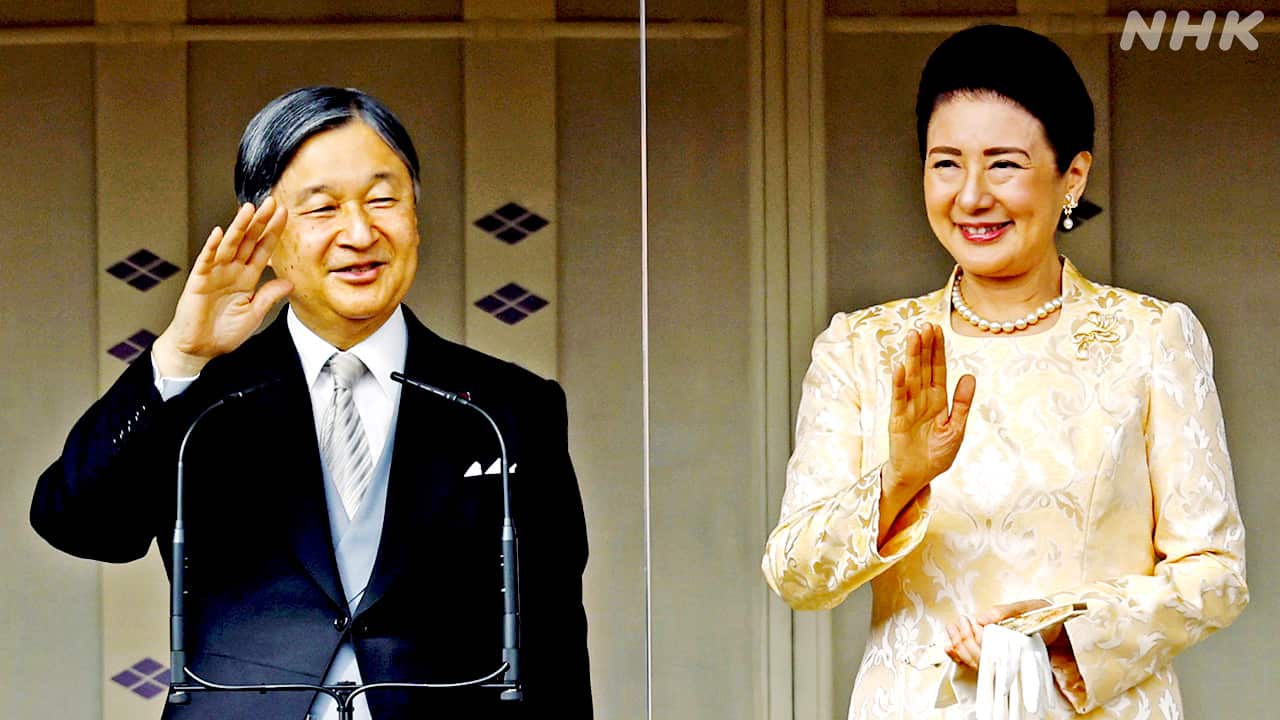
On February 23, a public celebration was held at the Imperial Palace to mark the Emperor’s 66th birthday.
The day, known as 天皇誕生日 (tennō tanjōbi, Emperor’s Birthday), is a national holiday in Japan. This year, crowds gathered at the 皇居 (kōkyo, Imperial Palace) for a special event honoring 天皇陛下 (tennō heika, His Majesty the Emperor). The occasion was the *一般参賀 (ippan sanga), a public greeting where people come to offer congratulations.
Ahead of his birthday, the Emperor also attended a 記者会見 (kisha kaiken, press conference) at the Imperial Palace. In Japanese news language, it was reported that he 臨みました (nozomimashita), meaning he “faced” or “attended” the press conference — a formal verb often used when someone participates in an important event.
What Happened at the Imperial Palace
On the morning of February 23, people gathered at the 皇居 (kōkyo). The purpose of the gathering was simple yet meaningful: to 祝う (iwau, celebrate) the Emperor’s 66th birthday.
The event is called 一般参賀 (ippan sanga).
- 一般 (ippan) means “general” or “public.”
- 参賀 (sanga) means “to pay respects or offer congratulations.”
Together, the term refers to members of the public visiting to express good wishes to the Imperial Family.
Before the birthday itself, 天皇陛下 (tennō heika) held a 記者会見 (kisha kaiken), or press conference, at the palace. The phrase used in the report was:
- 誕生日を前に記者会見に臨みました。 Tanjōbi o mae ni kisha kaiken ni nozomimashita. “He attended a press conference ahead of his birthday.”
This sentence contains a very common news expression that’s extremely useful for learners.
Cultural Context: The Emperor’s Birthday in Japan
天皇誕生日 (tennō tanjōbi) is a national holiday in Japan. It is one of the few occasions when parts of the 皇居 (kōkyo) grounds are opened to the public.
The 一般参賀 (ippan sanga) is a long-standing tradition. People gather to celebrate and show respect. Even if you’re just beginning to explore Japanese culture, understanding this event helps you see how tradition, ceremony, and public life intersect in modern Japan.
You’ll often see formal language in reports about the Imperial Family. Words like 陛下 (heika, “His Majesty”) and verbs like 臨む (nozomu) reflect a higher level of politeness and respect. Learning these expressions gives you insight into how Japanese adapts language depending on status and context.
Learn Japanese from This Article
Let’s break down key vocabulary and grammar you can start using right away.
Key Vocabulary
| Japanese | Romaji | Meaning |
|---|---|---|
| 天皇誕生日 | tennō tanjōbi | Emperor’s Birthday |
| 皇居 | kōkyo | Imperial Palace |
| 天皇陛下 | tennō heika | His Majesty the Emperor |
| 一般参賀 | ippan sanga | public greeting by the Imperial Family |
| 記者会見 | kisha kaiken | press conference |
| 臨む | nozomu | to face; to attend; to confront |
| 祝う | iwau | to celebrate |
Grammar Spotlight ①: 〜を祝う (to celebrate ~)
Pattern: > Noun + を祝う
This means “to celebrate (something).”
Examples:
誕生日を祝う。 Tanjōbi o iwau. To celebrate a birthday.
天皇誕生日を祝う一般参賀。 Tennō tanjōbi o iwau ippan sanga. A public greeting to celebrate the Emperor’s Birthday.
This structure is simple but powerful. You can use it for holidays, anniversaries, and achievements.
Grammar Spotlight ②: 〜を前に (ahead of ~ / before ~)
Pattern: > Noun + を前に
This is very common in news reports and formal writing. It means “before” or “ahead of” an event.
Example from the article:
- 誕生日を前に記者会見に臨みました。 Tanjōbi o mae ni kisha kaiken ni nozomimashita. He attended a press conference ahead of his birthday.
More examples:
試験を前に勉強します。 Shiken o mae ni benkyō shimasu. I study before an exam.
大会を前に練習を強化する。 Taikai o mae ni renshū o kyōka suru. To strengthen practice ahead of a tournament.
You’ll see 〜を前に constantly in Japanese news, so mastering it will dramatically improve your reading comprehension.
Useful Expression: 臨む
The verb 臨む (nozomu) is more formal than simply saying 出る (deru, to appear) or 参加する (sanka suru, to participate*).
Example:
- 記者会見に臨む。 Kisha kaiken ni nozomu. To attend (face) a press conference.
It carries a nuance of seriousness — as if someone is “facing” an important moment.
Continue Learning
To understand more about general news language and reading skills, explore these lessons:
- Reading and Writing in Japanese II: Hiragana and Katakana: To understand more about general, explore our Reading and Writing in Japanese II: Hiragana and Katakana lesson.
- Introduction to Kanji: Pictorial Foundations of Japanese Script: Working on your reading skills? Our Introduction to Kanji: Pictorial Foundations of Japanese Script lesson is a great next step.
- Basic Vocabulary Building: Embracing Words Without Latin Ties: Ready to dive deeper? Our lesson on Basic Vocabulary Building: Embracing Words Without Latin Ties will help you master these concepts.
By reading real news like this, you’re learning Japanese the way it’s actually used — formal, nuanced, and deeply connected to culture.
これからもよろしくお願いします。 Kore kara mo yoroshiku onegaishimasu.