
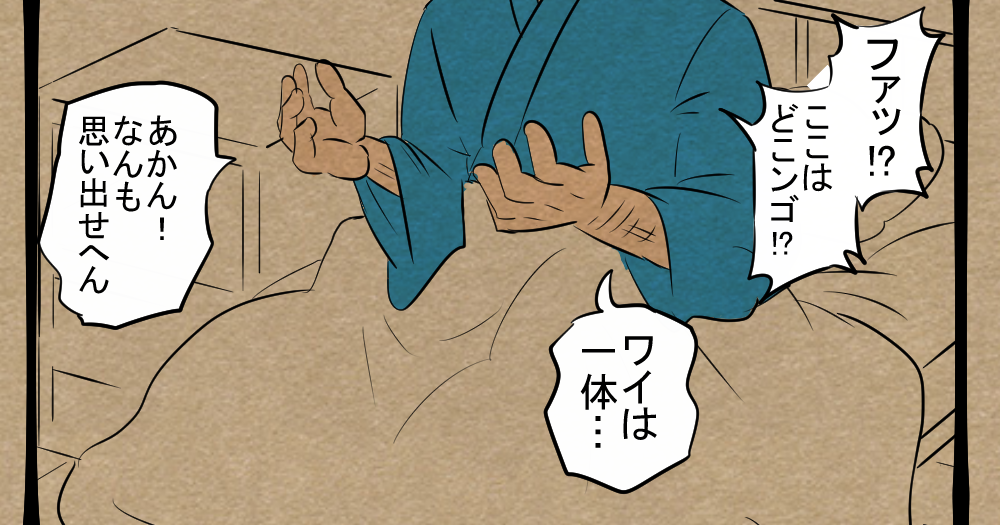
A Funny Japanese Comic About Waking Up Confused
Have you ever woken up from a quick nap, rubbed your eyes, and felt completely lost about what time it is—or even what you were doing before you dozed off? That foggy, disorienting moment is something we’ve all experienced, and it’s exactly the kind of relatable quirk captured in a hilarious Japanese comic strip from Rocket News, published on December 25, 2025. This little slice of humor not only makes you chuckle but also offers a perfect window into everyday Japanese life. Let’s dive into this story and see how it can help you learn authentic Japanese, just as it’s used in Japan!
A Lighthearted Look at Daily Life
This gem comes from the 264th installment of the four-panel comic series Yonkoma Sabotage BYD, illustrated by artist Zack KT-4. Titled お見舞いに来た部下 (omimai ni kita buka), which translates to "The Subordinate Who Came to Visit," the comic sketches out a funny and slightly awkward moment. The setup is simple: a subordinate visits their boss in the hospital after hearing about an accident, only to witness an unexpected, human side of their superior. Without spoiling the punchline, let’s just say it hinges on those universal moments of confusion—like waking up unsure of what’s real—that hit close to home for all of us.
What makes this comic so delightful is how it captures the mundane with a twist of humor, a signature of Japanese yonkoma (four-panel) comics. These short strips often zoom in on everyday scenarios, delivering a quick laugh or a thoughtful pause in just a few frames. For English speakers learning Japanese, this kind of content is a goldmine—bite-sized, authentic, and easy to enjoy even if you’re still building your language skills.
Cultural Context: Hospital Visits and Workplace Dynamics
To really appreciate the humor and setting of this comic, let’s unpack a key cultural concept: お見舞い (omimai), which means visiting someone who is ill or hospitalized. In Japan, this isn’t just a nice gesture; it’s a social custom with its own etiquette. When you visit, it’s typical to bring a small gift like fruit or flowers and to express concern with polite phrases. The relationship between a 部長 (buchou), or "department head/boss," and a 部下 (buka), meaning "subordinate," also adds depth to the story. Japanese workplace culture often emphasizes respect and formality, so seeing a boss in a vulnerable state—like in a hospital bed—can create a funny or touching shift in perspective.
Beyond that, yonkoma comics are a staple of Japanese media, often appearing in newspapers or magazines. Their structure—setup, development, climax, and punchline—mirrors the rhythm of daily life, making them a fantastic way for learners to explore Japanese humor and storytelling. This series, Sabotage BYD, frequently plays with relatable quirks and misunderstandings, reflecting the kind of casual, slice-of-life content that resonates with readers across Japan.
Learn Japanese from This Article
Engaging with real content like this comic strip does more than entertain—it helps you learn Japanese the way native speakers use it. It’s not just about memorizing words or rules; it’s about understanding the tone and context behind them. Below, you’ll find some key vocabulary, grammar patterns, and expressions pulled from this story to help you build your skills while connecting with the material.
Key Vocabulary
Here are some useful words tied to the themes of daily life, memory, and social customs in this comic:
| Japanese | Romaji | Meaning |
|---|---|---|
| 昼寝 | hirune | nap, midday rest |
| 記憶 | kioku | memory, recollection |
| 曖昧 | aimai | vague, ambiguous |
| お見舞い | omimai | visiting someone who is ill, hospital visit |
| 部下 | buka | subordinate, junior colleague |
| 漫画 | manga | comic, cartoon |
| 日常 | nichijou | daily life, everyday |
These words pop up often in conversations about daily routines or social interactions, so they’re worth adding to your vocabulary. For instance, if you’re describing a hazy memory, you might use 曖昧 (aimai) to express that vagueness.
Grammar Spotlight: 〜た後 and 〜てたっけ?
Let’s look at two grammar patterns that can help you talk about sequences of events or past memories, both of which tie into the comic’s theme of waking up confused.
1. 〜た後 (~ta ato) - "After doing something"
- Structure: Verb (past tense) + 後 (ato)
- Meaning: Used to describe something that happens after a specific action.
- Examples:
- 昼寝した後、頭がぼんやりした。 (Hirune shita ato, atama ga bon’yari shita.) - After taking a nap, my head felt fuzzy.
- 会議した後、疲れました。 (Kaigi shita ato, tsukaremashita.) - After the meeting, I felt tired.
- 買い物した後、家に帰ります。 (Kaimono shita ato, ie ni kaerimasu.) - After shopping, I’ll go home.
- Usage: This is super handy for narrating sequences in your day, like what happened after waking up from a nap or visiting someone.
2. 〜てたっけ? (~te ta kke?) - Casual question about past memory
- Structure: Verb (て-form) + たっけ?
- Meaning: A casual way to ask yourself or someone else if something happened in the past, often with a sense of doubt or forgetfulness.
- Examples:
- 何してたっけ? (Nani shite ta kke?) - What was I doing again?
- ここに来てたっIたっけ? (Koko ni kite ta kke?) - Was I here before?
- 電話してたっけ? (Denwa shite ta kke?) - Did I call them?
- Usage: This expression captures that feeling of confusion or forgetfulness, much like the comic’s punchline. It’s informal, so use it with friends or in casual settings.
Useful Expression: お見舞い申し上げます (omimai moushiagemasu)
- Meaning: "I offer my condolences" or "I’m visiting to express concern" (polite form for hospital visits or expressing sympathy).
- Example: お見舞い申し上げます。早く良くなることを願っています。 (Omimai moushiagemasu. Hayaku yoku naru koto o negatte imasu.) - I offer my condolences. I hope you get better soon.
- Usage: This is a formal and respectful way to express concern when visiting someone who is ill. It’s a key phrase to know for cultural situations like the one in the comic.
Continue Learning
Want to dive deeper into the language and culture behind this comic? Check out these lessons on our platform to build your skills:
- Greetings and Self-Introductions: Authentic Entry Phrases: Curious about the Japanese used here? Our Greetings and Self-Introductions: Authentic Entry Phrases lesson covers this in depth.
- Masu Form: Mastering Polite Everyday Speech: Want to understand the verb forms used here? Check out Masu Form: Mastering Polite Everyday Speech.
- Verb Basics: Harnessing the Dictionary Form: Want to understand the verb forms used here? Check out Verb Basics: Harnessing the Dictionary Form.
Learning Japanese through real content like this comic strip is how you’ll start to think and speak like a native. Keep exploring, and you’ll be amazed at how these small moments of culture and language add up to big progress!
これからもよろしくお願いします。 Kore kara mo yoroshiku onegaishimasu.