
Discover Japan's Wild Side with the 2026 Villain Lucky Bag
If you’ve ever been captivated by the raw, rebellious energy of Japanese delinquent culture—think leather jackets, motorcycle gangs, and the gritty vibe of Netflix’s Love Jōtō—then you’re in for a treat. Today, we’re diving into a unique piece of Japanese fashion that’s making waves: the 完全ド悪党福袋 (Kanzen Do Akutō Fukubukuro - Complete Villain Lucky Bag) from BIRTH JAPAN. For just 5,478 yen (送料込み - sōryō komi - shipping included), this mystery bag offers a full outlaw-inspired outfit that lets you wear the attitude of Japan’s underground scene. Let’s unpack this bold 福袋 (fukubukuro - lucky bag) and explore how it connects to language, culture, and style.
The Hottest Fukubukuro of 2026
Every January, Japanese stores roll out 福袋 (fukubukuro), special mystery bags filled with discounted goodies to celebrate the New Year. It’s a tradition that blends excitement with value, and among the countless options for 2026, BIRTH JAPAN’s “Complete Villain Lucky Bag” stands out. This isn’t just a deal; it’s an invitation to embrace the 不良 (furyō - delinquent) lifestyle. For 5,478 yen, you get a complete set—top and bottom—that radiates defiance, with customizable options like size and sleeve length (long or short). It’s perfect if you’ve ever wanted to dip your toes into this edgy world but weren’t sure where to start.
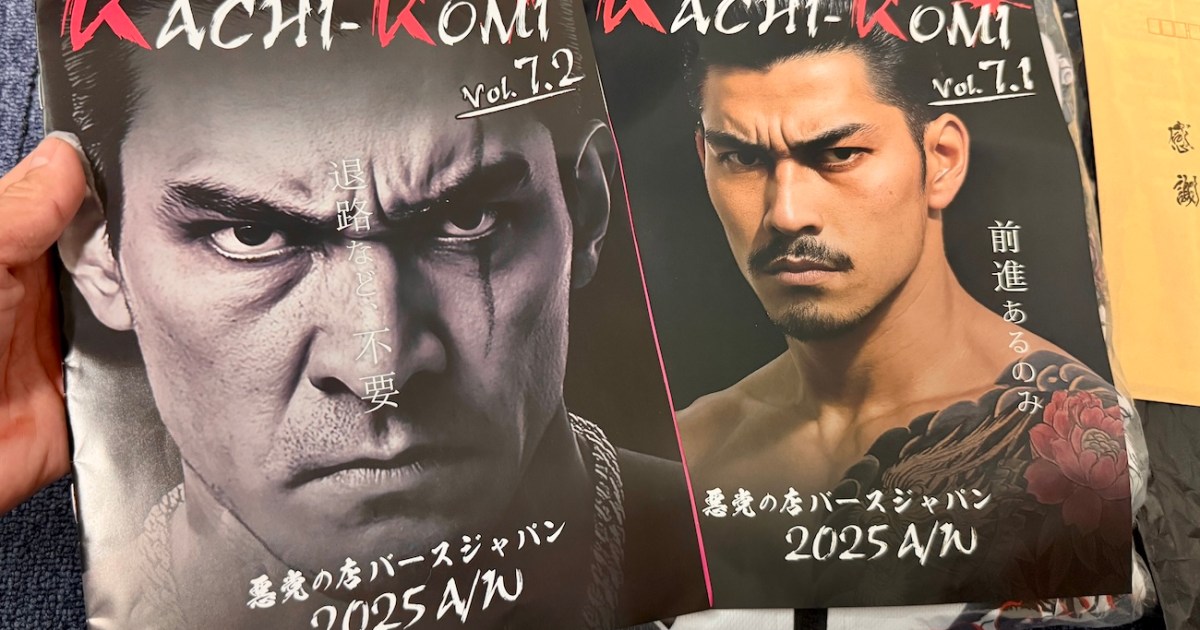
What’s inside? Alongside the clothing, you’ll find two catalogs of “KACHI-KOMI” (kachi-komi - slang for confrontation or raid), showcasing even bolder 衣装 (ishō - costumes or outfits) for those ready to dive deeper into 抗争衣装 (kōsō ishō - conflict attire). This isn’t fashion for fading into the background; it’s designed to make you stand out as a rule-breaker, embodying the lone-wolf spirit of Japanese delinquent tropes.
The Ultimate “Chinpira” Look
At the heart of this 福袋 is a standout set from DIAMOND JAPAN, dubbed チンピラの正装 (chinpira no seishō - formal wear for small-time thugs). Imagine a fierce dragon—a symbol of strength in Japan’s rougher circles—spanning the entire outfit, paired with lightning bolts and falling cherry blossoms. These designs mix traditional 和柄 (wagara - Japanese patterns) with gritty street style. The top and bottom connect to form a continuous dragon image, a rare and almost mythical touch that feels straight out of a manga.
Wearing this, as BIRTH JAPAN claims, turns you into a “legendary 悪党 (akutō - villain or scoundrel).” It’s an outfit that promises thrill and danger, ideal for anyone fantasizing about a cinematic, hitman-on-the-run life. When tried on, the effect is pure strength. As of December 24, 2025, the long-sleeve version was already sold out, a sign of its cult status in Japan’s underground scene. Plus, with BIRTH JAPAN’s “Store Manager Arrest 21st Anniversary Reflection Sale,” there’s no better time to explore their other rebellious gear.
Cultural Context: The Allure of Japanese Delinquent Style
To understand why the “Complete Villain Lucky Bag” hits so hard, you need to know about Japan’s fascination with ヤンキー (yankī - yankee, referring to Japanese delinquents) and 不良 (furyō - delinquent) subcultures. These terms conjure up images of pompadour hairstyles, leather jackets, and a rejection of societal norms—often romanticized in manga, anime, and shows like Love Jōtō. This subculture has roots in post-war Japan, where youth rebellion reflected social and economic turmoil, often tied to motorcycle gangs known as 暴走族 (bōsōzoku - reckless tribes).
Outfits like those in this 福袋 aren’t just clothes; they symbolize freedom and 反骨精神 (hankotsu seishin - rebellious spirit). Imagery like dragons (power and protection) and cherry blossoms (the fleeting nature of life) carries deep meaning. For many in Japan, this style isn’t about real crime—it’s about projecting strength and escaping conformity. BIRTH JAPAN offers a curated way to “try on” this identity, blending niche fashion with the pulse of modern Japanese pop culture.
Learn Japanese from This Article
Let’s turn this wild fashion discovery into a language lesson. Here, you’ll find key vocabulary, grammar patterns, and expressions inspired by the 福袋 and delinquent culture. These are taught the way Japanese kids learn—through context and real usage, not just textbook rules.
Key Vocabulary
| Japanese | Romaji | Meaning |
|---|---|---|
| 福袋 | fukubukuro | lucky bag, mystery bag sold at New Year |
| 不良 | furyō | delinquent, bad boy/girl |
| 悪党 | akutō | villain, scoundrel |
| 衣装 | ishō | costume, outfit |
| 反骨精神 | hankotsu seishin | rebellious spirit |
| 送料込み | sōryō komi | shipping included |
Grammar Spotlight: 〜たら and 〜てもいい
Let’s look at two useful grammar patterns that can help you talk about possibilities and permissions, just like discussing whether to buy a 福袋 or wear a bold 衣装.
〜たら (if/when, conditional) This pattern expresses a condition or sequence: “If X happens, then Y” or “When X happens, then Y.” Attach 〜たら to the past tense stem of a verb.
- 買ったら、着てみるよ。 (Kattara, kite miru yo.
- If I buy it, I’ll try wearing it.)
- サイズが合わなかったら、交換する。 (Saizu ga awanakattara, kōkan suru.
- If the size doesn’t fit, I’ll exchange it.)
- 福袋を開けたら、びっくりした。 (Fukubukuro o aketara, bikkuri shita.
- When I opened the lucky bag, I was surprised.) Use 〜たら when talking about hypothetical situations or reflecting on past events tied to a result.
- 買ったら、着てみるよ。 (Kattara, kite miru yo.
〜てもいい (it’s okay to do, may do) This pattern gives or asks for permission: “It’s okay to do X.” Attach 〜てもいい to the te-form of a verb.
- この衣装を着てもいい? (Kono ishō o kite mo ii?
- Is it okay to wear this outfit?)
- 不良っぽい服を着てもいいよ。 (Furyō-ppoi fuku o kite mo ii yo.
- It’s okay to wear delinquent-style clothes.) Use 〜てもいい when seeking approval or reassuring someone about an action, perfect for navigating cultural or social boundaries in Japan.
- この衣装を着てもいい? (Kono ishō o kite mo ii?
Useful Expression
Here’s a phrase you might hear or use when shopping for something like a 福袋:
- これ、送料込みですか? (Kore, sōryō komi desu ka?
- Is this shipping included?) This is a practical way to confirm costs, especially with online or limited-edition purchases in Japan.
Continue Learning
Ready to build on what you’ve learned? Check out these lessons to deepen your Japanese skills:
- Introduction to Kanji: Pictorial Foundations of Japanese Script: Working on your reading skills? Our Introduction to Kanji lesson is a great next step.
- Wa vs. Ga: Emphasizing Importance in Sentences: Ready to dive deeper? Our lesson on Wa vs. Ga will help you master these concepts.
- Ni, De, and E: Mapping Directions and Locations: Want to learn more about に? Check out our lesson on Ni, De, and E: Mapping Directions and Locations.
これからもよろしくお願いします。 Kore kara mo yoroshiku onegaishimasu.