
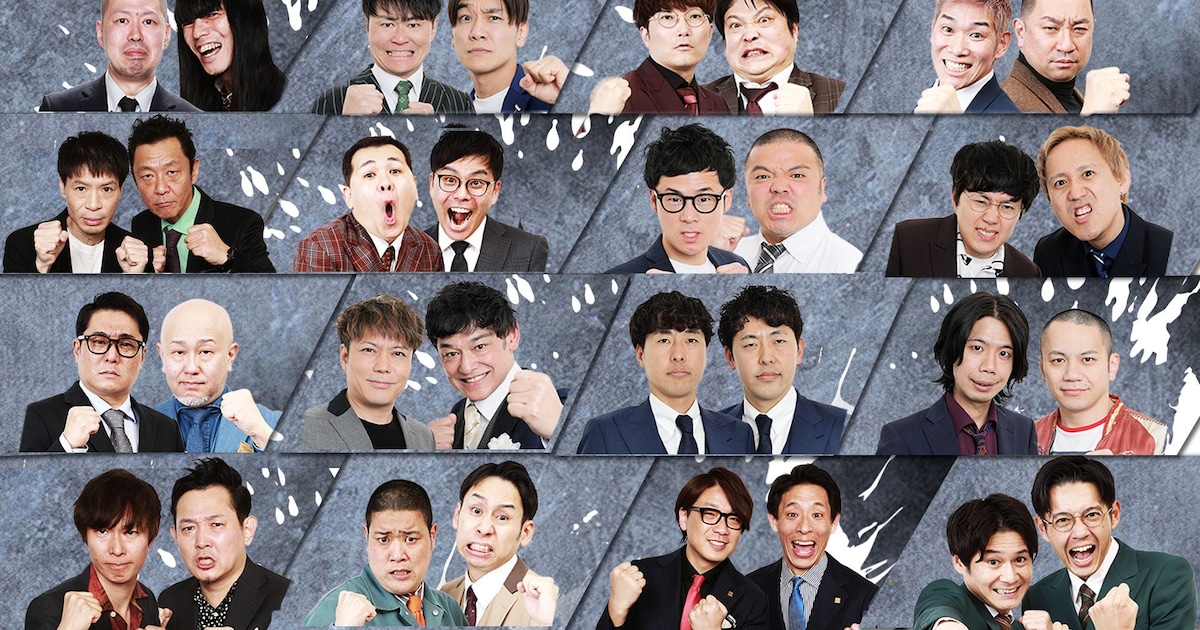
On April 18, the results of “THE SECOND~漫才トーナメント~2026” knockout stage were announced, and eight comedy duos secured their spots in the final showdown. After intense battles in the “16→8” round, 金属バット (Kinzoku Bat), タモンズ (Tamons), ザ・パンチ (The Punch), 黒帯 (Kuro Obi), シャンプーハット (Shampoo Hat), ヤング (Young), リニア (Linear), and トット (Totto) officially advanced.
Eight Duos Advance to the Grand Final
The stage was called 「ノックアウトステージ16→8」 (nokkuauto sutēji 16 kara 8), a round ベスト8をかけた battle — meaning they were competing for a place in the Top 8.
Here, the expression 〜をかけた (~ o kaketa) shows that something important was “at stake.”
After this round, the eight winning groups 「グランプリファイナル」への進出を決めた — they secured advancement to the Grand Prix Final.
The key phrase here is:
- 〜への進出を決めた (~ e no shinshutsu o kimeta) → “secured advancement to ~”
In Japanese competition news, this expression appears constantly, so it’s worth remembering.
Match Results by Block
Each duo won their match with the following scores:
- A Block: 金属バット (291) defeated ラフ次元 (268)
- B Block: タモンズ (282) defeated レイザーラモン (271)
- C Block: ザ・パンチ (294) defeated はりけ~んず (283)
- D Block: 黒帯 (293) defeated セルライトスパ (253)
- E Block: シャンプーハット (285) defeated パタパタママ (260)
- F Block: ヤング (289) defeated 吉田たち (271)
- G Block: リニア (289) defeated マシンガンズ (281)
- H Block: トット (291) defeated 囲碁将棋 (262)
Each win is described as 勝利 (shouri) — victory.
How the Judging Worked
The competition used a unique 審査 (shinsa), or judging system.
One hundred comedy fans — selected from preliminary audience members and official website applicants — evaluated the performances.
They used a simple three-point 採点 (saiten) system:
- 3 points: とても面白かった (totemo omoshirokatta) — Very funny
- 2 points: 面白かった (omoshirokatta) — Funny
- 1 point: 面白くなかった (omoshiroku nakatta) — Not funny
This audience-centered judging reflects Japan’s strong live comedy culture, where crowd reaction matters deeply.
Grand Final to Air Live in May
The 最終決戦 (saishuu kessen), or final showdown, will take place on May 16, 2026.
It will be broadcast nationwide on Fuji TV from 18:30 to 23:10 as a 生放送 (nama housou) — a live broadcast lasting over four hours.
The hosts will be:
- 東野幸治 (Higashino Koji)
- 宮司愛海 (Miyaji Manami), a Fuji TV announcer
Additional major figures 出演する (shutsuen suru — appear on the program) include:
- くりぃむしちゅー有田 (Arita from Cream Stew) as Hyper General Manager
- 博多華丸・大吉 (Hakata Hanamaru & Daikichi) as Special Supporters
- 小室瑛莉子 (Komuro Eriko) as reporter
Cultural Context: What Is “THE SECOND”?
“THE SECOND” is a major 漫才 (manzai) tournament.
Manzai is a traditional style of Japanese stand-up comedy performed by two people — typically:
- The ボケ (boke), who says something silly or absurd
- The ツッコミ (tsukkomi), who reacts and corrects them
Unlike the more famous M-1 Grand Prix, “THE SECOND” focuses on seasoned comedians rather than newcomers. That’s part of why fans online are calling this a “strong and intense” comedy lineup.
Comedy competitions are known in Japanese as 賞レース (shō rēsu) — literally “prize race.” This katakana-heavy phrase is a great example of how English-origin words are adapted into Japanese pronunciation.
Learn Japanese from This Article
Key Vocabulary
| Japanese | Romaji | Meaning |
|---|---|---|
| 進出 | shinshutsu | advancing to the next round |
| 最終決戦 | saishuu kessen | final showdown |
| 勝利 | shouri | victory |
| 審査 | shinsa | judging |
| 採点 | saiten | scoring |
| 生放送 | nama housou | live broadcast |
| 出演する | shutsuen suru | to appear (on TV, stage, etc.) |
| 賞レース | shou reesu | prize competition |
Try spotting these words in other entertainment news — they appear constantly in competition coverage.
Grammar Spotlight
① 〜をかけた
Meaning: Competing for ~; with ~ at stake
Structure: > Noun + をかけた + Noun
Example:
ベスト8をかけた戦い besuto hachi o kaketa tatakai A battle for a place in the Top 8
優勝をかけた試合 yuushou o kaketa shiai A match with the championship at stake
This pattern emphasizes what is on the line.
② 〜への進出を決めた
Meaning: Secured advancement to ~
Structure: > Destination + への進出を決めた
Example:
グランプリファイナルへの進出を決めた。 guranpuri fainaru e no shinshutsu o kimeta They secured advancement to the Grand Prix Final.
決勝への進出を決めた。 kesshou e no shinshutsu o kimeta They advanced to the finals.
You’ll hear this in sports, music contests, and TV competitions.
Useful Expressions
- とても面白かった (totemo omoshirokatta) — It was very funny.
- 面白くなかった (omoshiroku nakatta) — It wasn’t funny.
- 生放送で放送される (nama housou de housou sareru) — Broadcast live
These are natural phrases used daily in Japan, not textbook-only expressions.
Continue Learning
Working on your reading skills? Our Katakana Essentials: Adapting Global Words to Japanese lesson is a great next step.
Working on your reading skills? Our Introduction to Kanji: Pictorial Foundations of Japanese Script lesson is a great next step.
To understand more about entertainment, explore our Basic Vocabulary Building: Embracing Words Without Latin Ties lesson.
Japanese entertainment news is full of recurring patterns and expressions. The more you read real articles like this, the more naturally these structures will stick.
これからもよろしくお願いします。 Kore kara mo yoroshiku onegaishimasu.