
SEO Title: Japan Meteorological Agency Warns of Stronger Quakes in Nagano Meta Description: After a magnitude quake measuring 5+ in Nagano, Japan’s Meteorological Agency warns stronger shaking could occur near an active fault zone.
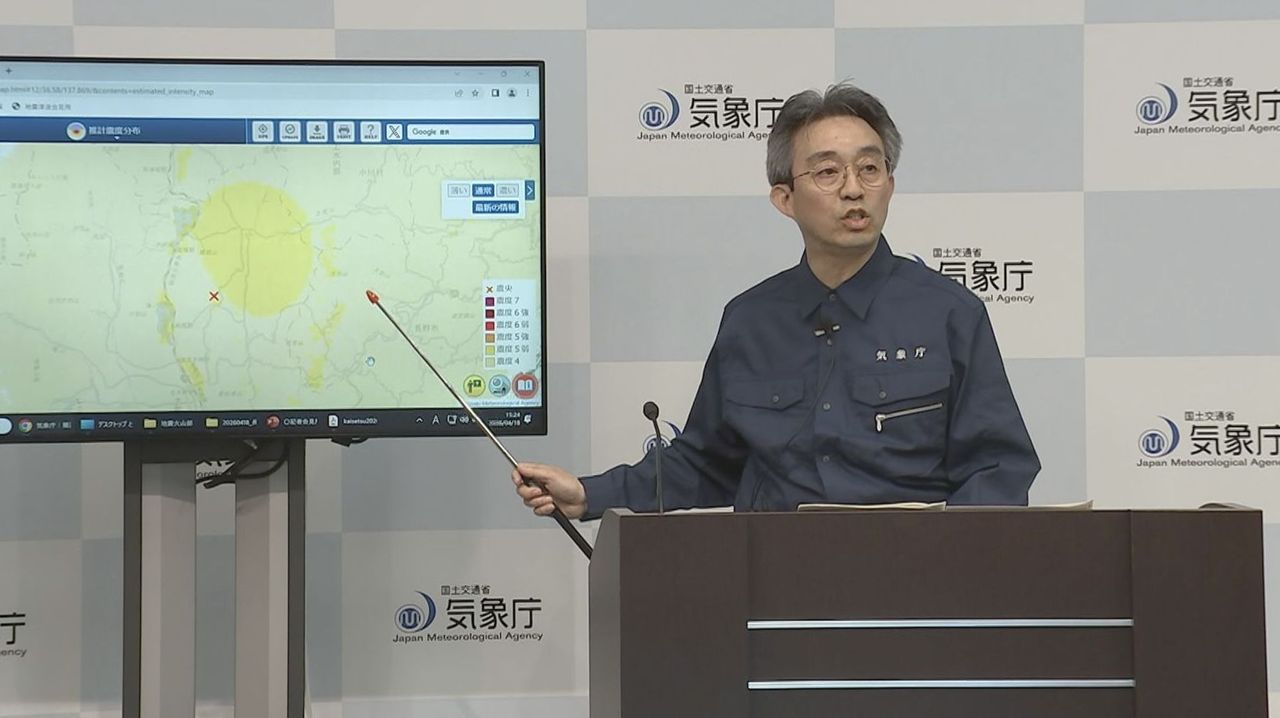
On April 18, 2001, Japan’s 気象庁 (kishōchō), the Japan Meteorological Agency, held a 記者会見 (kisha kaiken) after an earthquake in Nagano Prefecture recorded a 最大震度 (saidai shindo) of 5+ on Japan’s seismic intensity scale.
The agency warned that the area around the 震源 (shingen), or epicenter, includes an 活断層帯 (katsudansōtai), an active fault zone. Officials called for caution, explaining that if a larger earthquake occurs, shaking could reach an intensity of 6+ or higher.
What the Agency Announced
During the press conference, the 気象庁 (kishōchō) explained that the earthquake’s maximum intensity was measured at 5+ in Nagano Prefecture. In Japanese, the verb 観測する (kansoku suru) means “to observe” or “to measure,” and it is commonly used in official reports about weather and earthquakes.
The agency stated that the region around the epicenter contains an active fault zone. They emphasized that if a larger earthquake were to occur in this area, the shaking could reach 震度6強以上—6+ or higher on the Japanese scale.
To express this warning, officials 注意を呼びかけました (chūi o yobikakemashita) — they called for caution.
Understanding Japan’s Earthquake Scale
Japan uses a seismic intensity scale called 震度 (shindo), which measures how strongly the ground shakes at a specific location. This is different from magnitude, which measures the total energy released by an earthquake.
On the Japanese scale:
- 震度5強 (shindo go-kyō) indicates very strong shaking.
- 震度6強 (shindo roku-kyō) indicates extremely strong shaking that can cause significant damage.
Because Japan experiences frequent earthquakes, agencies like the 気象庁 (kishōchō) provide detailed and immediate information to the public. Press conferences are a standard part of communicating risk and encouraging preparedness.
Cultural Context: Why Warnings Matter
Earthquake awareness is deeply embedded in daily life in Japan. Government agencies regularly issue updates and guidance, and the phrase 注意を呼びかける (chūi o yobikakeru) appears often in news reports. It signals that authorities are urging the public to remain alert and prepared.
The mention of an 活断層帯 (katsudansōtai) is especially important. Active fault zones are closely monitored because they can generate powerful earthquakes. By highlighting the presence of such a fault, the agency is reminding residents that future seismic activity is possible.
Learn Japanese from This Article
Key Vocabulary
| Japanese | Romaji | Meaning |
|---|---|---|
| 気象庁 | kishōchō | Japan Meteorological Agency |
| 最大震度 | saidai shindo | maximum seismic intensity |
| 観測する | kansoku suru | to observe; to measure |
| 記者会見 | kisha kaiken | press conference |
| 震源 | shingen | epicenter |
| 活断層帯 | katsudansōtai | active fault zone |
| 注意を呼びかける | chūi o yobikakeru | to call for caution |
Grammar Spotlight ①: 〜について (about; regarding)
The particle 〜について (ni tsuite) means “about” or “regarding.” It’s frequently used in formal announcements and news.
Structure: Noun + について
Example from the article context:
- 地震について記者会見を行いました。 Jishin ni tsuite kisha kaiken o okonaimashita. They held a press conference about the earthquake.
You’ll hear this pattern constantly in Japanese news reports.
Grammar Spotlight ②: 〜すれば (if; when)
The conditional form 〜すれば (sureba) expresses “if” or “when.” It is commonly used in warnings or hypothetical situations.
Structure: Verb (conditional ば-form) + 〜
Example inspired by the article:
- 大きな地震が発生すれば、震度6強以上の揺れになる。 Ōkina jishin ga hassei sureba, shindo roku-kyō ijō no yure ni naru. If a large earthquake occurs, the shaking will reach 6+ or higher.
Notice how this structure clearly connects cause and possible result—perfect for official warnings.
Useful Expression
- 注意を呼びかける (chūi o yobikakeru) To call for caution.
You’ll see this expression in many contexts: weather alerts, health advisories, and disaster warnings.
Continue Learning
- Curious about the Japanese used here? Our Reading and Writing in Japanese II: Hiragana and Katakana lesson covers this in depth.
- Working on your reading skills? Our Introduction to Kanji: Pictorial Foundations of Japanese Script lesson is a great next step.
- To understand more about general vocabulary, explore our Basic Vocabulary Building: Embracing Words Without Latin Ties lesson.
By reading real news like this, you’re not just learning vocabulary—you’re learning how Japanese authorities communicate risk, responsibility, and public safety. That’s authentic Japanese, the way it’s actually used.
これからもよろしくお願いします。 Kore kara mo yoroshiku onegaishimasu.