
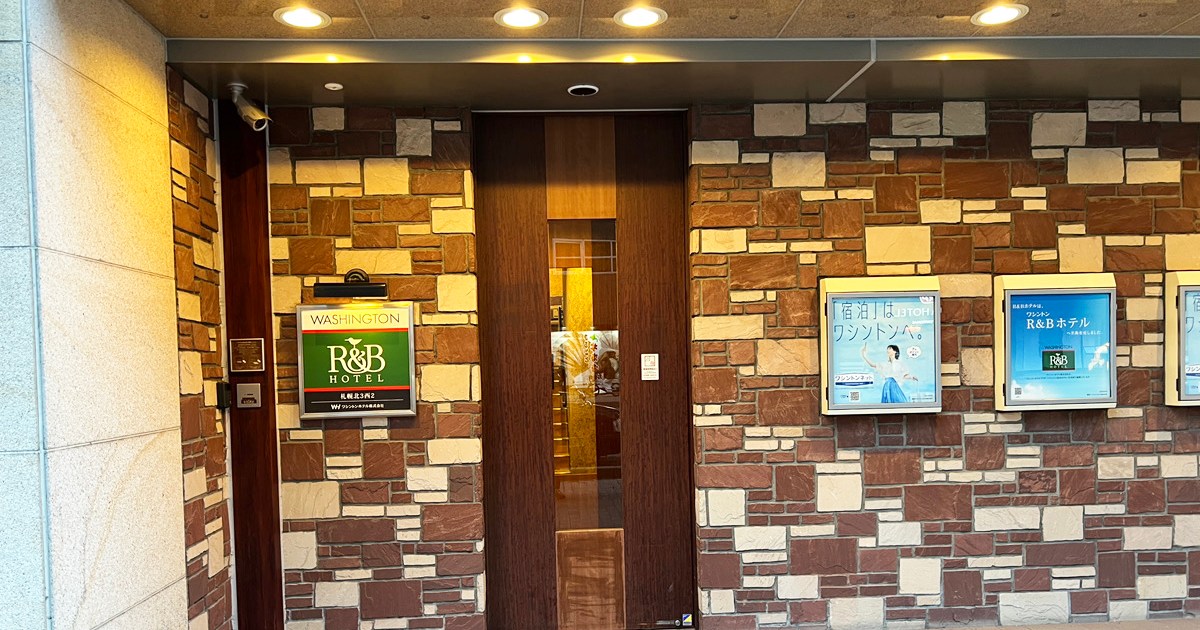
5,600 yen per night. Fixed price. During a busy three-day weekend in Sapporo—when even capsule hotels were charging over 8,000 yen—that number feels almost unreal.
In April 2026, Rocket News writer and indie band musician Nakazawa shared how he discovered a little-known benefit offered by JASRAC (the Japanese Society for Rights of Authors, Composers and Publishers): access to discounted hotel stays through its member “resort facilities.” What he found turned out to be a lifesaver for touring musicians trying to keep 宿泊費 (shukuhakuhī)—accommodation costs—under control.
Let’s take a closer look at what happened, and what you can learn from the Japanese used in this story.
Touring in Sapporo Is Expensive
Nakazawa traveled to Sapporo for his band’s tour. But there was a problem: hotel prices were high to begin with—and his trip landed on the first day of a 3連休 (san-renkyū), a three-day weekend.
In Japan, three-day weekends dramatically increase travel demand. That means higher prices during 繁忙期 (hanbōki), the busy season. According to the article:
- Even decent capsule rooms were over 8,000 yen per night.
- For an indie band musician, that’s a painful expense.
He started wondering if there was any way to reduce this part of the tour budget.
A “Secret” Benefit in a Member Magazine
The discovery came from an unlikely place: a monthly members-only magazine called 『JASRAC NOW』.
Nakazawa admits he usually skimmed it. The magazine tends to feature formal announcements about prestigious awards won by respected composers—important, but not directly relevant to him.
Hidden inside, however, was a small notice about “resort facilities” available only to members.
Interestingly, these facilities are not special buildings owned by JASRAC. It’s 専用の建物があるわけではない (sen’yō no tatemono ga aru wake de wa nai)—it’s not that there are dedicated JASRAC hotels.
Instead, JASRAC has contracts with certain hotel groups. Members can use them at 優待料金 (yūtai ryōkin), discounted special rates.
The groups mentioned were:
- Fujita Kanko Group (which operates Washington Hotels)
- Prince Hotels & Resorts
- Seven other directly contracted facilities
However, prices were not listed publicly. To find out the details, members had to 問い合わせる (toiawase-ru)—contact JASRAC directly.
The 5,600 Yen Surprise
Nakazawa called JASRAC’s membership office and asked for the cheapest option in Sapporo.
The answer: ワシントンR&Bホテル札幌北3西2 Washington R&B Hotel Sapporo Kita 3 Nishi 2
The price?
一泊5600円。しかも、定額。 One night for 5,600 yen. And a fixed price.
The word 定額 (teigaku) means a fixed rate—no fluctuation depending on season or demand.
While other hotels were charging:
- Hotel Gracery Sapporo: 10,800 yen (varies by date)
- Sapporo Washington Hotel Plaza: 7,200 yen (fixed)
The R&B Hotel was 5,600 yen regardless of the busy holiday period.
For a touring indie band, that difference adds up quickly.
What Was the Hotel Like?
So what do you get for 5,600 yen?
According to Nakazawa: a completely normal Japanese business hotel.
It had:
- A bed
- A desk
- A shower
- A toilet
Nothing flashy. Nothing unusual.
In fact, he says it was so ordinary that it was hard to find anything special to point out. But for someone on tour, that’s perfectly fine. He even prefers smaller rooms because they feel more comfortable during travel.
The hotel also had:
- Smoking rooms
- A coin laundry
All of which made it 使い勝手が良い (tsukaigatte ga yoi)—easy and convenient to use for touring musicians.
How the Check-In Worked
One small concern was how check-in would go.
Since the reservation was made through JASRAC, Nakazawa wasn’t sure what to expect. But when he arrived and told the front desk he had booked through JASRAC, he simply showed his ID and checked in normally.
When he arrived at the hotel and explained the situation—that is, 予約したことを伝えたところ (yoyaku shita koto o tsutaeta tokoro)—he was able to check in without issue.
Here, 〜ところ (tokoro) means “when” or “at the time of doing something.” We’ll look at this more below.
The process was almost the same as a regular hotel stay.
Cultural Context: Why Is This Interesting?
JASRAC is widely known in Japan for managing music copyrights. It’s often discussed in serious, business-like contexts.
The idea that it quietly offers practical benefits like hotel discounts feels surprising—especially since even some members might not know about them.
Also, the fact that prices aren’t publicly listed and require direct inquiry gives it an almost “hidden benefit” feel. In Japan, member organizations (like professional associations) sometimes offer perks that aren’t heavily advertised.
For indie musicians, where margins are tight, reducing 宿泊費 (shukuhakuhī) during 繁忙期 (hanbōki) can make a real difference.
Learn Japanese from This Article
Vocabulary
| Japanese | Romaji | Meaning |
|---|---|---|
| 宿泊費 | shukuhakuhī | accommodation cost |
| 3連休 | san-renkyū | three-day weekend |
| 繁忙期 | hanbōki | busy season |
| 優待料金 | yūtai ryōkin | discounted/special rate |
| 問い合わせる | toiawase-ru | to inquire; to contact |
| 定額 | teigaku | fixed price |
| 使い勝手が良い | tsukaigatte ga yoi | easy to use; convenient |
| 保養施設 | hoyō shisetsu | resort facility; recreation facility |
Grammar Spotlight
1️⃣ 〜わけではない
It’s not that… / It doesn’t mean that…
Structure: [Plain form] + わけではない
Example from the article:
- 専用の建物があるわけではない。 Sen’yō no tatemono ga aru wake de wa nai. It’s not that there are dedicated buildings.
This pattern softens or clarifies a statement. It’s often used to prevent misunderstanding.
Another example:
- 高いわけではないけど、安くもない。 Takai wake de wa nai kedo, yasuku mo nai. It’s not that it’s expensive, but it’s not cheap either.
2️⃣ 〜ところ
When / Just as / At the time of doing
Structure: Verb (plain past) + ところ
Example:
- 予約したことを伝えたところ、チェックインできた。 Yoyaku shita koto o tsutaeta tokoro, chekkuin dekita. When I told them I had a reservation, I was able to check in.
This pattern often introduces the result of an action.
Useful Expressions
一泊5600円です。 Ippaku 5600-en desu. It’s 5,600 yen per night.
一番安いところはどこですか。 Ichiban yasui tokoro wa doko desu ka? Where is the cheapest place?
空いていたら予約してください。 Aite itara yoyaku shite kudasai. If it’s available, please reserve it.
Notice the polite 〜ます forms used in these examples. They’re essential for real-world communication in Japan.
Continue Learning
- Want to understand the verb forms used here? Check out Masu Form: Mastering Polite Everyday Speech.
- Curious about the Japanese used here? Our Basic Vocabulary Building: Embracing Words Without Latin Ties lesson covers this in depth.
- Ready to dive deeper? Our lesson on Greetings and Self-Introductions: Authentic Entry Phrases will help you master these concepts.
Saving 2,000–3,000 yen per night might not sound dramatic at first—but over a full tour, that’s the difference between surviving and struggling for many indie musicians. And along the way, you’ve picked up real Japanese vocabulary used in everyday life, not textbook examples.
これからもよろしくお願いします。 Kore kara mo yoroshiku onegaishimasu.