
On April 7, 2026, a writer decided to try something surprisingly old-fashioned: joining a letter-writing community for three months at a cost of 2310 yen. In an age where you can connect with anyone instantly through your smartphone, she chose 文通 (buntsuu)—traditional correspondence by handwritten letters.
The result? “Better than I imagined.”
From Instant Messaging to Handwritten Letters
We live in a time when you can reach anyone in seconds. It’s convenient and timely. 一方で (ippou de), that very speed can be exhausting.
While chatting with her mother, the writer heard that in her younger days, she used to exchange letters with strangers. Back then, people would even publish their names and addresses in magazine pen-pal sections.
Yes—real addresses. Full 個人情報 (kojin jouhou), or personal information.
Times have changed.
Today, casually sharing your address with a stranger feels risky. That hesitation led her to discover a service called “Buntsuu-mura” (Letter Village).
A Reiwa-Era System for Letter Writing
“Buntsuu-mura” is a community where members can safely exchange letters without revealing personal information. The key is its 仕組み (shikumi), or system.
All letters are sent to the village office first. From there, they are sorted and forwarded to the recipient. In other words, your letter 経由する (keiyuu suru) the office before reaching the other person.
Even with a good system, though, a community needs people. According to official information, in 2024 alone, over 130,000 letters were exchanged, with more than 2,800 members.
That’s a lively “village.”
The 3-Month Trial: Becoming a Villager
There are 3-, 6-, and 12-month plans. The longest plan costs 825 yen per month. The writer chose the first-time 3-month trial for 2310 yen.
Upon registering, she received her own in-village address. Not a real one, of course, but something charming like “Sakuranbo Street, No. XX.” Members also use nicknames instead of real names, which gave her nostalgic feelings reminiscent of early social media days.
After creating a simple profile, she began searching for potential pen pals by age, gender, and hobbies. Her children even wanted to participate, so she looked for members with children of similar ages.
At one point, she instinctively searched for a “Friend Request” or “Message” button.
Then she realized.
This is 文通 (buntsuu), not social media.
That moment made her aware of how deeply modern people are immersed in 即レス (soku resu) culture—the expectation of instant replies.
The “Balloon Letter” System
One particularly interesting feature is called 風船便 (fuusenbin), or “balloon mail.”
You write a letter without knowing who will receive it. New members are more likely to receive these random letters, making it easier to start connecting even if you don’t know anyone yet.
Letters can be sent anytime, but there are two monthly 締め日 (shimebi), or closing dates, when the office processes and forwards mail. This means there’s a time lag. Even if you send a letter right away, it takes time for it to reach the recipient, for them to write back, and for the reply to go through the office again.
At first, that delay felt long.
But soon, she realized that waiting was the true 醍醐味 (daigomi)—the real pleasure.
Wondering, “Maybe it will arrive today.” Imagining someone reading her letter. These small thoughts felt rare and precious in the Reiwa era (Japan’s current era, which began in 2019).
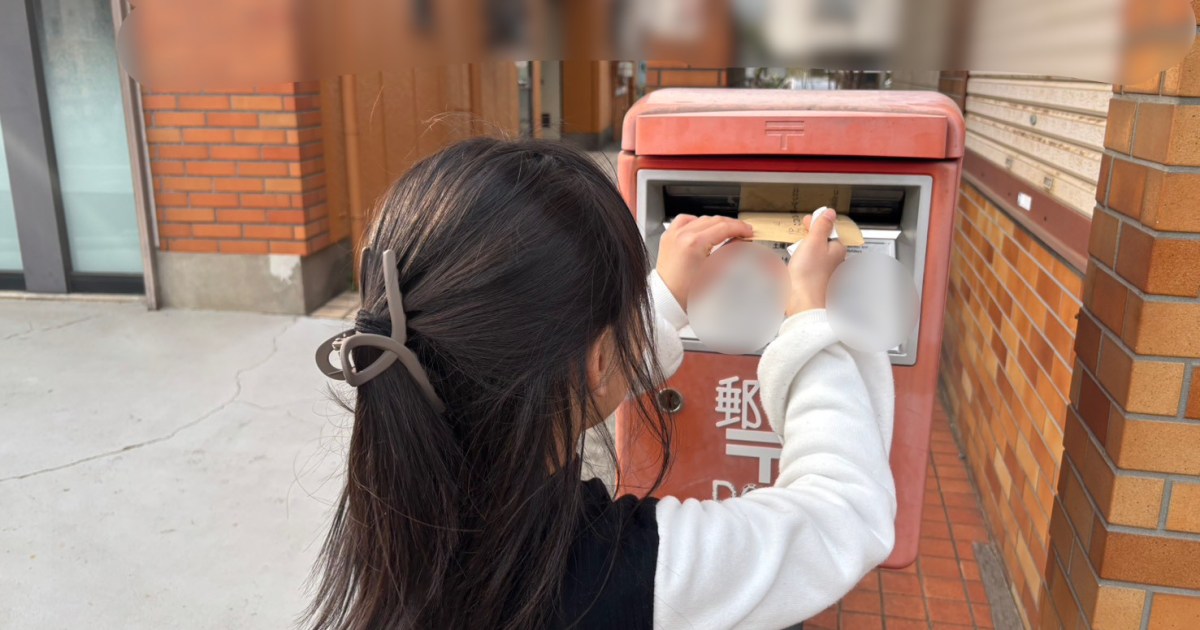
One day, she checked her mailbox.
It had arrived.
The joy wasn’t like winning a prize or receiving a birthday gift. It was something deeper: knowing that someone had taken the time to write by hand. She was so touched that she couldn’t open it immediately. Instead, she placed it beside her pillow and waited until the next day.
“Like a love letter,” she joked.
Deep Stories, Not Short Posts
Inside were three balloon letters. They included short self-introductions and small questions.
Later, she began receiving letters directly addressed to her. One question she often asked was: “Was there a turning point in your life?”
The replies were surprisingly deep. Some people shared dramatic or even intense life changes.
Unlike social media, where short posts quickly disappear, handwritten words carry weight. The experience made her realize that letters allow for a different depth of connection.
Her children even joined in. In one exchange, her child wrote:
“Recently, my mom has been noisy because she says she’s ‘lifting her ban’ on Hello! Project.”
Even in slow-paced letter writing, family humor finds its way in.
Cultural Context: Why Letters Feel Different in Japan
Japan has a long tradition of handwritten communication—from classical poetry exchanges to seasonal greeting cards. Writing by hand shows effort and sincerity.
Modern life emphasizes efficiency and speed. 即レス culture is strong, especially through messaging apps. Choosing slow communication feels almost rebellious.
The phrase 〜ゆえに (yue ni)—“because of” in a slightly formal tone—appears in the original article when describing exhaustion caused by speed. It reflects a thoughtful, reflective writing style often found in essays.
In this case: Speed exists. ゆえに, we become tired.
Letters, by contrast, restore slowness.
Learn Japanese from This Article
Key Vocabulary
| Japanese | Romaji | Meaning |
|---|---|---|
| 文通 | buntsuu | letter correspondence |
| 個人情報 | kojin jouhou | personal information |
| 仕組み | shikumi | system, mechanism |
| 経由する | keiyuu suru | to go through; to pass via |
| 即レス | soku resu | instant reply |
| 締め日 | shimebi | closing date; deadline |
| 醍醐味 | daigomi | real pleasure; best part |
Grammar Spotlight
1. 〜一方で (〜ippou de) — “while; on the other hand”
Used to show contrast between two situations.
Example from the article context:
- タイムリーにやりとりできて便利な一方で、疲れてしまうこともある。 Taimurii ni yaritori dekite benri na ippou de, tsukarete shimau koto mo aru. It’s convenient to communicate in real time, while at the same time it can be exhausting.
This structure helps you express balanced opinions—very common in essays.
2. 〜ゆえに (〜yue ni) — “because of; due to”
A slightly formal or literary way to say “because.”
- そのスピード感ゆえに、疲れてしまう。 Sono supiido-kan yue ni, tsukarete shimau. Because of that sense of speed, we become tired.
You’ll see this in written Japanese more than casual speech.
Useful Expressions
文通してみたいです。 Buntsuu shite mitai desu. I’d like to try letter correspondence.
自己紹介を書きました。 Jiko shoukai o kakimashita. I wrote a self-introduction.
返事を待つ時間が好きです。 Henji o matsu jikan ga suki desu. I like the time spent waiting for a reply.
Notice the polite 〜ます forms. Want to master this essential pattern? See the lesson below.
Continue Learning
- Want to understand the verb forms used here? Check out Masu Form: Mastering Polite Everyday Speech.
- To understand more about lifestyle, explore our Greetings and Self-Introductions: Authentic Entry Phrases lesson.
- Curious about the Japanese used here? Our Basic Vocabulary Building: Embracing Words Without Latin Ties lesson covers this in depth.
Trying 文通 (buntsuu) in the Reiwa era may seem old-fashioned. Yet in a world of instant replies and endless scrolling, the slow arrival of a handwritten letter might be exactly what many of us didn’t know we needed.
これからもよろしくお願いします。 Kore kara mo yoroshiku onegaishimasu.