
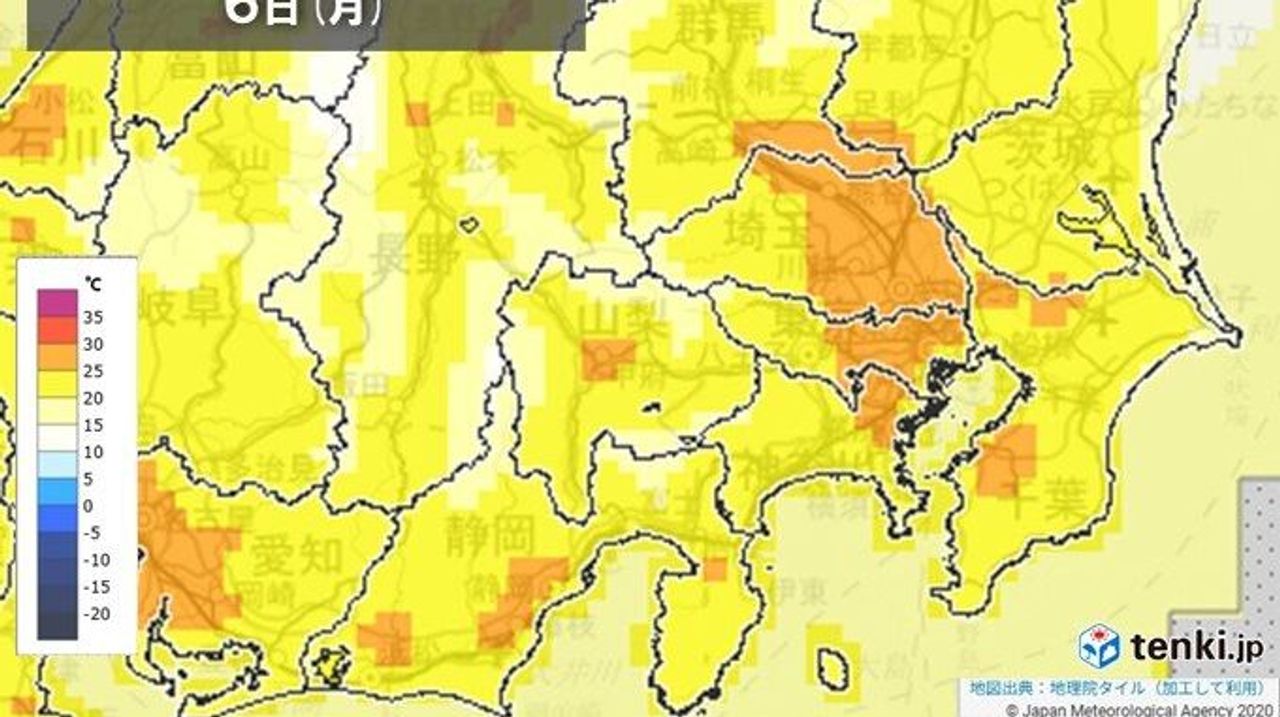
On April 6, the Kanto region is expected to see clear skies and 季節外れ (kisetsu hazure) warmth—so unusual that central Tokyo could experience its first 夏日 (natsubi) of the year.
An Unseasonably Warm Day in Kanto
According to the report, today the Kanto area will be sunny, with 季節外れ (kisetsu hazure) 陽気 (youki). The word 陽気 (youki) often suggests pleasant weather, but in this case, it may feel almost too warm for early spring.
In Tokyo’s 都心 (toshin), there is a 可能性がある (kanousei ga aru)—a possibility—that temperatures will reach a 夏日 (natsubi), defined as a day when the 最高気温 (saikou kion, highest temperature of the day) is 25°C or higher. If that happens, it will be the first such day this year.
During the daytime, it may feel hot rather than simply warm.
Heatstroke Concerns in Early Spring
Even though it’s only early April, the article warns that people need to 備える (sonaeru) for 熱中症 (necchuu shou), or heatstroke.
Why is this important? At this time of year, people’s bodies are not yet used to high temperatures. Sudden warmth after cooler months can put stress on the body. The key message is simple: don’t underestimate spring heat just because the calendar says it’s not summer yet.
Cultural Context: What Is a “Natsubi”?
In Japan, weather reports use very specific temperature categories. One common term is 夏日 (natsubi), which officially means a day when the high reaches 25°C or more. You’ll often hear it on TV weather forecasts.
These precise categories reflect how closely people in Japan follow seasonal changes. The shift from spring to summer isn’t just about the month—it’s about the temperature, humidity, and how the body feels. That’s why a 季節外れ (kisetsu hazure) day can quickly become a health concern.
Learn Japanese from This Article
Key Vocabulary
| Japanese | Romaji | Meaning |
|---|---|---|
| 季節外れ | kisetsu hazure | unseasonal; out of season |
| 陽気 | youki | weather; climate (often pleasant) |
| 都心 | toshin | city center (especially Tokyo) |
| 夏日 | natsubi | a day with a high of 25°C or more |
| 最高気温 | saikou kion | highest temperature of the day |
| 熱中症 | necchuu shou | heatstroke |
| 備える | sonaeru | to prepare for; to be ready for |
Try reading this sentence from the article:
東京都心でも今年初めて夏日となる可能性があります。 Toukyou toshin demo kotoshi hajimete natsubi to naru kanousei ga arimasu. “Even in central Tokyo, there is a possibility it will become the first summer day of the year.”
Grammar Spotlight
1. 〜となる (to become — formal/written)
This is a more formal version of 〜になる (~ni naru), often used in news reports.
Pattern: Noun + となる
Example from the article:
- 夏日となる (natsubi to naru) — to become a summer day (reach 25°C or more)
More examples:
- 問題となる。 Mondai to naru. “It becomes a problem.”
- 話題となっています。 Wadai to natte imasu. “It has become a topic of discussion.”
You’ll frequently see 〜となる in newspapers and formal announcements.
2. 〜可能性がある (there is a possibility that...)
Pattern: Verb (dictionary form) + 可能性がある
- 夏日となる可能性がある。 Natsubi to naru kanousei ga aru. “There is a possibility it will become a summer day.”
More examples:
- 雨が降る可能性があります。 Ame ga furu kanousei ga arimasu. “There is a possibility it will rain.”
- 遅れる可能性がある。 Okureru kanousei ga aru. “There is a possibility of being late.”
This structure is extremely common in weather forecasts and news reports.
Useful Expression
- 熱中症に備える Necchuu shou ni sonaeru “To prepare for heatstroke”
Notice the particle に after 熱中症. It marks what you are preparing for.
Continue Learning
Want to strengthen your reading skills so you can understand more weather reports like this?
- Reading and Writing in Japanese II: Hiragana and Katakana: Want to learn more about general? Check out our lesson on Reading and Writing in Japanese II: Hiragana and Katakana.
- Introduction to Kanji: Pictorial Foundations of Japanese Script: Working on your reading skills? Our Introduction to Kanji: Pictorial Foundations of Japanese Script lesson is a great next step.
- Basic Vocabulary Building: Embracing Words Without Latin Ties: To understand more about general, explore our Basic Vocabulary Building: Embracing Words Without Latin Ties lesson.
Small weather words like 夏日 (natsubi) and 季節外れ (kisetsu hazure) appear constantly in Japanese news. The more you notice them, the more natural your reading will feel.
これからもよろしくお願いします。 Kore kara mo yoroshiku onegaishimasu.