
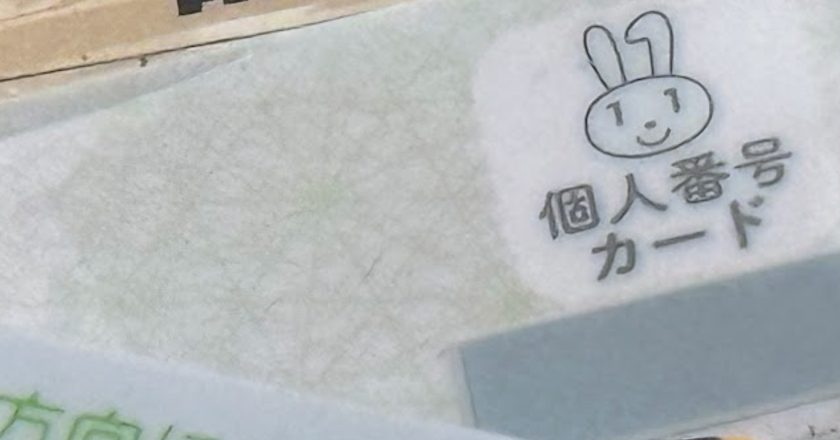
On April 6, ITmedia highlighted a surprisingly relatable tech problem: children’s マイナンバーカード (mainanbā kādo) are sometimes too difficult to use—even failing facial recognition as kids grow up.
As Japan’s new school year begins, many families are celebrating entrance ceremonies and new grades. But behind the scenes, parents are also dealing with something far less festive: digital IDs, passwords, and unexpected system limitations.
Let’s take a closer look at what’s happening—and what it reveals about how Japan designs technology.
When a Student Tried to Move… and Hit a Wall
The issue gained attention through a column ranked No. 4 in ITmedia’s weekly Top 10 articles (March 28–April 3, 2026). The story described a university-bound son preparing to live alone.
He tried to complete his moving-out procedure using his My Number card.
In Japanese, the pattern looks like this:
- 転出手続きをしようとしたら、失敗した。 Tenshutsu tetsuzuki o shiyō to shitara, shippai shita. When he tried to complete the moving-out procedure, he failed.
Why did he fail?
Because his child-issued card did not have a 署名用電子証明書 (shomeiyō denshi shōmeisho)—a “digital certificate for signature.” In Japan, children under 15 are not issued this certificate unless specifically requested.
Since he had received his card at age 14, he didn’t have the certificate. As a result, he couldn’t complete the procedure online and had no choice but to use paper forms.
This is where another important grammar pattern appears:
- 紙で手続きせざるを得なかった。 Kami de tetsuzuki sezaru o enakatta. He had no choice but to complete the procedure on paper.
The phrase 〜せざるを得ない (~sezaru o enai) means “to have no choice but to do.”
Facial Recognition vs. Growing Up
The complications didn’t stop there.
When he attempted to reset his password using the JPKI暗証番号リセットアプリ (JPKI anshō bangō risetto apuri), he needed to use 顔認証 (kao ninshō)—facial recognition.
But there was a problem.
His face had changed significantly between age 14 and his university years. After three failed attempts, the system triggered a ロックアウト (rokkuauto)—a security lock.
In other words, growing up caused the system to reject him.
Parents Struggling with Passwords
The article’s author, who has two elementary school children, says she deeply understands the frustration.
Her children mainly use their My Number cards as health insurance cards. But even managing two four-digit passwords for the 利用者証明用電子証明書 (user authentication digital certificate) can be confusing.
This brings up another modern challenge: パスワード管理 (pasuwādo kanri)—password management.
Some parents reportedly:
- Use the same password for all children.
- Use each child’s birthday as the password.
The author even admits she regrets not simplifying things that way—despite the security concerns.
And if you forget the password? You need facial recognition again… which leads to the same growth-related problem.
Babies and Medical Visits
Since the end of 2025, Japan’s traditional health insurance cards have been abolished in principle. Both adults and children must use the My Number card at medical institutions.
That means even:
- Newborn babies
- Preschoolers
- Elementary school children
must use their My Number card at hospital reception.
Some parents report that babies who received their card as newborns could no longer pass facial recognition just a few months later due to rapid growth.
(As of December 2, 2024, infants under one year old are now issued My Number cards without a photo, according to the article’s update.)
There’s also a practical issue: hospital facial recognition devices are typically positioned at adult height. Parents often have to lift sick children up to the camera, remove masks, adjust their position, and wait for authentication—while the child feels unwell.
As the author puts it: it’s tough on parents.
Designed for Adults?
The author notes that the My Number system and マイナポータル (Maina Potaru, My Number Portal) have improved significantly.
For example, during tax season, calculating and filing medical expense deductions has become much smoother using the card and authentication アプリ (apuri). She says she is impressed every year by the improvements.
But she also feels the system seems fundamentally designed with adults in mind.
Children under 15 don’t automatically receive a signature digital certificate, which may reduce the burden of password setup. However, as seen in the university student’s case, it can later make procedures more complicated.
The article suggests that designing one system for both adults and children is more difficult than it appears.
Cultural Context: Japan’s Digital ID Transition
Japan’s My Number system is a national ID framework that links residents to tax, social security, and disaster response systems. In recent years, the government has pushed for broader adoption, including replacing health insurance cards.
The goal is efficiency and digital transformation.
But this article reveals something uniquely Japanese: careful, security-focused design sometimes clashes with real-life family situations.
It also shows how seriously Japan takes authentication—whether through 電子証明書 (denshi shōmeisho) or facial recognition.
Learn Japanese from This Article
Key Vocabulary
| Japanese | Romaji | Meaning |
|---|---|---|
| マイナンバーカード | mainanbā kādo | My Number card (Japanese national ID) |
| 電子証明書 | denshi shōmeisho | digital certificate |
| 顔認証 | kao ninshō | facial recognition |
| ロックアウト | rokkuauto | lockout after failed attempts |
| パスワード管理 | pasuwādo kanri | password management |
| アプリ | apuri | app (application) |
| データセンター | dēta sentā | data center |
Notice how many of these are written in katakana. Japanese tech vocabulary often adapts English words into Japanese pronunciation.
Grammar Spotlight
1️⃣ 〜ようとしたら
Meaning: When (someone) tried to do…, (unexpected result)
Structure: Verb (volitional form) + としたら
Example from the article:
- 転出手続きをしようとしたら、できなかった。 Tenshutsu tetsuzuki o shiyō to shitara, dekinakatta. When he tried to complete the moving-out procedure, he couldn’t.
Use this when something surprising or unintended happens after attempting an action.
2️⃣ 〜せざるを得ない
Meaning: Have no choice but to do
Structure: Verb (negative stem) + ざるを得ない
Example:
- 紙で手続きせざるを得なかった。 Kami de tetsuzuki sezaru o enakatta. He had no choice but to complete the procedure on paper.
This expression often appears in news articles and formal writing.
Useful Expression
- 落とし穴があった Otoshi ana ga atta There was a hidden pitfall.
This is a common metaphor in Japanese news writing for an unexpected problem.
Continue Learning
Working on your reading skills? Our Katakana Essentials: Adapting Global Words to Japanese lesson is a great next step.
To understand more about tech vocabulary, explore our Basic Vocabulary Building: Embracing Words Without Latin Ties.
Curious about how hiragana and katakana work together? Check out Reading and Writing in Japanese II: Hiragana and Katakana.
Japan’s digital systems are evolving quickly—and as this story shows, language evolves alongside them. By understanding the vocabulary and grammar behind real news stories like this, you’re learning Japanese the way it’s actually used today.
これからもよろしくお願いします。 Kore kara mo yoroshiku onegaishimasu.