
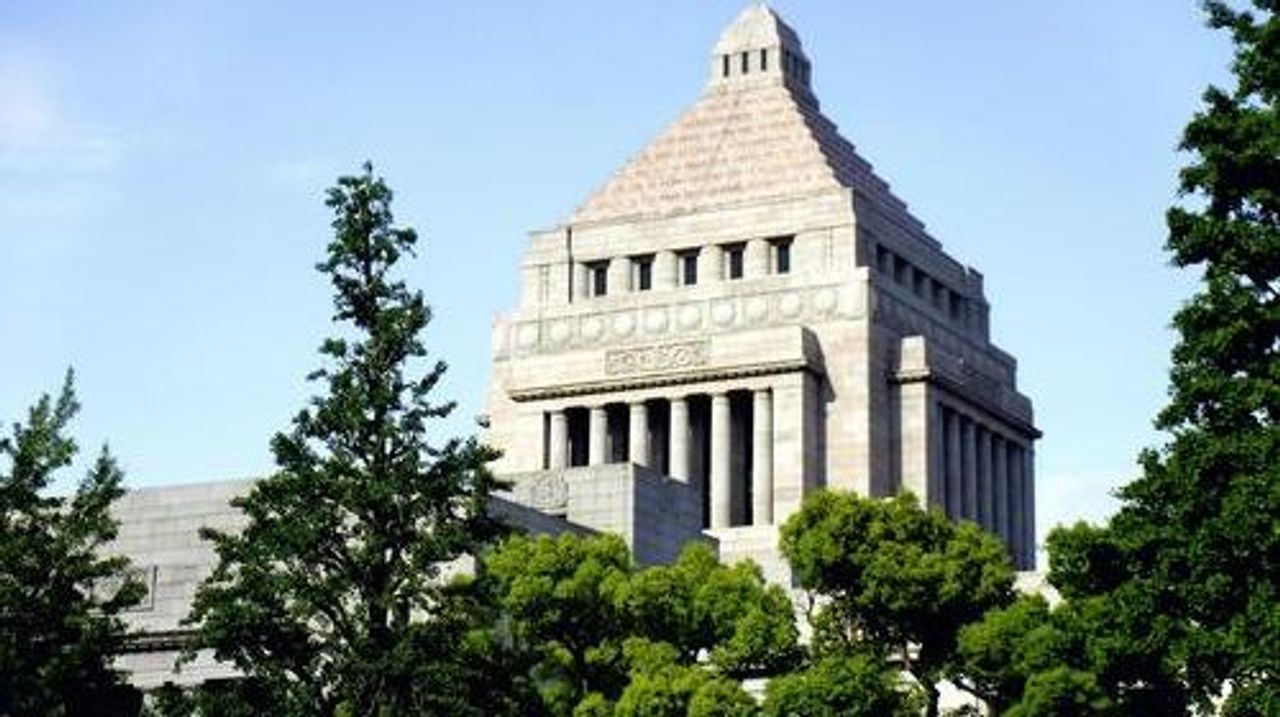
On April 6, the Liberal Democratic Party and the Constitutional Democratic Party agreed to hold the final round of questioning on the 2026 budget proposal in the House of Councillors the following day. Even if the proposal is rejected, it is expected to pass on the same day due to the constitutional superiority of the House of Representatives.
Final Steps for the 2026 Budget
Japan’s ruling Liberal Democratic Party and the opposition Constitutional Democratic Party reached an agreement on April 6 to conduct 締めくくり質疑 (shimekuguri shitsugi, closing questioning) on the 予算案 (yosan-an, budget proposal) for fiscal year 2026.
This questioning will take place on April 7 in the 参院 (san'in, House of Councillors), specifically in its budget committee. After that, the proposal will move to a 本会議 (honkaigi, plenary session) of the House of Councillors, where it will be put to a 採決 (saiketsu, vote).
According to the report, even if the proposal is 否決 (hiketsu, rejected) in the Upper House, it is expected to become law the same day. This is because of 衆院の優越 (shūin no yūetsu), the constitutional principle that gives the House of Representatives (the Lower House) greater authority over budget decisions. The current 見通し (mitōshi, outlook) is that the budget will be enacted on April 7 regardless of the Upper House vote.
What Does “Superiority of the Lower House” Mean?
Japan’s parliament is called the National Diet and consists of two chambers:
- The House of Representatives (Lower House)
- The House of Councillors (Upper House)
Under Japan’s Constitution, the Lower House has stronger power when it comes to budgets. This is known as 衆院の優越 (shūin no yūetsu).
If the Upper House rejects a budget bill, the decision of the Lower House takes precedence. That’s why the article notes that even if the proposal is voted down in the Upper House, it will still be established on the same day.
Understanding this system helps you see how Japanese political news often uses technical but precise wording to describe procedure.
Learn Japanese from This Article
Let’s break down some key vocabulary and grammar that appear in this report.
Key Vocabulary
| Japanese | Romaji | Meaning |
|---|---|---|
| 予算案 | yosan-an | budget proposal |
| 締めくくり質疑 | shimekuguri shitsugi | closing questioning |
| 参院 | san'in | House of Councillors (Upper House) |
| 本会議 | honkaigi | plenary session |
| 採決 | saiketsu | vote; decision by voting |
| 否決 | hiketsu | rejection (by vote) |
| 衆院の優越 | shūin no yūetsu | superiority of the House of Representatives |
| 見通し | mitōshi | outlook; prospect |
Notice how many of these words are compounds made of kanji. For example:
- 採 (take) + 決 (decide) → 採決 (saiketsu) = decision by taking votes
- 否 (no) + 決 (decide) → 否決 (hiketsu) = decision of “no” (rejection)
Once you start recognizing kanji patterns, political vocabulary becomes much easier to decode.
Grammar Spotlight
1. 〜ことで合意した
Pattern: Verb (dictionary form) + ことで合意した “agreed to do (something)”
From the article: 締めくくり質疑を7日の参院予算委員会で行うことで合意した。 Shimekuguri shitsugi o nanoka no san'in yosan iinkai de okonau koto de gōi shita. “They agreed to hold the closing questioning in the House of Councillors budget committee on the 7th.”
Here, 行う (okonau, to carry out) becomes 行うこと (“the act of carrying out”), and adding で合意した expresses reaching an agreement on that action.
You’ll often see this pattern in political and business news.
2. 〜された場合でも
Pattern: Verb (passive form) + 場合でも “even if (something) is done / happens”
From the article: 否決された場合でも… Hiketsu sareta baai demo… “Even if it is rejected…”
- 否決された = “was rejected” (passive past form)
- 場合 = case/situation
- でも = even
This structure is common in formal writing, especially legal or political contexts.
Useful Expression
見通しだ (mitōshi da) “It is expected that…” / “The outlook is…”
Example from the article context: 同日中に成立する見通しだ。 Dōjitsu-chū ni seiritsu suru mitōshi da. “It is expected to be enacted on the same day.”
Japanese news often uses 見通しだ to present an informed expectation without sounding overly certain.
Continue Learning
Want to strengthen your reading skills so articles like this feel easier?
- Reading and Writing in Japanese II: Hiragana and Katakana: Want to learn more about general? Check out our lesson on Reading and Writing in Japanese II: Hiragana and Katakana.
- Introduction to Kanji: Pictorial Foundations of Japanese Script: Working on your reading skills? Our Introduction to Kanji: Pictorial Foundations of Japanese Script lesson is a great next step.
- Basic Vocabulary Building: Embracing Words Without Latin Ties: Curious about the Japanese used here? Our Basic Vocabulary Building: Embracing Words Without Latin Ties lesson covers this in depth.
Political news may seem dense at first, but once you understand the key terms and structures, you’ll start to see clear patterns. Keep reading real Japanese sources—this is exactly how native speakers build familiarity with formal language.
これからもよろしくお願いします。 Kore kara mo yoroshiku onegaishimasu.