
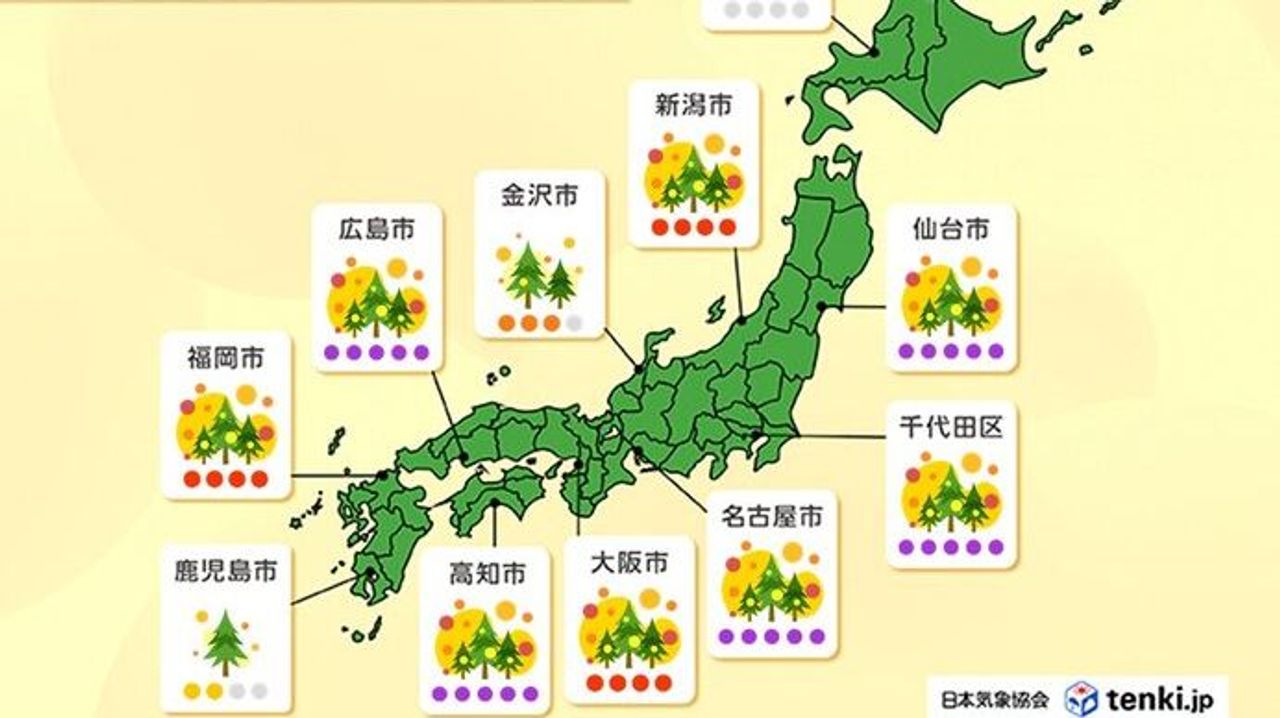
On April 5, a massive wave of pollen is forecast to sweep across Japan — from Kyushu all the way to the Tohoku region. While the weather is expected to clear up and create perfect conditions for going out and enjoying cherry blossom viewing, officials are urging people to take thorough precautions against allergies.
A Wide Area Affected by Pollen
According to the forecast (予想 yosou), 花粉 (kafun, pollen) will 大量 (tairyou, in large quantities) 飛散する (hisan suru, scatter through the air*) today.
The report specifically says:
九州から東北の広い範囲で花粉が大量飛散する予想です。 Kyūshū kara Tōhoku no hiroi han’i de kafun ga tairyou hisan suru yosou desu. “A large amount of pollen is forecast to disperse across a wide area from Kyushu to Tohoku.”
Let’s pause on that phrase 九州から東北の広い範囲で. This structure is very natural in Japanese weather reports and news broadcasts. It clearly marks a geographical span — “in a wide area from Kyushu to Tohoku.” You’ll hear this pattern often when describing weather, disasters, or seasonal events.
Beautiful Weather — But Be Careful
The good news? The weather is expected to 回復する (kaifuku suru, recover or improve). As conditions clear, today will become:
お出かけやお花見日和となりますが、花粉対策は万全にしてお出かけください。 Odekake ya ohanami biyori to narimasu ga, kafun taisaku wa banzen ni shite odekake kudasai. “It will become ideal weather for going out and cherry blossom viewing, but please make sure your pollen countermeasures are complete before heading out.”
The word 日和 (biyori) is especially interesting. It means “ideal weather for ~.” You attach it to an activity:
- お出かけ日和 (odekake biyori) – perfect weather for going out
- お花見日和 (ohanami biyori) – perfect weather for cherry blossom viewing
At the same time, the advisory tone is clear. Even though it will be pleasant outside, people are encouraged to prepare 万全に (banzen ni, thoroughly or perfectly) before going out.
Cultural Context: Spring in Japan Means Pollen Season
Spring in Japan brings two powerful seasonal experiences at once: cherry blossoms and pollen.
お花見 (ohanami, cherry blossom viewing) is one of Japan’s most beloved traditions. Friends, families, and coworkers gather under blooming sakura trees to eat, drink, and celebrate the arrival of spring.
But it also overlaps with pollen season. When trees release 花粉 (kafun), many people suffer from allergies. That’s why news reports frequently combine cheerful weather updates with serious health reminders.
The balance you see in this article — “It’s beautiful outside, but please be careful” — reflects a very Japanese communication style: informative, polite, and preventative.
Learn Japanese from This Article
Vocabulary
| Japanese | Romaji | Meaning |
|---|---|---|
| 花粉 | kafun | pollen |
| 大量 | tairyou | large quantity, massive amount |
| 飛散する | hisan suru | to scatter, disperse in the air |
| 予想 | yosou | forecast, prediction |
| 回復する | kaifuku suru | to recover, improve |
| 日和 | biyori | ideal weather for ~ |
| 万全 | banzen | perfect, fully prepared |
Grammar Spotlight
1. 〜から〜の広い範囲で
Meaning: “In a wide area from ~ to ~”
Structure: Noun A + から + Noun B + の広い範囲で
Example from the article:
- 九州から東北の広い範囲で花粉が大量飛散する予想です。 Kyūshū kara Tōhoku no hiroi han’i de kafun ga tairyou hisan suru yosou desu. “A large amount of pollen is forecast to disperse across a wide area from Kyushu to Tohoku.”
This structure is common in weather and disaster reporting.
2. 〜となりますが、〜ください
Meaning: “It will become ~, but please ~” (formal advisory tone)
Structure: Clause + となりますが、Request + ください
Example from the article:
- お花見日和となりますが、花粉対策は万全にしてお出かけください。 Ohanami biyori to narimasu ga, kafun taisaku wa banzen ni shite odekake kudasai. “It will become perfect weather for cherry blossom viewing, but please make sure your pollen precautions are complete before going out.”
This pattern is very common in formal announcements, especially in news and public advisories.
Useful Expressions
- 花粉対策をする (kafun taisaku o suru) — to take measures against pollen
- 天気が回復する (tenki ga kaifuku suru) — the weather improves
- お出かけください (odekake kudasai) — please go out (polite invitation or suggestion)
Try making your own sentence:
- 天気が回復しますが、暖かい服を着てください。 Tenki ga kaifuku shimasu ga, atatakai fuku o kite kudasai. “The weather will improve, but please wear warm clothes.”
Continue Learning
To understand more about general topics like weather reports and seasonal vocabulary, explore our Reading and Writing in Japanese II: Hiragana and Katakana lesson.
Working on your reading skills? Our Introduction to Kanji: Pictorial Foundations of Japanese Script lesson is a great next step.
Ready to dive deeper? Our lesson on Basic Vocabulary Building: Embracing Words Without Latin Ties will help you master these concepts.
Spring in Japan is beautiful — but it comes with its own challenges. By understanding the language used in weather forecasts like this, you’re not just learning vocabulary. You’re learning how Japanese communicates caution, seasonality, and daily life.
これからもよろしくお願いします。 Kore kara mo yoroshiku onegaishimasu.