
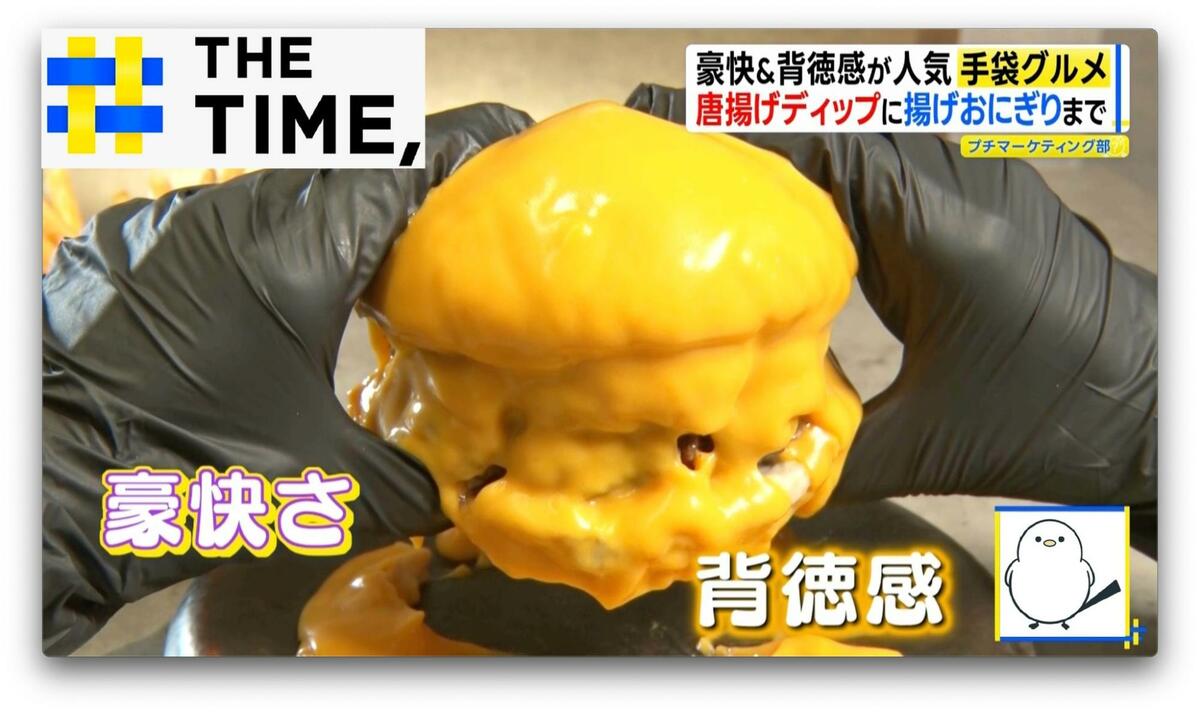
Black gloves, lively chatter, and chicken dipped straight into sauce — a new food trend called “glove gourmet” is gaining attention among young people in Japan.
According to a report featured on THE TIME, eating food by hand while wearing vinyl gloves has become increasingly 人気 (ninki, popularity), especially 若い世代を中心に (wakai sedai o chūshin ni, centered around the younger generation). But why is this style of eating catching on?
What Is “Glove Gourmet”?
The term refers to food that you eat 手づかみで (tezukami de, with your hands) — but with gloves on. Instead of using chopsticks or forks, diners put on black vinyl gloves and enjoy their meal in a more “wild” and direct way.
At the brewery pub dam pub in Toranomon, Tokyo, customers enjoy 自家醸造 (jika jōzō, house-made) craft beer along with food meant to be eaten by hand. The restaurant is lively and crowded — in Japanese, we say it’s 賑わう (nigiwau, bustling or lively*).
Inside, many customers can be seen wearing black gloves while eating.
One man in his 20s commented:
「手でワイルドに食べるタイプのチキンが結構好き」 Te de wairudo ni taberu taipu no chikin ga kekkō suki. “I really like the type of chicken you eat wildly with your hands.”
A woman in her 20s added:
「3種類ソースがあるけど、どれも味変できて美味しい」 San shurui sōsu ga aru kedo, dore mo ajihen dekite oishii. “There are three kinds of sauce, and you can change the flavor with any of them — they’re all delicious.”
Dipping “Dobon!” Into Sauce
One appeal seems to be the fun of dipping food straight into sauce — described in the article as “ドボンっ” (dobon!) — the sound of something plunging into liquid.
Instead of carefully spooning sauce onto your food, you dip it boldly. This ties into the idea of 味変 (ajihen), literally “flavor change.” In Japan, ajihen is a popular concept, especially in ramen and casual dining: you adjust the taste by adding condiments, sauces, or spices partway through the meal.
With three different 種類 (shurui, types) of sauces available, customers can experiment with different flavors while eating the same dish.
Cultural Context: Why Gloves?
Eating with your hands isn’t traditionally common in Japan, where chopsticks are standard. However, certain foods — like fried chicken, corn on the cob, or festival snacks — are sometimes eaten by hand.
What makes this trend unique is the use of gloves. The gloves keep hands clean while still allowing for a more tactile, direct eating experience. It creates a balance between hygiene and the fun, casual feeling of eating “wildly.”
For younger customers, this combination of novelty, social atmosphere, and customizable flavors seems to be a big part of the appeal.
Learn Japanese from This Article
Vocabulary
| Japanese | Romaji | Meaning |
|---|---|---|
| 手づかみ | tezukami | eating with one’s hands |
| 若い世代 | wakai sedai | younger generation |
| 人気 | ninki | popularity |
| 自家醸造 | jika jōzō | house-made; home-brewed |
| 賑わう | nigiwau | to be lively; to be crowded |
| 味変 | ajihen | changing the flavor |
| 種類 | shurui | kind; type; variety |
| 手袋 | tebukuro | gloves |
Grammar Spotlight
1. 〜を中心に
Meaning: centered around; mainly; focusing on
Structure: Noun + を中心に
Example from the article: 若い世代を中心に人気になっています。 Wakai sedai o chūshin ni ninki ni natte imasu. “It has become popular mainly among the younger generation.”
More examples:
東京を中心に展開しています。 Tōkyō o chūshin ni tenkai shite imasu. “It operates mainly in Tokyo.”
学生を中心に集まりました。 Gakusei o chūshin ni atsumarimashita. “People gathered, mainly students.”
This pattern is extremely useful when describing trends, news, and social phenomena.
2. 〜など
Meaning: such as; things like
Structure: Noun + など
From the article context: ビニール手袋などをはめて… Binīru tebukuro nado o hamete… “Wearing vinyl gloves and things like that…”
It softens the statement and suggests there may be other similar items.
Useful Expressions
- 味変できる (ajihen dekiru) — “can change the flavor”
- 結構好き (kekkō suki) — “I like it quite a bit” (casual, natural phrasing)
- ワイルドに食べる (wairudo ni taberu) — “to eat in a wild way”
Notice how casual and natural the quoted speech sounds. This is the kind of everyday Japanese you’ll hear from people in their 20s.
Continue Learning
Curious about how Japanese news describes trends without clearly marking past, present, or future in the same way English does?
- Time and Dates: Tense-Free Expressions Curious about the Japanese used here? Our Time and Dates: Tense-Free Expressions lesson covers this in depth.
Food trends come and go, but language sticks with you. By paying attention to expressions like 〜を中心に and everyday words like 味変, you’re learning Japanese the way it’s actually used in modern Japan.
これからもよろしくお願いします。 Kore kara mo yoroshiku onegaishimasu.