
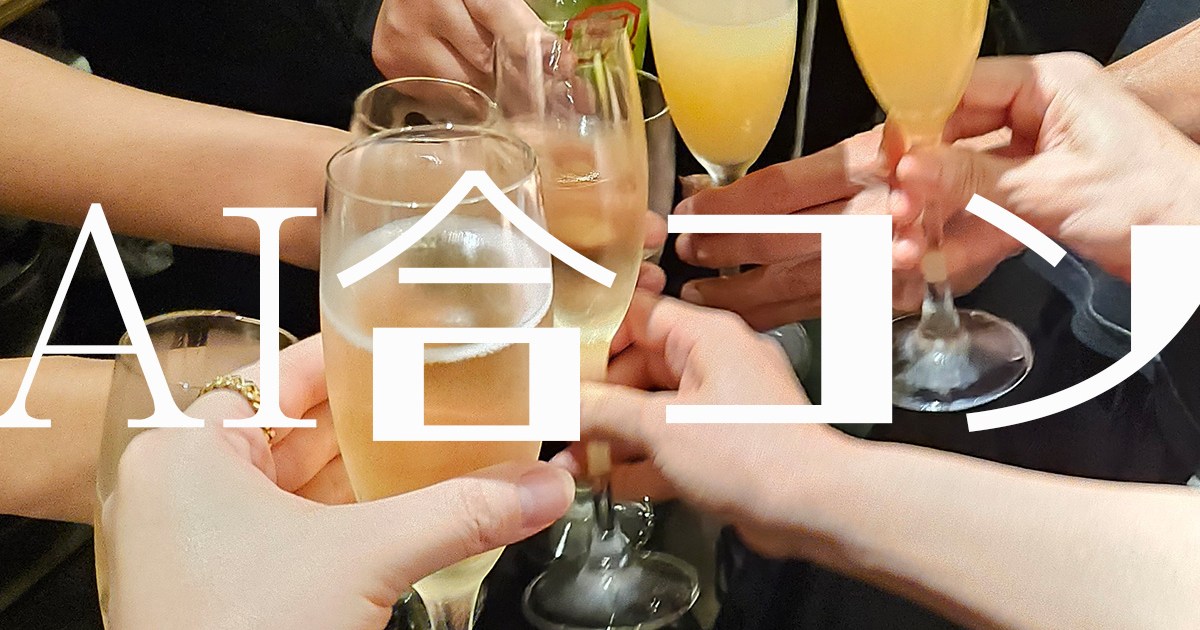
“AI will even set up your group date for you.”
That was the promise behind a new matchmaking service that caught one writer’s attention. As AI continues to evolve at an astonishing pace, it’s becoming normal in Japan to think, “For now, I’ll just ask AI.” From daily advice to business decisions, artificial intelligence is steadily weaving itself into everyday life—and now, into the world of 婚活 (konkatsu), or actively searching for a marriage partner.
What happened next, however, was less “romantic comedy” and more “dating horror story.”
AI Enters the 婚活 Battlefield
The service in question uses AI to arrange a 合コン (goukon)—a group blind date where several men and women meet at once. Group dates like these have long been part of Japanese dating culture, especially among coworkers and friends. The AI version simply replaces the human organizer.
Here’s how it works:
- You pass a photo screening.
- You enter your profile and preferences.
- You make a 予約 (yoyaku), or reservation.
- Once booked, the date is confirmed.
But there’s a catch.
If you キャンセル (kyanseru), you must pay a fee. Normally it’s several thousand yen. Cancel the day before, and it jumps to nearly 10,000 yen. That price acts as a 抑止力 (yokushiryoku)—a deterrent—since even one missing participant means the group date can’t happen.
Another twist? You don’t see who’s coming until 8 p.m. the day before. Even then, you only get basic profile details like age and job. Faces are blurred. You won’t truly know who you’re meeting until you arrive. It’s essentially a dating “gacha” (random draw) system.
The service is reportedly popular, and reservations fill up quickly. After waiting, the writer finally secured a slot—two weeks away.
Then, the day before the event, it was canceled.
Cancellation Festival
The first cancellation came after member information was released. According to the service, a man on the other side withdrew, causing the entire event to be called off.
Paying nearly 10,000 yen to cancel isn’t cheap. That fact led to an uncomfortable suspicion: could the women’s ages—especially the writer, who is around 40—have influenced the decision?
Still hopeful, she booked again.
Two weeks later, the day before the event—another cancellation.
This time, it happened before the member information was even released.
Confused but determined, she made a third reservation.
Again, the day before: canceled.
By the third time, it no longer felt like coincidence. Something about the situation felt 腑に落ちない (fu ni ochinai)—it just didn’t make sense. Why would someone casually throw away such a high cancellation fee?
She decided to 問い合わせる (toiawase ru)—contact the company directly.
The response: the cancellations were due to member circumstances, not company manipulation.
Still, the service mainly attracts users in their 20s and 30s. Although technically still in her 30s, the writer wondered if being close to 40 had quietly placed her at a disadvantage. It’s not that the company was necessarily discriminating—それはそういうわけではない (wake de wa nai)—but market demand is market demand.
Each time she made a reservation, she cleared her schedule. Each time, it collapsed the day before. The emotional toll quietly built up.
Then, a few days later, the company contacted her with a direct invitation to join another event. That raised new questions. Were participants being adjusted behind the scenes when numbers didn’t work out?
Nothing was confirmed. But the experience left her with a clear impression: AI may arrange the meeting, but modern dating remains brutally realistic.
“No Results Achieved!”
In the end, she never attended a single group date through the service.
Despite AI’s promise of efficiency, the future it arranged turned out to be surprisingly severe. For now, she no longer feels motivated to actively book again. If an opportunity happens to open up, she might join—but she’s no longer chasing it.
Her conclusion? Encounters ultimately come down to timing and fate. Rather than forcing it, she’ll move forward at her own pace.
Cultural Context: Group Dates and 婚活 in Japan
In Japan, 婚活 (konkatsu) is a widely accepted and even structured activity. The word combines 結婚 (kekkon, marriage) and 活動 (katsudou, activity). It reflects a practical mindset: finding a partner can require strategy and effort.
Meanwhile, the 合コン (goukon) is a long-standing social format. Typically organized by a mutual friend, it allows participants to meet several potential partners in a relaxed group setting. The AI version removes the friend from the equation—but it also removes the human buffer.
The article also shows how AI services are steadily becoming normalized. In Japanese, you might hear:
AIに聞くか。 AI ni kiku ka. “Shall I just ask AI?”
That casual phrasing reflects how technology is blending into daily life.
Learn Japanese from This Article
Key Vocabulary
| Japanese | Romaji | Meaning |
|---|---|---|
| 婚活 | konkatsu | marriage hunting; actively seeking a spouse |
| 合コン | goukon | group blind date |
| 予約 | yoyaku | reservation; booking |
| キャンセル | kyanseru | cancellation |
| 抑止力 | yokushiryoku | deterrent; preventive force |
| 腑に落ちない | fu ni ochinai | not convincing; doesn’t make sense |
| 問い合わせる | toiawase ru | to inquire; to contact for information |
Grammar Spotlight
1️⃣ 〜つつある (Change in Progress)
This pattern expresses that something is gradually happening.
Structure: Verb (stem) + つつある
From the article’s theme: AIが日常に浸透しつつある。 AI ga nichijou ni shintou shi tsutsu aru. “AI is gradually permeating everyday life.”
You’ll often see this in news articles describing social trends.
2️⃣ 〜わけではない (It’s Not That…)
This pattern softens statements and avoids absolute conclusions.
Structure: Verb / い-adjective / な-adjective + わけではない
Example inspired by the article: 差別しているわけではない。 Sabetsu shite iru wake de wa nai. “It’s not that they’re discriminating.”
Japanese communication often avoids direct accusations. This pattern helps express nuance and restraint.
Useful Expression
なんの成果も得られませんでした! Nanno seika mo eraremasen deshita! “I didn’t achieve any results at all!”
This dramatic phrase is often used humorously after failure—especially online.
Continue Learning
📚 Want to understand the verb forms used here? Check out Masu Form: Mastering Polite Everyday Speech.
📚 Ready to dive deeper? Our lesson on Greetings and Self-Introductions: Authentic Entry Phrases will help you master these concepts.
📚 Ready to dive deeper? Our lesson on Basic Vocabulary Building: Embracing Words Without Latin Ties will help you master these concepts.
Basic Vocabulary Building: Embracing Words Without Latin Ties
これからもよろしくお願いします。 Kore kara mo yoroshiku onegaishimasu.