
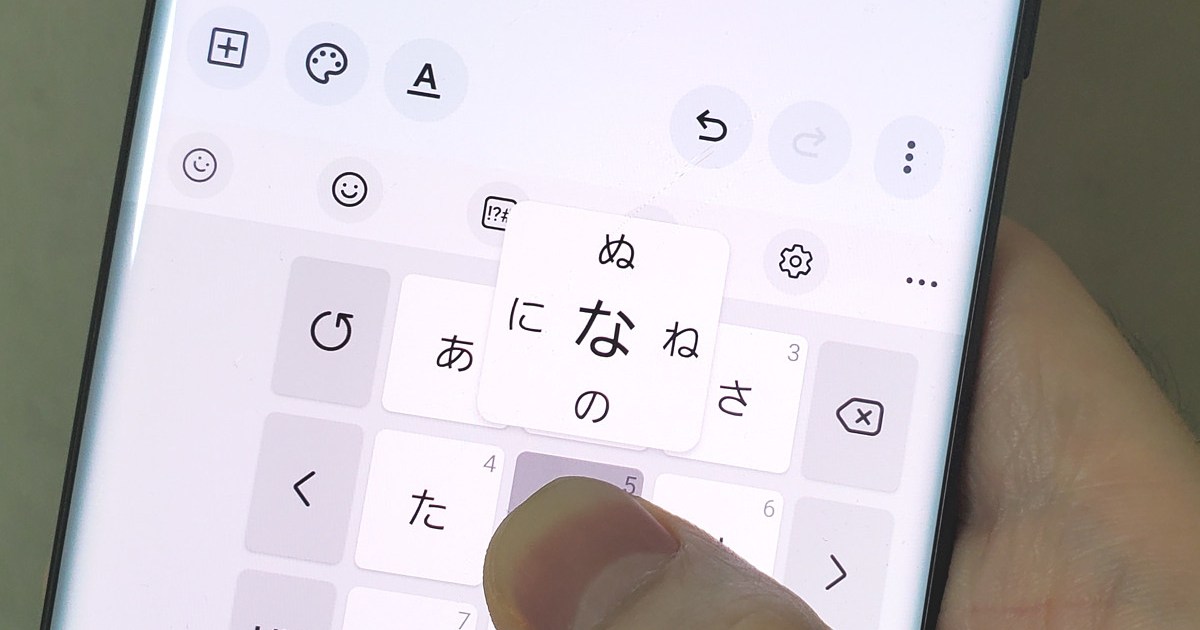
For 10 to 15 years, the writer of this Rocket News article avoided flick input on their smartphone. Not because it was impossible—but because it felt 面倒臭い (mendokusai), “too much trouble.”
Instead of switching to the standard Japanese smartphone method, they clung to QWERTY input, the keyboard-style layout familiar to English speakers. They never fully 移行する (ikou suru), “transition,” to flick input. And for over a decade, they simply… continued avoiding it.
Then one day, reality hit.
Typing ロケットニュース (Roketto Nyūsu), “Rocket News,” took about 20 seconds. When they tried flick input experimentally, it was painfully slow—so slow that a deep 羞恥の念 (shuuchi no nen), a “feeling of shame,” welled up inside.
Something had to change.
So they asked AI for help.
Asking AI: Can You Improve in One Week?
Rather than downloading a training app, the writer posed a very specific challenge to Google’s generative AI, Gemini:
“I’ve been relying on QWERTY input. Without using a practice app, how can I improve my flick input in one week?”
There were two deliberate conditions:
- No practice apps
- Only one week
Not because long-term training was impossible—決して長期に渡ると面倒だからではない (kesshite chouki ni wataru to mendou dakara de wa nai)—“it’s not that a long period would be troublesome.” It was simply more interesting this way.
Gemini responded instantly.
And first—it comforted the writer.
“It’s not ‘relying’ at all! There are many situations where QWERTY is faster. You’re just taking the first step toward being skilled at both.”
That gentle reassurance alone left an impression. Then Gemini laid out three concrete steps.
Step 1: Enter “The Path of Hardship”
The first step sounded dramatic:
修羅の道 (shura no michi) — “the path of hardship” (literally, the path of carnage).
In other words: remove your escape routes.
- Disable QWERTY input.
- Turn off “keitai-style” multi-tap input.
- Force yourself to use flick input only.
It sounds intense, but the logic is simple. As long as you can switch back, you won’t commit.
Step 2: Build a “Mental Character Map”
Gemini’s second step focused on constructing a 文字配列マップ (moji hairetsu mappu), a “mental map of character layout.”
For example, with the あ行 (a-gyou, the “A-row”):
- あ → い → う → え → お (a → i → u → e → o)
While chanting them almost like a spell, move your finger:
- Left
- Up
- Right
- Down
Repeat this for every row: か行 (ka-gyou), さ行 (sa-gyou), and so on.
Think of it like baseball practice. Before the game begins, you maintain your bat and practice swings. These drills build muscle memory.
After these two steps, the writer felt some improvement—but still unsteady.
The real breakthrough came next.
Step 3: Turn Daily Life Into a Practice Field
The third step was surprisingly simple:
Use flick input everywhere. 四六時中 (shirokujichuu)—all the time.
- Reply to SNS messages using flick.
- Do all web searches with flick.
- Write your thoughts in a private LINE group or memo app.
- Mentally convert train ads or TV subtitles into flick input patterns.
- Even repeat what people say by typing it.
The most eye-opening idea?
You don’t always need to touch your phone to practice. Just mentally converting what you see into kana builds that internal map.
Daily life becomes a typing game.
At first, it was frustrating. Gemini had even labeled days 1–2 as:
絶望期 (zetsubouki) — “the period of despair.”
But it also predicted that by days 5–7, flick input would start to feel easier than QWERTY.
And that’s exactly what happened.
The Result After One Week
After seven days of focused practice, the improvement was dramatic.
Typing ロケットニュース now took just 5–6 seconds.
Fingers that once hesitated now “naturally sensed the correct direction.” The mental character map had taken shape.
One week earlier, the writer had been avoiding flick input for over a decade—逃げ続けていた (nige tsuzukete ita), “continuing to run away.” Now they had reached a new level.
Two reflections remained:
- Modern AI is impressively capable.
- Flick input is truly powerful once mastered.
The writer hadn’t underestimated AI exactly—その力を侮っていたわけではない (sono chikara o anadoru itta wake de wa nai)—“it’s not that I was looking down on its power.” But the experience proved how effectively AI could guide real improvement.
And flick input?
Once you get used to it, it’s hard to go back.
Cultural Context: Why Flick Input Matters in Japan
In Japan, smartphones are primarily designed around kana input. Flick input allows you to type Japanese efficiently using directional swipes from each kana base (like あ, か, さ).
While QWERTY is available, native Japanese users overwhelmingly rely on flick input for speed and efficiency. Someone typing slowly with QWERTY can stand out—especially among younger users who grew up with flick as the default.
This article humorously captures a very Japanese experience: overcoming reluctance, embracing discipline, and turning daily life into structured practice.
Learn Japanese from This Article
Vocabulary
| Japanese | Romaji | Meaning |
|---|---|---|
| 面倒臭い | mendokusai | troublesome; annoying |
| 移行する | ikou suru | to transition; to shift |
| 羞恥の念 | shuuchi no nen | a feeling of shame |
| 助力 | joryoku | assistance; help |
| 至る | itaru | to reach (a conclusion/state) |
| 修羅の道 | shura no michi | path of hardship |
| 四六時中 | shirokujichuu | all the time |
Grammar Spotlight
1️⃣ 〜続ける (~tsuzukeru) — “to continue doing”
Verb (stem) + 続ける
逃げ続けていた。 Nige tsuzukete ita. “I continued running away.”
使い続ける。 Tsukai tsuzukeru. “To keep using.”
This pattern emphasizes ongoing action over a long period.
2️⃣ 〜わけではない (~wake de wa nai) — “It’s not that…”
Used to soften or clarify what you don’t mean.
面倒だからではない。 Mendou dakara de wa nai. “It’s not because it’s troublesome.”
侮っていたわけではない。 Anadotte ita wake de wa nai. “It’s not that I underestimated it.”
This structure is extremely common in natural Japanese explanations.
Useful Expressions
目から鱗だった。 Me kara uroko datta. “It was eye-opening.” (literally, “scales fell from my eyes”)
日常生活を練習場に変える。 Nichijou seikatsu o renshuujou ni kaeru. “Turn daily life into a practice field.”
These expressions reflect a very Japanese mindset: improvement through consistent, immersive repetition.
Continue Learning
- Want to understand the verb forms used here? Check out Masu Form: Mastering Polite Everyday Speech.
- To understand more about lifestyle, explore our Basic Vocabulary Building: Embracing Words Without Latin Ties.
- To understand more about lifestyle, explore our Greetings and Self-Introductions: Authentic Entry Phrases.
One week. No apps. Just commitment—and a little AI 助力 (joryoku), “assistance.”
Sometimes improvement doesn’t require a new tool. It requires removing your escape routes and practicing 四六時中 (shirokujichuu), all the time.
And sometimes, the hardest part isn’t the skill itself—it’s finally deciding to stop running away.
これからもよろしくお願いします。 Kore kara mo yoroshiku onegaishimasu.