
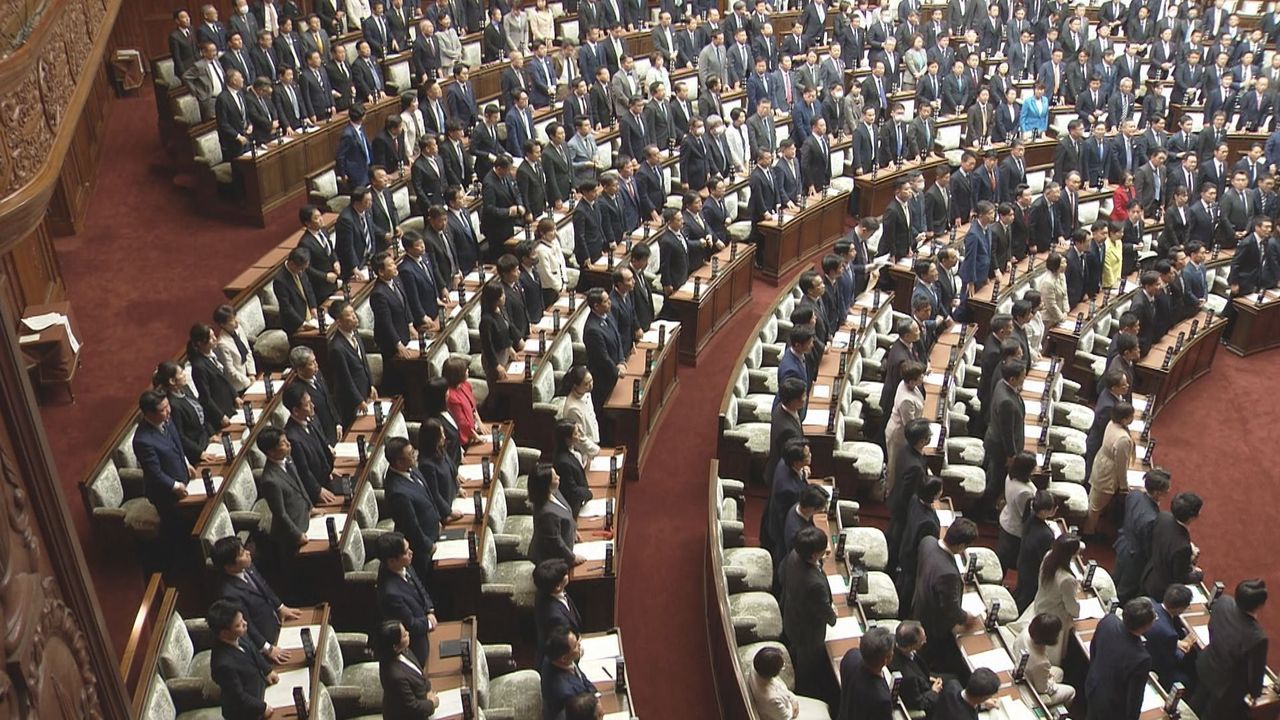
A provisional budget was passed in Japan’s House of Representatives just moments ago. The vote took place in a plenary session, and the measure was approved by a majority of ruling party lawmakers and their allies.
Provisional Budget Passed in Lower House
The 暫定予算案 (zantei yosan-an), a provisional budget proposal that serves as a “bridge” 〜までの (made no, until) the full new fiscal year budget is enacted, was put to a vote in the 衆議院本会議 (shuugiin honkaigi), the plenary session of the House of Representatives.
During the session, a formal 採決 (saiketsu, vote) がおこなわれ、可決されました (ga okonaware, kaketsu saremashita) — was conducted and the bill was passed. The approval came with a majority of support from the ruling parties and others.
The provisional measure will function as a temporary financial framework until the full 新年度予算案 (shinnendo yosanan), the new fiscal year budget proposal, is formally enacted.
Why a Provisional Budget Is Needed
Japan’s fiscal and administrative systems are closely tied to the 新年度 (shinnendo), or new fiscal year, which begins on April 1. If the main 予算案 (yosanan, budget proposal) has not yet been enacted by the start of the new year, the government may introduce a 暫定予算 (zantei yosan), a temporary budget that allows essential government functions to continue.
This ensures that public services and administrative operations are not interrupted while lawmakers continue deliberations on the full budget.
The vote took place in the 衆議院 (shuugiin), the House of Representatives, which is the lower house of Japan’s National Diet. The 本会議 (honkaigi) refers to a plenary session where all members gather and formal decisions such as final votes are made.
Cultural Context: How News Is Reported in Japanese
Japanese news reporting often uses formal passive structures to maintain a neutral tone. Instead of saying “Lawmakers passed the bill,” reports frequently say that a vote “was conducted” and the bill “was passed.”
For example:
- 採決がおこなわれ、可決されました。 Saiketsu ga okonaware, kaketsu saremashita. “A vote was held, and it was passed.”
This style focuses on the action itself rather than on who performed it — a common feature of formal Japanese reporting.
Learn Japanese from This Article
Key Vocabulary
| Japanese | Romaji | Meaning |
|---|---|---|
| 新年度 | shinnendo | new fiscal/academic year |
| 予算案 | yosanan | budget proposal |
| 暫定予算 | zantei yosan | provisional (temporary) budget |
| 衆議院 | shuugiin | House of Representatives |
| 本会議 | honkaigi | plenary session |
| 採決 | saiketsu | vote (formal decision by voting) |
| 可決 | kaketsu | to pass (a bill) |
Try reading the original sentence structure:
新年度予算案が成立するまでの「つなぎ」となる暫定予算案は、衆議院本会議で採決がおこなわれ、可決されました。 Shinnendo yosanan ga seiritsu suru made no “tsunagi” to naru zantei yosanan wa, shuugiin honkaigi de saiketsu ga okonaware, kaketsu saremashita. “The provisional budget proposal, which serves as a bridge until the new fiscal year budget is enacted, was voted on in the House of Representatives plenary session and was passed.”
Grammar Spotlight
1. 〜までの (made no) — “until; up to the point of”
Structure:
- Verb (dictionary form) + までの + Noun
Example from the article:
- 成立するまでのつなぎ Seiritsu suru made no tsunagi “A bridge until (it) is enacted”
More examples:
- 完成するまでの時間 Kansei suru made no jikan “The time until completion”
- 帰るまでの計画 Kaeru made no keikaku “Plans until returning home”
This pattern modifies a noun and explains the period leading up to something.
2. Passive News Style: 〜がおこなわれ、〜されました
Structure:
- Noun + が + Passive Verb (おこなわれ)
- Followed by another passive verb (されました)
Example:
- 採決がおこなわれ、可決されました。 “A vote was held, and it was passed.”
This is common in formal writing and news reports, where the focus is on the event rather than the actor.
Useful Expressions
- 成立する (seiritsu suru) — to be enacted (used for laws and budgets)
- 賛成多数で可決される (sansei tasū de kaketsu sareru) — to be passed by majority approval
These expressions frequently appear in political and economic news, so recognizing them will greatly improve your reading comprehension.
Continue Learning
- Curious about the Japanese used here? Our Reading and Writing in Japanese II: Hiragana and Katakana lesson covers this in depth.
- Working on your reading skills? Our Introduction to Kanji: Pictorial Foundations of Japanese Script lesson is a great next step.
- Want to learn more about general vocabulary? Check out our lesson on Basic Vocabulary Building: Embracing Words Without Latin Ties.
By reading real news like this, you’re learning Japanese the way it’s actually used in society — formal, precise, and deeply connected to Japan’s political and cultural systems.
これからもよろしくお願いします。 Kore kara mo yoroshiku onegaishimasu.