
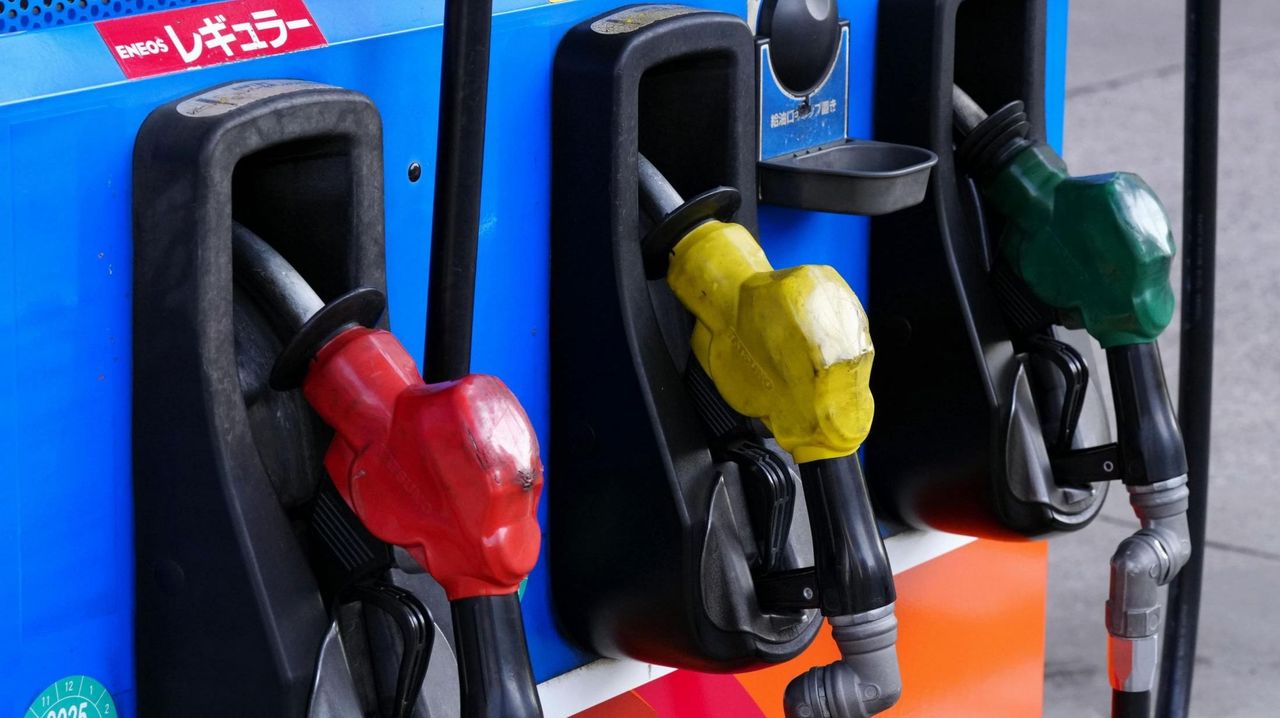
The Japanese government will use nearly all of its remaining contingency budget—about 810 billion yen—to reinforce a gasoline subsidy fund, it was learned on the 23rd. The move comes in response to worsening conditions in the Middle East and continued rises in global crude oil prices.
Government to Tap 予備費 Amid Rising Oil Prices
According to the report, the government will utilize its 2025 予備費 (yobihi, reserve fund) of approximately 800 billion yen to add money to a fund that serves as the 財源 (zaigen, financial source) for gasoline 補助金 (hojokin, subsidies*).
This action comes 中東情勢の悪化を受け (chūtō jōsei no akka o uke), meaning “in response to the worsening Middle East situation.” As tensions in the region continue, 原油相場 (genyu sōba, crude oil market prices) have remained high.
Although the government resumed subsidy payments on the 19th in order to curb gasoline price increases, rising oil prices have raised concerns that the existing fund could face 枯渇 (kokatsu, depletion). By injecting additional money from the reserve budget, officials aim to prevent the fund from running dry.
The remaining balance of the reserve fund is said to be about 810 billion yen, and the government plans to use nearly all of it. A formal 閣議決定 (kakugi kettei, Cabinet decision) is expected as early as the 24th.
Why This Matters in Japan
Gasoline prices directly affect daily life in Japan. From commuting by car to transporting goods across the country, higher fuel costs can quickly influence household budgets and business expenses.
The use of 予備費 is significant. In Japan’s budgeting system, this contingency fund is set aside for unexpected events. Tapping almost the entire amount shows the seriousness of the situation and the government’s intention to stabilize prices quickly.
You’ll often see this kind of careful, formal language in Japanese news reporting—especially when discussing government finances and policy decisions.
Learn Japanese from This Article
Let’s break down key vocabulary and expressions that appear frequently in Japanese news.
Key Vocabulary
| Japanese | Romaji | Meaning |
|---|---|---|
| 予備費 | yobihi | reserve fund; contingency budget |
| 中東情勢 | chūtō jōsei | Middle East situation (political conditions) |
| 補助金 | hojokin | subsidy; financial aid |
| 財源 | zaigen | financial source; funding source |
| 原油相場 | genyu sōba | crude oil market price |
| 枯渇 | kokatsu | depletion; running dry |
| 閣議決定 | kakugi kettei | Cabinet decision |
Notice how many of these words use kanji related to money and resources:
- 費 (expense)
- 金 (money)
- 源 (source)
- 油 (oil)
Recognizing these building blocks will dramatically improve your ability to read economic news.
Grammar Spotlight
1. 〜を受け (〜 o uke) — “in response to”
Structure: > Noun + を受け
Meaning: “in response to…” or “following…”
Example from the article:
- 中東情勢の悪化を受け、政府は対策を取った。 Chūtō jōsei no akka o uke, seifu wa taisaku o totta. In response to the worsening Middle East situation, the government took measures.
More examples:
- 台風の被害を受け、学校は休校になった。 Taifū no higai o uke, gakkō wa kyūkō ni natta. In response to typhoon damage, the school closed.
This structure is very common in formal writing and news reports.
2. 〜ことが分かった (〜 koto ga wakatta) — “it was learned that…”
Structure: > Clause (plain form) + ことが分かった
This is a typical journalistic expression meaning “it became clear that…” or “it was learned that…”
Example:
- 予備費を活用することが分かった。 Yobihi o katsuyō suru koto ga wakatta. It was learned that the reserve fund will be used.
You’ll see this phrase constantly in Japanese news articles. It adds a formal, objective tone.
Useful Expression
- 価格の上昇を抑える Kakaku no jōshō o osaeru To curb (hold down) price increases
Example:
- 政府は価格の上昇を抑えるために補助金を出す。 Seifu wa kakaku no jōshō o osaeru tame ni hojokin o dasu. The government provides subsidies to curb price increases.
Continue Learning
To strengthen your reading skills and better understand articles like this:
- To understand more about general, explore our Reading and Writing in Japanese II: Hiragana and Katakana lesson.
- Working on your reading skills? Our Introduction to Kanji: Pictorial Foundations of Japanese Script lesson is a great next step.
- Want to learn more about general? Check out our lesson on Basic Vocabulary Building: Embracing Words Without Latin Ties.
By reading real news like this, you’re training yourself to understand the same language Japanese people encounter every day.
これからもよろしくお願いします。 Kore kara mo yoroshiku onegaishimasu.