
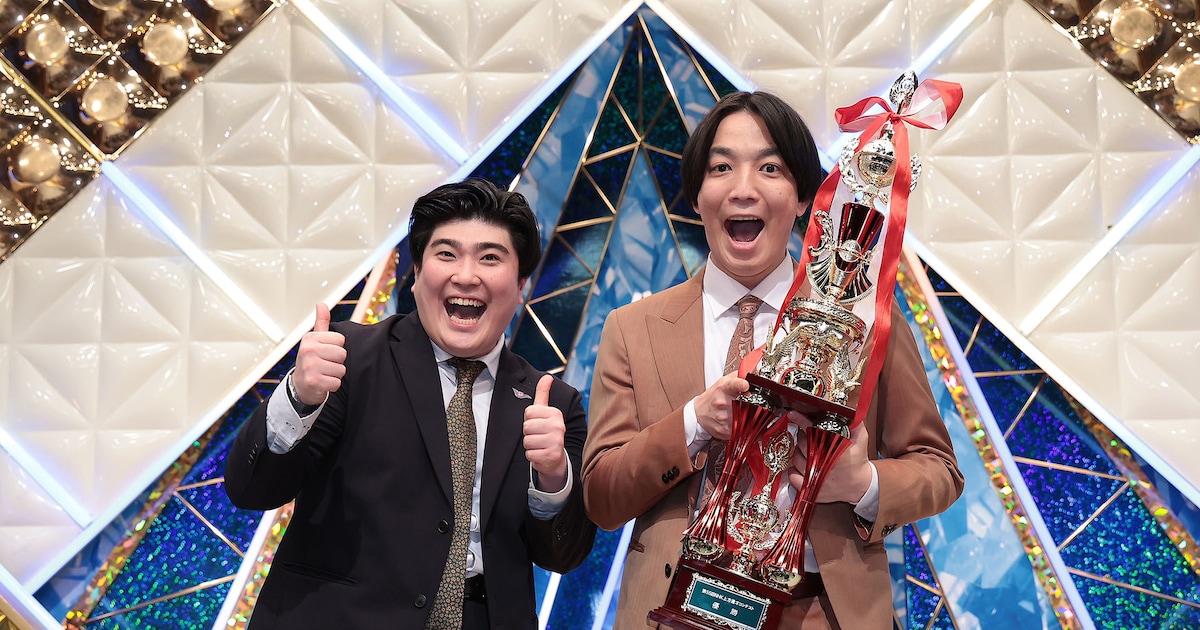
On March 20, the 55th NHK Kamigata Manzai Contest crowned its newest champion: 例えば炎 (Tatoeba Honoo). After advancing through intense preliminary rounds, the duo claimed 優勝 (yuushou, overall victory) at the final event held at NHK Osaka.
For young comedians in western Japan, this is one of the most prestigious stages they can stand on.
A Historic Comedy Competition
The NHK上方漫才コンテスト (NHK Kamigata Manzai Contest) has been held since 1971 by NHK Osaka. It’s open to comedy duos and groups who have been active for less than 10 years, making it a major stepping stone for rising performers.
This year:
- 122 groups entered the first preliminary round.
- 17 advanced to the final qualifying round.
- 8 acts made it to the televised main competition.
From there, the competition split into two blocks:
- Aブロック: ライムギ, 豪快キャプテン, もも, シカノシンプ
- Bブロック: ジョックロック, 侍スライス, 例えば炎, タレンチ
In tournament-style fashion, winners from each block 勝ち上がる (kachiagaru, advance), or literally “rise up by winning.” Eventually, 例えば炎 advanced to the 決勝 (kesshou, final round) and secured the championship.
In Japanese, you’ll also hear the expression 駒を進める (koma o susumeru), which literally means “to move a game piece forward” (like in shogi). It’s often used to describe advancing to the next stage of a tournament.
Performing at Their Best
During the broadcast, the duo 披露する (hirou suru, performed/showcased) their manzai routine on stage at NHK Osaka.
After their victory, member タキノ shared:
優勝できて非常にうれしいですし、びっくりしています。 Yuushou dekite hijou ni ureshii desu shi, bikkuri shiteimasu. “I’m extremely happy to have won, and I’m also surprised.”
He added that luck may have played a part:
運が良かったというのもあるなと。 Un ga yokatta to iu no mo aru na to. “I think we were lucky, too.”
He mentioned that the performance order worked in their favor and that being in the 楽屋 (gakuya, dressing room/backstage) with familiar comedians from their usual theater helped them relax. He even said:
今までテレビでやってきた中で、一番良い状態で漫才ができたかもしれません。 Ima made terebi de yatte kita naka de, ichiban ii joutai de manzai ga dekita kamoshiremasen. “It might have been the best condition we’ve ever performed manzai in on television.”
Notice the grammar 〜かもしれません (kamoshiremasen), meaning “might” or “possibly.” It softens the statement and shows humility—very common in Japanese interviews.
Facing an Admired Senior in the Final
The final round was especially meaningful for member 田上.
He explained that the opposing duo, 豪快キャプテン, had been appearing as guest performers at his group’s monthly live shows for nearly two years, starting from their second year as comedians.
He said:
憧れの先輩と決勝でやれてうれしかったです。 Akogare no senpai to kesshou de yarete ureshikatta desu. “I was happy to compete in the final with a senior I’ve always admired.”
The phrase 憧れの先輩 (akogare no senpai) is deeply cultural. In Japan, 先輩 (senpai) refers to someone senior in experience, not just age. Expressing admiration toward a senpai shows respect and humility—important values in Japanese society.
田上 also revealed that this appearance at NHK Osaka was his first time back on that channel since appearing on the children’s program 「おかあさんといっしょ」.
He used the grammar pattern:
「おかあさんといっしょ」ぶりのNHK大阪のテレビでした。
Here, 〜ぶり(に) (~buri ni) means “for the first time in…” or “after…”. In this case, it means:
“It was my first time on NHK Osaka TV since ‘Okaasan to Issho.’”
Finally, he reflected:
あの日はみんなが優勝だったと思いますが、今日は唯一の優勝なのでうれしいです。 “I think everyone was a winner that day, but today we’re the sole champions, so I’m happy.”
Cultural Context: Why Kamigata Manzai Matters
“Kamigata” refers to the Kansai region (including Osaka and Kyoto), historically considered the heart of Japanese comedy. Osaka in particular is famous for its fast-paced, dialogue-driven comedy style known as 漫才 (manzai).
Many nationally famous comedians began their careers in regional contests like this one. Winning the NHK Kamigata Manzai Contest signals that a duo is ready for bigger stages across Japan.
The program aired on NHK General (Kansai region) on March 20 from 7:30 to 8:48 p.m., and it is also available for streaming on NHK ONE.
Learn Japanese from This Article
Key Vocabulary
| Japanese | Romaji | Meaning |
|---|---|---|
| 優勝 | yuushou | championship; overall victory |
| 決勝 | kesshou | final round |
| 勝ち上がる | kachiagaru | to advance (in a tournament) |
| 駒を進める | koma o susumeru | to advance to the next stage |
| 披露する | hirou suru | to perform; to showcase |
| 楽屋 | gakuya | dressing room; backstage |
| 憧れの先輩 | akogare no senpai | a senior you admire |
Try making your own sentence with 勝ち上がる or 優勝 to describe a sports tournament you’ve watched.
Grammar Spotlight
1️⃣ 〜ぶり(に) — “For the first time in…”
Structure: Noun + ぶり(に)
Example from the article: 「おかあさんといっしょ」ぶりのNHK大阪のテレビでした。 Okaasan to Issho-buri no NHK Oosaka no terebi deshita. “It was my first time on NHK Osaka TV since ‘Okaasan to Issho.’”
More examples:
3年ぶりに日本へ行きました。 San-nen buri ni Nihon e ikimashita. “I went to Japan for the first time in three years.”
久しぶりですね。 Hisashiburi desu ne. “Long time no see.”
2️⃣ 〜かもしれません — “Might; possibly”
Structure: Plain form + かもしれません
Example from the article: 一番良い状態で漫才ができたかもしれません。 Ichiban ii joutai de manzai ga dekita kamoshiremasen. “It might have been our best performance condition.”
More examples:
明日は雨が降るかもしれません。 Ashita wa ame ga furu kamoshiremasen. “It might rain tomorrow.”
彼は来ないかもしれません。 Kare wa konai kamoshiremasen. “He might not come.”
This structure is especially common in interviews, where speakers avoid sounding too absolute or boastful.
Useful Expression
優勝できてうれしいです。 Yuushou dekite ureshii desu. “I’m happy to have won.”
This uses the 〜できて form to express happiness about being able to achieve something.
Continue Learning
Ready to strengthen your reading skills?
- Working on your reading skills? Our Introduction to Kanji: Pictorial Foundations of Japanese Script lesson is a great next step.
- Ready to dive deeper? Our lesson on Basic Vocabulary Building: Embracing Words Without Latin Ties will help you master these concepts.
- Working on your reading skills? Our Katakana Essentials: Adapting Global Words to Japanese lesson is a great next step.
Comedy contests like this aren’t just entertainment—they’re packed with real, natural Japanese. By paying attention to how performers and winners speak, you’re learning Japanese the way it’s actually used on TV in Japan.
これからもよろしくお願いします。 Kore kara mo yoroshiku onegaishimasu.