
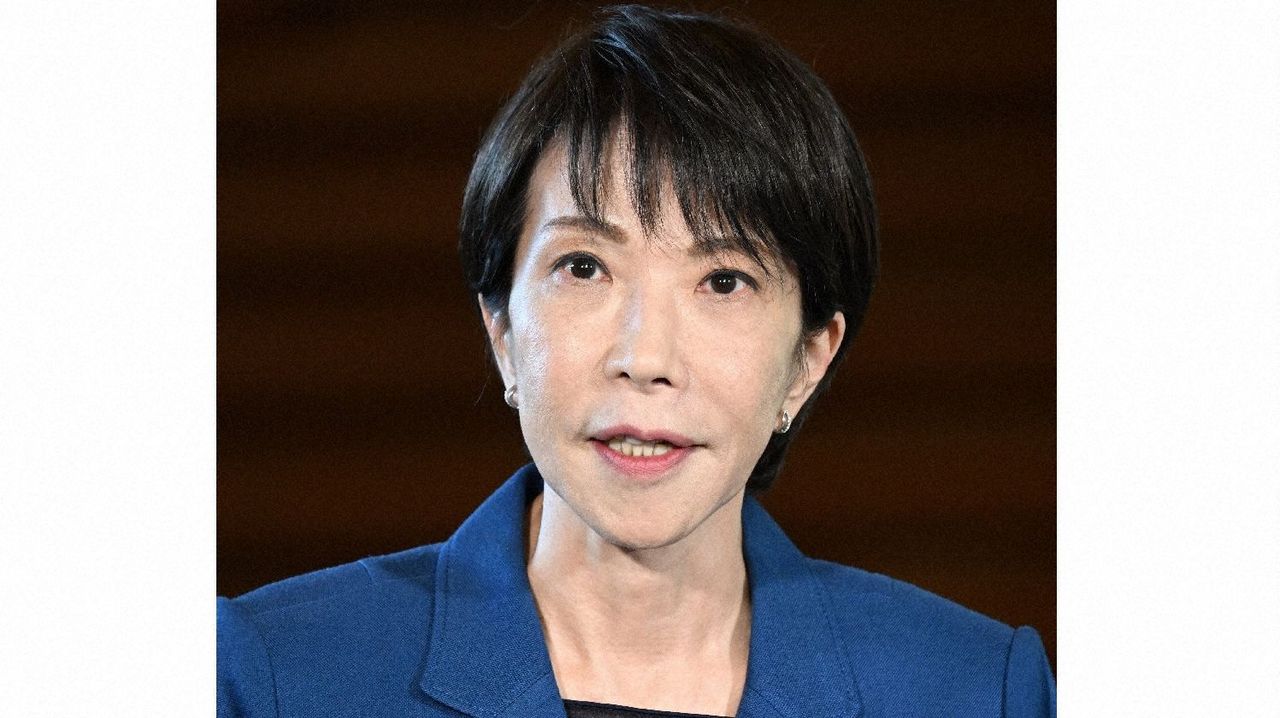
On March 18 (March 19 Japan time), Prime Minister Sanae Takaichi arrived in Washington, her 訪問先 (houmonsaki) for a high-level summit with U.S. President Donald Trump. The two leaders are scheduled to hold a formal 会談 (kaidan) at the White House on March 19.
At the center of the talks is the situation surrounding the Strait of Hormuz, which is described as being 事実上 (jijitsujou)—virtually—blockaded. President Trump’s comments 〜を巡る the security measures for the strait have reportedly shifted 二転三転 (niten-santen), or changed repeatedly. Observers are watching closely to see whether he will make 踏み込んだ (fumikonda)—more far-reaching—demands during the meeting.
Prime Minister Takaichi, for her part, hopes to confirm 連携強化 (renkei kyouka), or strengthened cooperation, across a wide range of areas including security and the economy. However, it is 見通しだ that no 共同声明 (kyoudou seimei), or joint statement, will be issued by the two leaders after the meeting.
Why the Strait of Hormuz Matters
The Strait of Hormuz is a critical maritime route for global energy transportation. When Japanese news describes the area as 事実上の封鎖 (jijitsujou no fuusa), it means that although there may not be an official declaration of closure, conditions are effectively preventing normal passage.
For Japan, which depends heavily on imported energy, stability in this region is directly tied to national security and economic stability. That is why discussions 〜を巡る this issue draw significant attention in Japanese political reporting.
No Joint Statement?
In many diplomatic meetings, leaders issue a 共同声明 (kyoudou seimei) to publicly outline agreements and shared positions. The fact that such a statement is 見通しだ to be postponed or omitted can signal that negotiations are still sensitive or that clear consensus has not been reached.
Japanese media often uses cautious phrasing like 見通しだ (“it is expected that…”) to avoid making definitive claims before official announcements.
Learn Japanese from This Article
Key Vocabulary
| Japanese | Romaji | Meaning |
|---|---|---|
| 訪問先 | houmonsaki | destination of a visit |
| 会談 | kaidan | formal meeting; talks |
| 事実上 | jijitsujou | virtually; in effect |
| 二転三転 | niten-santen | to change repeatedly |
| 踏み込んだ | fumikonda | far-reaching; stepping further |
| 連携強化 | renkei kyouka | strengthening cooperation |
| 共同声明 | kyoudou seimei | joint statement |
| 見通しだ | mitooshi da | it is expected that |
Notice how many of these are compound kanji words commonly used in political news. Learning to recognize them will dramatically improve your reading speed.
Grammar Spotlight
1. 〜を巡る
Meaning: concerning; over; surrounding (an issue)
This structure attaches to a noun and shows that discussion, debate, or conflict centers around that topic.
Pattern: Noun + を巡る
Example sentences:
ホルムズ海峡の安全確保策を巡る発言が注目されている。 Horumuzu kaikyō no anzen kakuho-saku o meguru hatsugen ga chūmoku sarete iru. Remarks concerning security measures for the Strait of Hormuz are drawing attention.
税制改革を巡る議論が続いている。 Zeisei kaikaku o meguru giron ga tsuzuite iru. Debate over tax reform continues.
This is a very common structure in news headlines.
2. 〜見通しだ
Meaning: it is expected that; there is a prospect that
Used in news reporting to describe likely outcomes.
Pattern: Plain form + 見通しだ
Example sentences:
共同声明は発表されない見通しだ。 Kyōdō seimei wa happyō sarenai mitooshi da. A joint statement is not expected to be issued.
会談は午後に行われる見通しだ。 Kaidan wa gogo ni okonawareru mitooshi da. The meeting is expected to take place in the afternoon.
This phrasing gives information while maintaining journalistic caution.
Useful Expressions from Political News
- 幅広い分野で (habahiroi bun’ya de) — “across a wide range of fields”
- 確認したい考えだ (kakunin shitai kangae da) — “intends to confirm”
- 注目される (chūmoku sareru) — “to draw attention”
You’ll see these repeatedly in government and diplomatic reporting.
Continue Learning
- Ready to dive deeper? Our lesson on Reading and Writing in Japanese II: Hiragana and Katakana will help you master these concepts.
- Working on your reading skills? Our Introduction to Kanji: Pictorial Foundations of Japanese Script lesson is a great next step.
- Want to learn more about general? Check out our lesson on Basic Vocabulary Building: Embracing Words Without Latin Ties.
Diplomatic news like this may seem complex at first, but with the right vocabulary and grammar tools, you can start reading authentic Japanese political reporting with confidence.
これからもよろしくお願いします。 Kore kara mo yoroshiku onegaishimasu.