
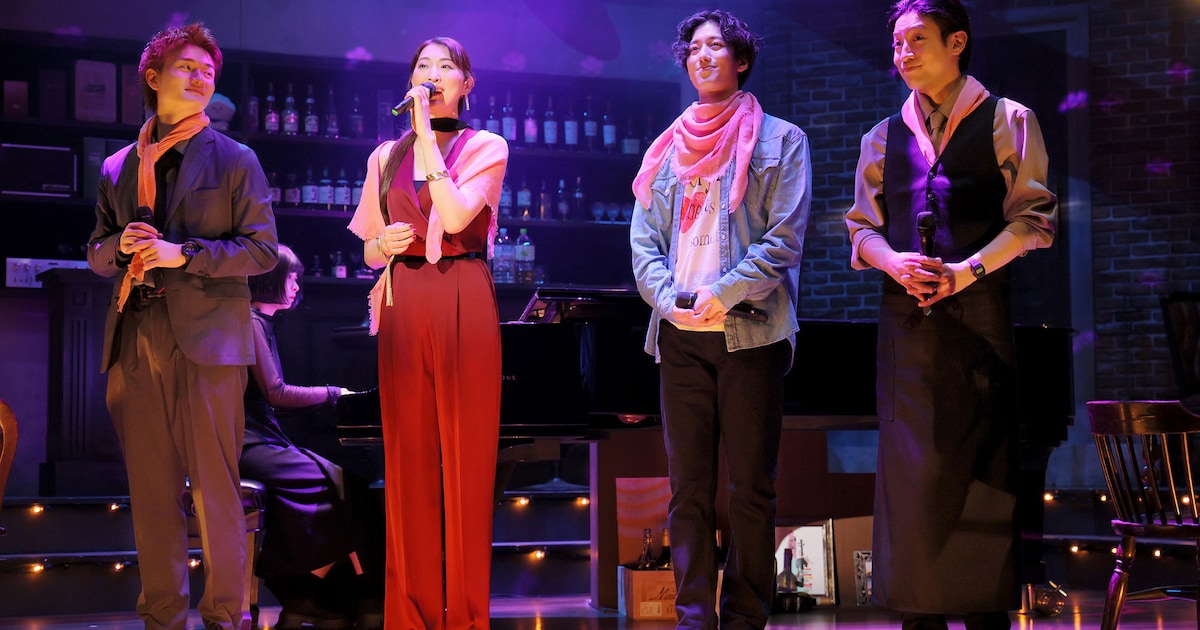
On March 16, 2026, the musical play 音楽劇「アカネイロのプレリュード~赤坂の奏~」 (ongakugēki “Akaneiro no Prelude – Akasaka no Kanade”) officially 開幕 (kaimaku, opened) at Sōgetsu Hall in Tokyo. Set in the very neighborhood of Akasaka where it is being performed, the production aims to energize the area by telling a story rooted in its streets.
Running through March 22, this new musical is produced by TBS and brings together a unique double-cast system, live piano performance, and a heartfelt story of 再建 (saiken, rebuilding).
A Story of Rebuilding in the Heart of Akasaka
The theme behind the production is simple but powerful: > “By staging a work set in ‘Akasaka’ in ‘Akasaka,’ we want to revitalize the town.”
The story centers on a long-established music bar in Akasaka called アカネ. In Japanese, a business with history and tradition is called 老舗 (shinise), meaning a long-running, respected establishment. The bar faces closure, and the characters’ relationships unfold as they attempt its 再建 (saiken, reconstruction).
The protagonist, Ayukawa Kōta, dreams of becoming a video director. However, 父の借金と失踪をきっかけに (chichi no shakkin to shissō o kikkake ni) — “triggered by his father’s debt and disappearance” — he ends up taking responsibility for the bar.
That phrase 〜をきっかけに (o kikkake ni) is a powerful grammar structure we’ll look at later. It means “as a result of” or “taking the opportunity of,” and it’s used constantly in Japanese storytelling.
The musical features just one live piano and four actors on stage at a time, creating an intimate theatrical experience. With a runtime of approximately 1 hour and 40 minutes, the production focuses on character-driven drama and music.
A Unique Double-Cast System
All four main roles are performed with Wキャスト (double casting). This means that depending on the performance date, different actors appear in the same role.
For example:
- Ayukawa Kōta is played by 水田航生 (Mizuta Kōki) or 小野塚勇人 (Onoduka Hayato)
- The shy employee Sudō Jun’ichi by 陳内将 (Jinnai Shō) or 鈴木康介 (Suzuki Kōsuke)
- The mysterious self-proclaimed “god of rebuilding,” Arakaki Wataru, by 瀧澤翼 (Takizawa Tsubasa) or 鈴木曉 (Suzuki Akira)
- Former singer Misaki Aki, who holds the key to the story, by 珠城りょう (Tamaki Ryō) or 久城あす (Kujo Asu)
Because the cast combinations change each performance, audience members’ 感情移入 (kanjō inyū, emotional involvement or empathy) may shift depending on who they watch. One actor’s interpretation might highlight different emotional layers than another’s.
Actor Jinnai Shō even suggested that watching the show multiple times reveals new details behind the dialogue, deepening your understanding of each character’s motivations.
Cast Reflections: Trial and Error, Growth, and Gratitude
Many of the cast members emphasized how much collaboration went into the production.
Onoduka Hayato described the process as one of 試行錯誤 (shikō sakugo, trial and error), with everyone discussing and refining the work together. He expressed confidence that the result is a heartwarming production.
Suzuki Kōsuke reflected on the nervous excitement of returning to the stage, recalling the familiar stomach aches that come as opening night approaches. He described theater as 一期一会 (ichigo ichie), a “once-in-a-lifetime encounter.” Each performance is unique — anything can happen — and that fleeting nature is part of its beauty.
Takizawa Tsubasa spoke about confronting both his role and himself as an actor 向き合いながら (mukiai nagara, while facing), growing through daily discoveries during rehearsal.
Tamaki Ryō highlighted the importance of delivering emotions born in the moment, supported by live piano performance.
Across the comments, one theme repeats: gratitude toward the audience. Several actors mentioned wanting to 巻き込む (makikomu, draw in or involve) the audience fully, making them part of the experience rather than passive observers.
Cultural Context: Why Akasaka Matters
Akasaka is a well-known district in Tokyo, home to media companies, theaters, and historic restaurants. By setting the story in a local 老舗 (shinise) bar and performing it in Akasaka itself, the production creates a layered experience.
In Japan, revitalizing neighborhoods through arts and events is common. The idea of connecting place and performance reflects a broader cultural emphasis on community ties and regional pride.
The focus on 再建 (saiken, rebuilding) also resonates socially. Stories of restoring family businesses or preserving tradition are recurring themes in Japanese drama, symbolizing both personal and communal renewal.
Learn Japanese from This Article
Here are key words and expressions you can take directly from this story:
Vocabulary
| Japanese | Romaji | Meaning |
|---|---|---|
| 開幕 | kaimaku | opening (of a show/event) |
| 再建 | saiken | rebuilding, reconstruction |
| 老舗 | shinise | long-established business |
| 試行錯誤 | shikō sakugo | trial and error |
| 感情移入 | kanjō inyū | emotional involvement |
| 一期一会 | ichigo ichie | once-in-a-lifetime encounter |
| 巻き込む | makikomu | to involve; to draw in |
Try using one in a sentence: この映画にとても感情移入しました。 Kono eiga ni totemo kanjō inyū shimashita. “I really emotionally connected with this movie.”
Grammar Spotlight 1: 〜をきっかけに
Structure: Noun + をきっかけに
Meaning: Triggered by; taking the opportunity of; as a result of
Example from the story: 父の借金と失踪をきっかけに、店を背負うことになった。 Chichi no shakkin to shissō o kikkake ni, mise o seou koto ni natta. “Triggered by his father’s debt and disappearance, he ended up taking responsibility for the shop.”
More examples:
日本旅行をきっかけに、日本語を勉強し始めました。 Nihon ryokō o kikkake ni, nihongo o benkyō shihajimemashita. “I started studying Japanese after my trip to Japan.”
友達の紹介をきっかけに、この店を知りました。 Tomodachi no shōkai o kikkake ni, kono mise o shirimashita. “I learned about this shop through a friend’s introduction.”
Grammar Spotlight 2: 〜ながら
Structure: Verb stem + ながら
Meaning: While doing; although
Example inspired by the article: ピアノの生演奏を聴きながら、物語を楽しめます。 Piano no nama ensō o kikinagara, monogatari o tanoshimemasu. “You can enjoy the story while listening to live piano music.”
- 働きながら、日本語を勉強しています。 Hatarakinagara, nihongo o benkyō shiteimasu. “I study Japanese while working.”
Continue Learning
Curious about the Japanese used in this article? These lessons will help you go deeper:
- Basic Vocabulary Building: Embracing Words Without Latin Ties
- Katakana Essentials: Adapting Global Words to Japanese
- Introduction to Kanji: Pictorial Foundations of Japanese Script
By reading real entertainment news like this, you’re seeing Japanese as it’s naturally used — in interviews, cultural commentary, and everyday expressions of passion and gratitude.
And just like a live performance described as 一期一会 (ichigo ichie), each article you read is a unique step in your journey.
これからもよろしくお願いします。 Kore kara mo yoroshiku onegaishimasu.