
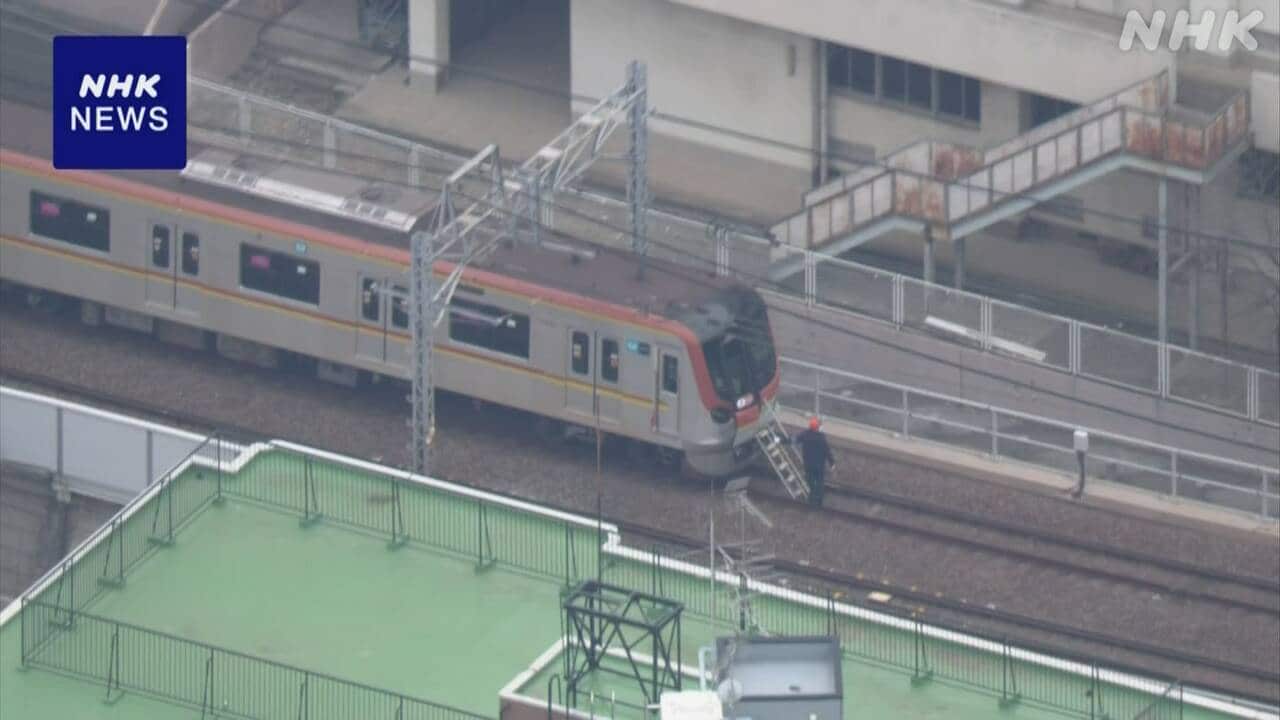
On March 13, train services on the Tokyu Toyoko Line and the Minatomirai Line were suspended for up to nine and a half hours in parts of Yokohama, affecting more than 120,000 passengers.
Services Suspended Due to Power Outage
According to NHK, the disruption began shortly after noon on the 13th. Because of a 停電 (teiden, power outage), train operators 運転を見合わせる (unten o miawaseru, suspend operations) on certain 区間 (kukan, sections of the route) within Yokohama City.
The suspension lasted for a maximum of approximately nine and a half hours. During that time, more than 120,000 利用客 (riyoukyaku, passengers) were affected, particularly during the busy evening return-home period.
The article explains that trains receive electricity from overhead wires known as 架線 (kasen). When there is a problem with the power supply system, trains cannot continue operating safely, leading to large-scale service interruptions.
Why This Matters
The Tokyu Toyoko Line and the Minatomirai Line are key commuter routes connecting Tokyo and Yokohama. Even a temporary suspension can have a major 影響 (eikyou, impact) on daily life, especially during peak commuting hours.
In Japan, railways are known for their punctuality and reliability. That’s why a disruption lasting 9時間半にわたって (9-jikan han ni watatte, over a period of nine and a half hours) is especially significant. News reports often highlight both the length of the disruption and the number of affected passengers.
You’ll also notice that Japanese news frequently uses formal structures like 〜の影響で (〜 no eikyou de, due to ~) to explain causes in a concise, objective way.
Learn Japanese from This Article
Key Vocabulary
| Japanese | Romaji | Meaning |
|---|---|---|
| 停電 | teiden | power outage, blackout |
| 影響 | eikyou | influence, impact, effect |
| 運転を見合わせる | unten o miawaseru | to suspend operations (transportation) |
| 区間 | kukan | section (of a route), segment |
| 利用客 | riyoukyaku | passengers, users (customers) |
| 架線 | kasen | overhead wire (railway power line) |
Try reading this sentence naturally:
停電の影響で、横浜市内の区間で運転を見合わせました。 Teiden no eikyou de, Yokohama shinai no kukan de unten o miawashimashita. “Due to a power outage, operations were suspended in sections within Yokohama City.”
Grammar Spotlight
1️⃣ 〜にわたって
Meaning: over a period of time; throughout
Structure: [Time period] + にわたって
Example from this news: > 9時間半にわたって運転を見合わせました。 > 9-jikan han ni watatte unten o miawashimashita. > “Operations were suspended for nine and a half hours.”
More examples:
3日間にわたってイベントが行われました。 Mikka-kan ni watatte ibento ga okonaware mashita. “The event was held over three days.”
全国にわたって影響が出ました。 Zenkoku ni watatte eikyou ga demashita. “The impact spread throughout the entire country.”
2️⃣ 〜の影響で
Meaning: due to; because of (formal/news style)
Structure: [Noun] + の影響で
停電の影響で、電車が止まりました。 Teiden no eikyou de, densha ga tomarimashita. “Due to a power outage, the trains stopped.”
This structure is extremely common in news reports. You’ll hear it with weather, accidents, and economic issues:
- 台風の影響で (taifuu no eikyou de) — due to a typhoon
- 事故の影響で (jiko no eikyou de) — due to an accident
Useful Expression
運転を見合わせる
In English, we might say “the trains were stopped” or “service was suspended.” In Japanese news, the standard expression is:
運転を見合わせる
Literally, it means “to hold off on operations,” and it sounds more formal and neutral than simply saying 止まる (tomaru, to stop).
Understanding these set phrases helps you read Japanese news more naturally—just like native speakers do.
Continue Learning
Ready to strengthen your reading skills?
- Reading and Writing in Japanese II: Hiragana and Katakana: Ready to dive deeper? Our lesson on Reading and Writing in Japanese II: Hiragana and Katakana will help you master these concepts.
- Introduction to Kanji: Pictorial Foundations of Japanese Script: Working on your reading skills? Our Introduction to Kanji: Pictorial Foundations of Japanese Script lesson is a great next step.
- Basic Vocabulary Building: Embracing Words Without Latin Ties: To understand more about general, explore our Basic Vocabulary Building: Embracing Words Without Latin Ties lesson.
Railway news like this is a great way to see real-world Japanese in action—formal structures, precise numbers, and practical vocabulary you’ll encounter again and again.
これからもよろしくお願いします。 Kore kara mo yoroshiku onegaishimasu.