
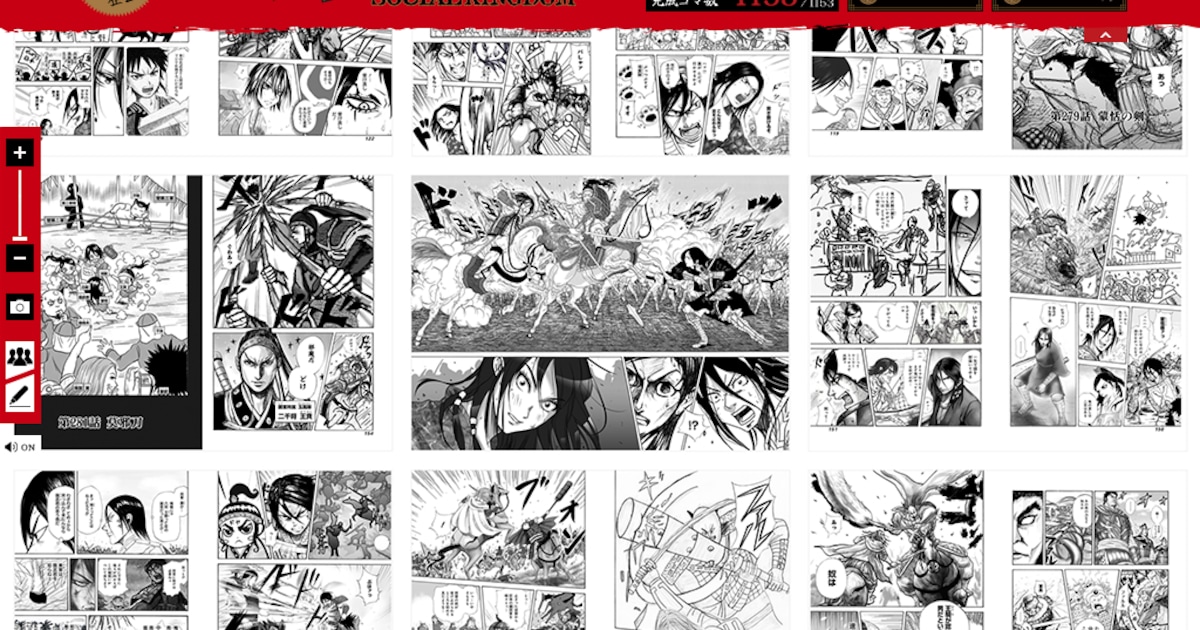
On March 19 at midnight, a special website will relaunch one of manga’s most ambitious fan collaborations—bringing together readers and some of Japan’s biggest creators to redraw キングダム (Kingudamu), one panel at a time.
“Social Kingdom” Returns After 14 Years
The project is called ソーシャルキングダム再炎 (Sōsharu Kingudamu saien), a 復活 (fukkatsu, revival) of the original 2012企画. Back then, 1,153 participants worked together to redraw every single panel of Volume 26 of Yasuhisa Hara’s historical epic キングダム (Kingudamu). The scale was so large it even earned Guinness recognition, according to related coverage at the time.
Now, 14 years later—14年ぶりに (jūyon-nen buri ni, for the first time in 14 years)—the project is back.
This new version celebrates the manga’s 20th anniversary, which it reached in January. Hara has 厳選 (gensen, carefully selected) 20 episodes from Volumes 1 through 78 that he describes as moments where his “soul trembled with heat.” These 20 “legendary episodes” will be recreated through a total of 2,289 panels—nearly double the number from the first project.
Big Names Join the Collaboration
Each of the 20 selected episodes will feature one special guest artist contributing an illustration. The guest list reads like a hall of fame of manga and entertainment.
Creators such as 荒木飛呂彦 (Araki Hirohiko), 井上雄彦 (Inoue Takehiko), 寺田克也 (Terada Katsuya), and 安彦良和 (Yasuhiko Yoshikazu) all 名を連ねる (na o tsuraneru, have their names listed among others) as participants.
Other manga artists, musicians, comedians, and celebrities are also joining—including Ishida Sui, Oku Hiroya, Morita Masanori, and members of comedy duos and music groups. In total, 20 guest contributors plus one of the official キングダム assistants will take part.
For fans of manga history, this lineup is especially exciting. Seeing creators with very different artistic styles reinterpret scenes from the same series is part of what makes the project so アツい (atsui, hype and exciting).
How Readers Can Participate
Participation is open to the public.
Applicants can visit the special website, select and reserve a single panel they want to draw, create their artwork, and upload the image to enter. Submissions will open in batches of five episodes at a time starting March 19.
In a playful nod to the series’ military themes, participants will receive rewards according to their 武功 (bukō, military merit or achievement). In other words, prizes are given 〜に応じて (ni ōjite, according to) your contribution or results.
Here’s how it works:
- Everyone whose submission is selected will receive a compiled booklet containing all 20 recreated episodes.
- One panel creator chosen by Hara himself will receive the 原泰久賞 (Hara Yasuhisa-shō), including a framed version of their illustration.
- Each episode will also have a ranking based on viewer reactions. The top-ranked contributor will receive the 百人将賞 (Hyakuninshō-shō), along with an acrylic keyholder.
“Skill Doesn’t Matter,” Says Hara
Hara left a message encouraging wide participation:
“Drawing skill has absolutely nothing to do with it. Awkward drawings, scary drawings, sparkly drawings, cool drawings—everything is 大歓迎 (daikangei, very welcome).”
He added with humor that artwork that is “too extreme” might face 却下 (kyakka, rejection).
His final message captures the spirit of the project:
“Let’s all have fun drawing one panel at a time and create a version of Kingdom that exists nowhere else!”
The tone is inclusive and playful. This isn’t about professional perfection—it’s about shared creativity.
Cultural Context: Why “Kingdom” Matters
キングダム (Kingudamu) began serialization in Weekly Young Jump and tells a sweeping story set during China’s Warring States period. It follows the journey of Xin (李信) and King Ying Zheng (嬴政), who seeks to unify China.
Reaching 20 years of serialization is a major milestone in the Japanese manga industry. Long-running series build deep emotional connections with readers, and anniversary projects often invite fans to participate directly. The idea of redrawing official panels reflects Japan’s strong fan culture—where respect for the original work coexists with creative reinterpretation.
Learn Japanese from This Article
Key Vocabulary
| Japanese | Romaji | Meaning |
|---|---|---|
| 復活 | fukkatsu | revival; comeback |
| 厳選 | gensen | carefully selected |
| 名を連ねる | na o tsuraneru | to have one's name listed among others |
| 却下 | kyakka | rejection; dismissal |
| 大歓迎 | daikangei | very welcome |
| 武功 | bukō | military achievement; merit |
| アツい | atsui | hype; exciting (slangy form of 熱い) |
| 企画 | kikaku | project;企画 |
| 特設サイト | tokusetto saito | special website |
Grammar Spotlight
1. 〜ぶりに (for the first time in ~)
Used to express that something is happening after a certain period of time.
14年ぶりに復活する。 Jūyon-nen buri ni fukkatsu suru. “It returns for the first time in 14 years.”
You can use this with time expressions:
- 3年ぶりに日本へ行きました。 San-nen buri ni Nihon e ikimashita. “I went to Japan for the first time in three years.”
2. 〜に応じて/〜に応じた (according to; depending on)
Used when something changes depending on conditions.
武功に応じたプレゼントが用意される。 Bukō ni ōjita purezento ga yōi sareru. “Prizes are prepared according to one’s merit.”
More examples:
レベルに応じてクラスが分かれます。 Reberu ni ōjite kurasu ga wakaremasu. “Classes are divided according to level.”
人数に応じた席を用意します。 Ninzuu ni ōjita seki o yōi shimasu. “We’ll prepare seating according to the number of people.”
Useful Expression
絵の上手い下手は関係ありません。 E no umai heta wa kankei arimasen. “Drawing skill doesn’t matter.”
This pattern—Aは関係ありません—means “A doesn’t matter” or “A is irrelevant.”
For example:
- 年齢は関係ありません。 Nenrei wa kankei arimasen. “Age doesn’t matter.”
Continue Learning
- Working on your reading skills? Our Introduction to Kanji: Pictorial Foundations of Japanese Script lesson is a great next step.
- Curious about the Japanese used here? Our Basic Vocabulary Building: Embracing Words Without Latin Ties lesson covers this in depth.
- Noticed words like サイト (saito) and アクリルキーホルダー (akuriru kīhorudā)? Strengthen your reading with Katakana Essentials: Adapting Global Words to Japanese.
Twenty years of キングダム, 2,289 panels, and countless interpretations—this is a celebration not just of a manga, but of a community.
これからもよろしくお願いします。 Kore kara mo yoroshiku onegaishimasu.