
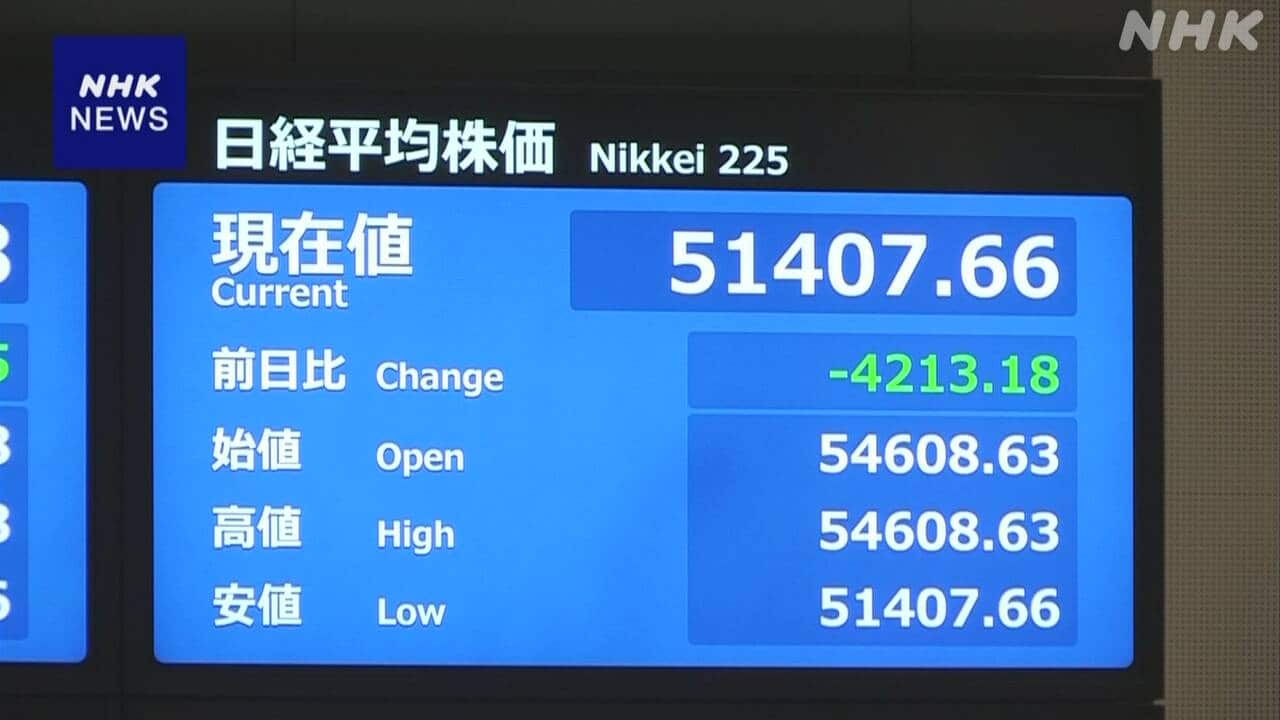
On Monday the 9th, the 日経平均株価 (Nikkei heikin kabuka) plunged more than 4,200 yen at one point in trading — a record-level 急落 (kyūraku, sharp drop) triggered by rising concerns over the stability of global oil supplies.
Tokyo Stocks Tumble at the Start of the Week
At the beginning of the week — 週明け (shūake) in Japanese — the 東京株式市場 (Tōkyō kabushiki shijō, Tokyo stock market) reacted sharply to developments overseas.
Amid concerns about the possible prolongation of the situation in Iran — イラン情勢の長期化への懸念から (Iran jōsei no chōkika e no kenen kara, due to worries about the Iran situation becoming long-term) — crude oil 先物価格 (sakimono kakaku, futures prices) rose significantly.
In response to that surge — 大幅に上昇したことを受けて (ōhaba ni jōshō shita koto o ukete, in response to the sharp rise) — the Nikkei Stock Average temporarily fell by more than 4,200 yen, marking an extraordinary drop in the market.
Even in just these few lines, you can see how closely Japan’s economy is tied to global events. A development in the Middle East quickly influenced oil prices, which then shook stock prices in Tokyo.
Why Oil Prices Matter So Much
Japan relies heavily on imported energy resources. When crude oil prices climb, businesses anticipate higher costs for transportation, manufacturing, and daily operations. That uncertainty often leads investors to sell stocks, pushing prices down.
The word 情勢 (jōsei) means “situation” or “state of affairs,” and you’ll often hear it in news reports about international politics or conflicts. When paired with 長期化 (chōkika, prolongation), it signals fears that a problem may not be resolved quickly — something markets generally dislike.
Financial news in Japan frequently connects global developments with domestic market reactions using structured expressions. Let’s look at how that language works.
Learn Japanese from This Article
Key Vocabulary
| Japanese | Romaji | Meaning |
|---|---|---|
| 週明け | shūake | beginning of the week (after the weekend) |
| 東京株式市場 | Tōkyō kabushiki shijō | Tokyo stock market |
| 情勢 | jōsei | situation; state of affairs |
| 長期化 | chōkika | prolongation; becoming long-term |
| 先物価格 | sakimono kakaku | futures price |
| 日経平均株価 | Nikkei heikin kabuka | Nikkei Stock Average |
| 急落 | kyūraku | sharp drop; plunge |
Notice how many of these are compound kanji words. Financial Japanese often combines two or more kanji to create precise meanings — something you’ll see constantly in news headlines.
Grammar Spotlight
1. 〜を受けて
Meaning: “In response to…” / “Following…”
Structure: [Event/Reason] + を受けて
Example from the article:
- 原油の先物価格が大幅に上昇したことを受けて、日経平均株価は急落しました。 Gen’yū no sakimono kakaku ga ōhaba ni jōshō shita koto o ukete, Nikkei heikin kabuka wa kyūraku shimashita. The Nikkei Stock Average plunged in response to the sharp rise in crude oil futures prices.
This structure is extremely common in news Japanese. It creates a clear cause-and-effect relationship in a formal tone.
2. 〜への懸念から
Meaning: “Due to concerns about…”
Structure: [Noun] + への懸念から
Example from the article:
- イラン情勢の長期化への懸念から、株価が下落しました。 Iran jōsei no chōkika e no kenen kara, kabuka ga geraku shimashita. Stock prices fell due to concerns about the prolonged Iran situation.
This expression is also typical of economic and political reporting. It allows journalists to explain market psychology without stating direct causation as a certainty.
Useful Expression
- 記録的な急落 kirokuteki na kyūraku A record-level plunge
The suffix 〜的 (-teki) turns a noun into an adjective meaning “-like” or “-al.” For example:
- 歴史的な出来事 (rekishiteki na dekigoto) — a historic event
- 国際的な問題 (kokusai-teki na mondai) — an international issue
Mastering 〜的 will dramatically expand your descriptive vocabulary.
Continue Learning
To strengthen your reading skills and recognize patterns like these:
- Reading and Writing in Japanese II: Hiragana and Katakana: To understand more about general, explore our Reading and Writing in Japanese II: Hiragana and Katakana lesson.
- Introduction to Kanji: Pictorial Foundations of Japanese Script: Working on your reading skills? Our Introduction to Kanji: Pictorial Foundations of Japanese Script lesson is a great next step.
- Basic Vocabulary Building: Embracing Words Without Latin Ties: Curious about the Japanese used here? Our Basic Vocabulary Building: Embracing Words Without Latin Ties lesson covers this in depth.
Financial headlines can look intimidating, but once you understand the building blocks — compound kanji, formal grammar patterns, and cause-and-effect expressions — you’ll find they follow clear and logical structures.
Keep reading real Japanese news. Each article makes you stronger.
これからもよろしくお願いします。 Kore kara mo yoroshiku onegaishimasu.