
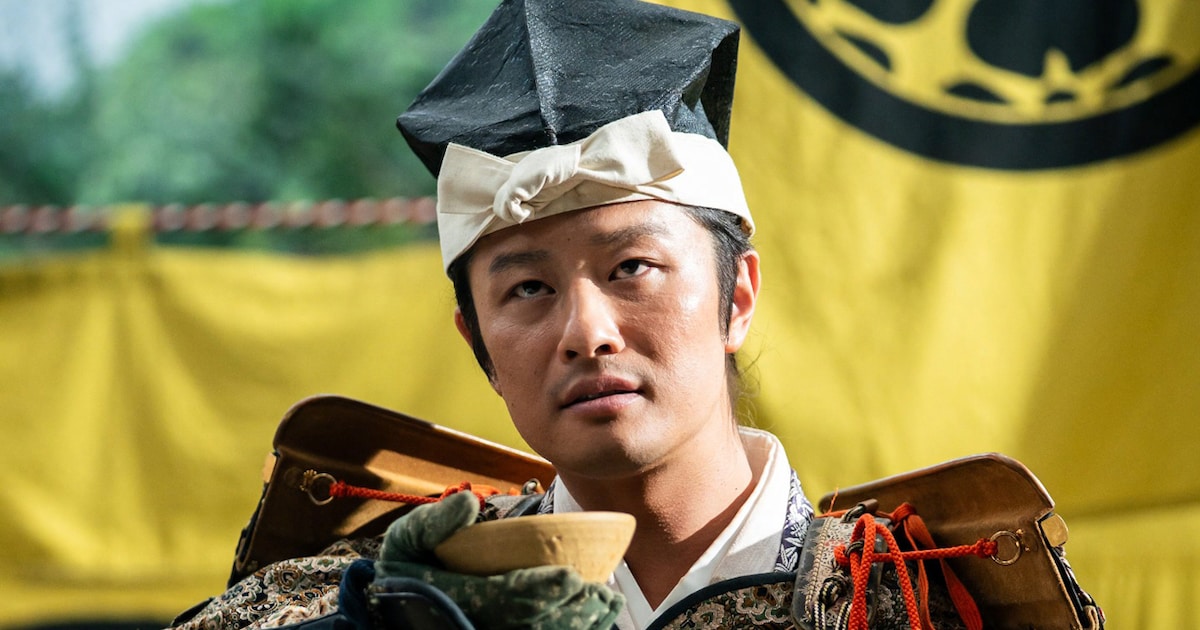
On March 8, 2026, seven new cast members were officially announced for NHK’s historical drama 「豊臣兄弟!」 (Toyotomi Kyōdai!), and one name surprised many fans: Hiroyuki Isobe, bassist of the rock band [Alexandros], will make his drama debut as the Sengoku warlord Chōsokabe Motochika.
In Japanese, this kind of official cast reveal is called 解禁 (kaikin)—a lifting of the curtain that sends fans rushing to social media. And this announcement certainly did.
A Rock Musician Enters the World of Samurai
「豊臣兄弟!」 (Toyotomi Kyōdai!) is NHK’s latest 大河ドラマ (taiga dorama), the prestigious year-long historical series that airs every Sunday at 8 p.m. on NHK General. Taiga dramas are known for their epic scale, detailed costumes, and deep exploration of Japanese history.
Set in the Sengoku period, the drama tells the story of Toyotomi Hideyoshi and his younger brother Hidenaga, who achieved national unification through a strong sibling bond. Taiga Nakano plays Hidenaga, while Sōsuke Ikematsu 扮する (funsuru, portrays) the older brother Hideyoshi.
Isobe will play Chōsokabe Motochika, a powerful warlord from Tosa (modern-day Kōchi Prefecture). Historically, Motochika once formed an alliance with Oda Nobunaga but later rose to power in Shikoku and came into conflict with the Oda clan. His 役どころ (yakudokoro, role) is that of a regional leader navigating shifting alliances during one of Japan’s most turbulent eras.
“It Didn’t Feel Real”
When Isobe received the offer, he described his reaction with a vivid metaphor. He recalled the time he went skydiving from 4,000 meters:
“It was so high that I didn’t really feel fear. It didn’t feel real.”
In Japanese, he used the phrase 現実味が湧かない (genjitsumi ga wakanai), meaning “it doesn’t feel realistic.” Only later, as he studied Motochika and the Sengoku–Azuchi-Momoyama period, did the weight of the role begin to sink in.
Shortly after receiving the offer, he traveled to Kōchi to visit Motochika’s grave and pay his respects. When he saw lighters featuring Motochika being sold in a local convenience store, he said he felt 身が引き締まる思い (mi ga hikishimaru omoi)—a tightening sense of responsibility.
He pledged to portray the character 全身全霊で (zenshin zenrei de), “with his whole body and soul.”
This will be Isobe’s first appearance in a TV drama. For band members stepping into acting—especially in a taiga drama—this is a rare and significant challenge.
Other Newly Announced Cast Members
Alongside Isobe, six more actors were revealed:
- Masato Wada as Imai Sōkyū, a wealthy Sakai merchant and one of the three great tea masters
- Maggie as Tsuda Sōgyū, also a merchant and tea master
- Ryōsuke Mikata as Fujihide Mitsubuchi, a magistrate serving Ashikaga Yoshiaki
- Ryōhei Abe as Tomomichi Iwanari, one of the “Miyoshi Three” senior retainers
- Kanata Irei as Naotsune Endō, a retainer of Azai Nagamasa
- Mansaku Ikeuchi as Kageakira, cousin of Asakura Yoshikage
Mikata and Irei will also be appearing in a taiga drama for the first time.
Masato Wada commented that when the production was first announced, he was excited as a viewer—but once cast, that excitement turned into pressure. To prepare for his role as a tea master, he practiced handling the 帛紗 (fukusa, a silk cloth used in tea ceremony) everywhere he went.
These behind-the-scenes efforts highlight the intense preparation that goes into historical roles in Japan.
Cultural Context: What Is a Taiga Drama?
A 大河ドラマ (taiga dorama) is NHK’s flagship historical series, typically running for an entire year. These dramas focus on major historical figures and are known for:
- Lavish period costumes and armor (甲冑 kacchū)
- Carefully researched scripts
- Large ensemble casts
- Strong national attention
Appearing in a taiga drama is considered a major milestone for actors. For a musician like Isobe, stepping into this world is both unusual and prestigious.
The Sengoku period (15th–16th centuries) was marked by constant warfare and shifting alliances among regional warlords. Understanding this background helps you appreciate why characters like Chōsokabe Motochika carry such dramatic weight.
Learn Japanese from This Article
Let’s look at some key vocabulary and expressions that appeared in the news.
Key Vocabulary
| Japanese | Romaji | Meaning |
|---|---|---|
| 解禁 | kaikin | official reveal; lifting a ban |
| 大河ドラマ | taiga dorama | NHK’s year-long historical drama series |
| 扮する | funsuru | to portray; to play (a role) |
| 役どころ | yakudokoro | role; character part (nuanced) |
| 現実味が湧く | genjitsumi ga waku | to feel real; to become realistic |
| 身が引き締まる思い | mi ga hikishimaru omoi | to feel a strong sense of responsibility |
| 全身全霊 | zenshin zenrei | with one’s whole body and soul |
| 甲冑 | kacchū | armor |
Grammar Spotlight
1. 〜させていただく (Humble “to be allowed to do”)
Isobe said:
長宗我部元親を演じさせて頂く事を知った時は… Nagasokabe Motochika o enji sasete itadaku koto o shitta toki wa… “When I learned that I would be allowed to play Chōsokabe Motochika…”
The pattern:
Verb (causative) + させていただく
This humble form expresses gratitude for being given the opportunity to do something. It’s commonly used in interviews, business settings, and formal speeches.
Example:
- 出演させていただきます。 Shutsuen sasete itadakimasu. “I will have the honor of appearing (in the show).”
2. 〜際(に) (Formal “when” or “on the occasion of”)
From his skydiving story:
セスナ機から飛び降りた際… Sesuna-ki kara tobi orita sai… “When I jumped from the Cessna plane…”
Pattern:
Verb (plain past) + 際(に)
This is a more formal alternative to とき (toki, when).
Example:
- 日本を訪れた際に、京都へ行きました。 Nihon o otozureta sai ni, Kyōto e ikimashita. “When I visited Japan, I went to Kyoto.”
You’ll often see 際 in interviews, official statements, and written Japanese.
Useful Expression
身が引き締まる思いです。 Mi ga hikishimaru omoi desu. “I feel a strong sense of responsibility.”
This expression is commonly used when someone receives an important role, award, or position. It reflects seriousness and humility—values deeply embedded in Japanese professional culture.
Continue Learning
📚 Working on your reading skills? Our Katakana Essentials: Adapting Global Words to Japanese lesson is a great next step.
📚 Working on your reading skills? Our Introduction to Kanji: Pictorial Foundations of Japanese Script lesson is a great next step.
Introduction to Kanji: Pictorial Foundations of Japanese Script
📚 Curious about the Japanese used here? Our Basic Vocabulary Building: Embracing Words Without Latin Ties lesson covers this in depth.
Basic Vocabulary Building: Embracing Words Without Latin Ties
これからもよろしくお願いします。 Kore kara mo yoroshiku onegaishimasu.