
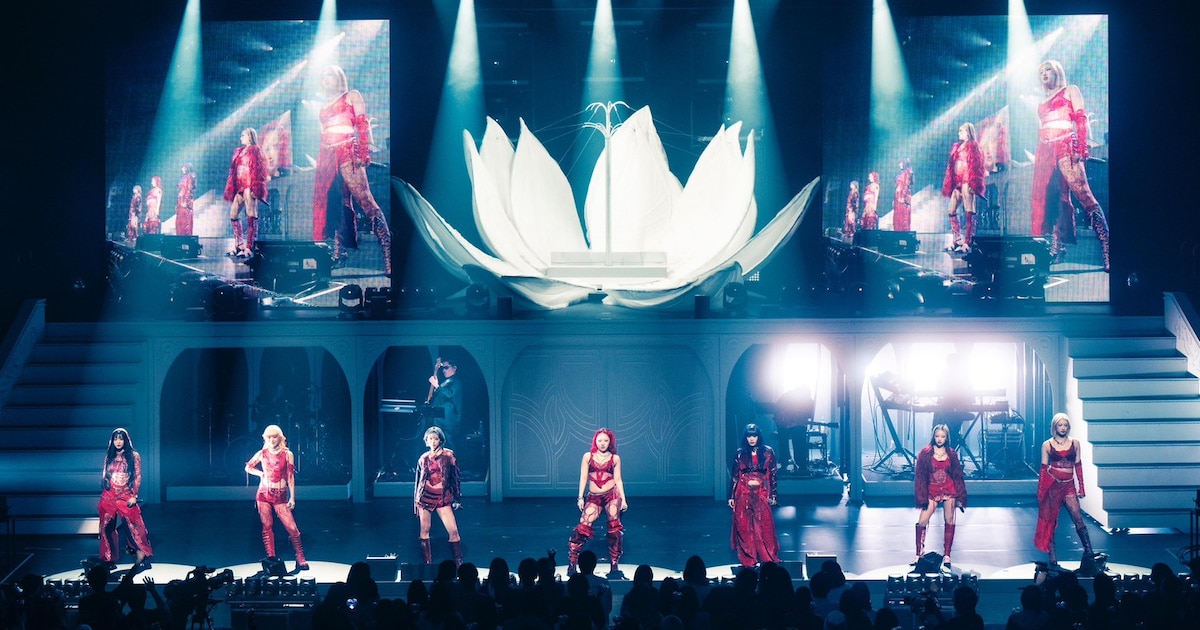
On March 7, HANA’s first-ever tour kicked off in Aichi—and fans were treated to a surprise debut of a brand-new song.
HANA’s 1st Tour Opens in Aichi
HANA’s first tour, 「HANA 1st TOUR 2026 “Born to Bloom”」 (HANA 1st TOUR 2026 “Born to Bloom”), officially 開幕 (kaimaku – opened) on March 7 at 愛知県芸術劇場にて (Aichi-ken Geijutsu Gekijō nite – at Aichi Prefectural Art Theater).
Notice the formal written expression 〜にて (nite). It means “at” or “in,” and you’ll often see it in news articles and official announcements rather than casual conversation.
During the opening-night performance, HANA surprised the audience by 披露 (hirou – unveiling/performing for the first time) a new song titled 「Bad Girl」 (Bad Girl). The unexpected reveal added an extra layer of excitement to the tour’s first show.
The tour will continue 約5カ月にわたって (yaku go-kagetsu ni watatte – over approximately five months), running until July 20, when it concludes in Niigata at Niigata Tersa.
“Bad Girl”: A Bittersweet Rock Love Song
The newly revealed song 「Bad Girl」 (Bad Girl) is already being used as the campaign song for Apple’s commercial 「グループセルフィーをiPhone 17 Proで」 (Group Selfie with iPhone 17 Pro), which began 放映 (houei – broadcasting) on March 6.
Lyrically, the song explores the emotional tension of wanting to change yourself while still feeling hesitant. It portrays a heart that 揺れ動く (yureugoku – wavers, sways emotionally) between uncertainty about self-transformation and the impulse to get closer to someone you love.
It also expresses a 切実 (setsujitsu – earnest, heartfelt, even desperate) desire to become someone’s “special” person. Musically, it’s described as a slightly bitter rock love song.
As of now, no release details have been announced.
Fans React: “がち? やば過ぎ😭”
Online reactions were immediate. One fan posted:
「は?がち? なにこれやば過ぎ😭」 Ha? Gachi? Nani kore yaba sugi 😭 “Huh? Seriously? What is this—this is insanely good 😭”
Here you can see two pieces of modern slang:
- がち (gachi) – “seriously?” or “for real?”
- やば過ぎ (yaba sugi) – “too crazy,” often meaning “insanely good” in a positive context
These expressions are common on social media and among younger fans. They capture the raw, emotional excitement of a surprise moment like this.
Cultural Context: Tours and Surprise Reveals in Japan
In Japan’s music industry, the first day of a tour—especially a 1st tour—is a major milestone. The word 1stツアー (first tour) signals that an artist is stepping into a new stage of their career.
Surprise performances (サプライズ披露 – sapuraizu hirou) are also a powerful way to reward fans who attend opening night. Because many fans follow tours closely through social media, the first show often sets the tone for the entire run.
The fact that “Bad Girl” is already tied to a major Apple commercial adds another layer of visibility. TV commercial songs frequently boost recognition for artists in Japan, especially when the CM (commercial) begins airing nationwide.
Learn Japanese from This Article
Let’s break down key words and grammar you can start using right away.
Vocabulary
| Japanese | Romaji | Meaning |
|---|---|---|
| 開幕 | kaimaku | opening (of an event, tour, season) |
| 披露 | hirou | to unveil; to perform for the first time |
| 放映 | houei | broadcast (on TV) |
| 揺れ動く | yureugoku | to sway; to waver emotionally |
| 切実 | setsujitsu | earnest; heartfelt; desperate |
| がち | gachi | seriously?; for real (slang) |
| やば過ぎ | yaba sugi | too crazy; insanely good/bad (slang) |
Grammar Spotlight
1. 〜にて (formal “at/in”)
Used mainly in written or formal contexts like news.
愛知県芸術劇場にて開幕した。 Aichi-ken Geijutsu Gekijō nite kaimaku shita. “It opened at Aichi Prefectural Art Theater.”
In everyday conversation, you would usually use で instead.
2. 〜にわたって (over a period of)
Used to describe something continuing across time or space.
ツアーは5カ月にわたって開催される。 Tsuaa wa go-kagetsu ni watatte kaisai sareru. “The tour will be held over five months.”
You’ll often see this in news reports and formal writing.
Useful Expression
誰かの“特別”になりたい。 Dareka no “tokubetsu” ni naritai. “I want to become someone’s special person.”
This pattern:
Noun + に なりたい = “I want to become (noun)”
For example:
先生になりたい。 Sensei ni naritai. “I want to become a teacher.”
Continue Learning
To understand more about entertainment-related vocabulary, explore our Basic Vocabulary Building: Embracing Words Without Latin Ties
Working on your reading skills? Our Katakana Essentials: Adapting Global Words to Japanese and Introduction to Kanji: Pictorial Foundations of Japanese Script lessons are great next steps.
Concert tours, surprise song debuts, emotional fan reactions—this is the kind of real-world Japanese that brings the language to life. Keep noticing the words, the grammar, and even the slang. That’s how you move from textbook Japanese to the Japanese people actually use.
これからもよろしくお願いします。 Kore kara mo yoroshiku onegaishimasu.