
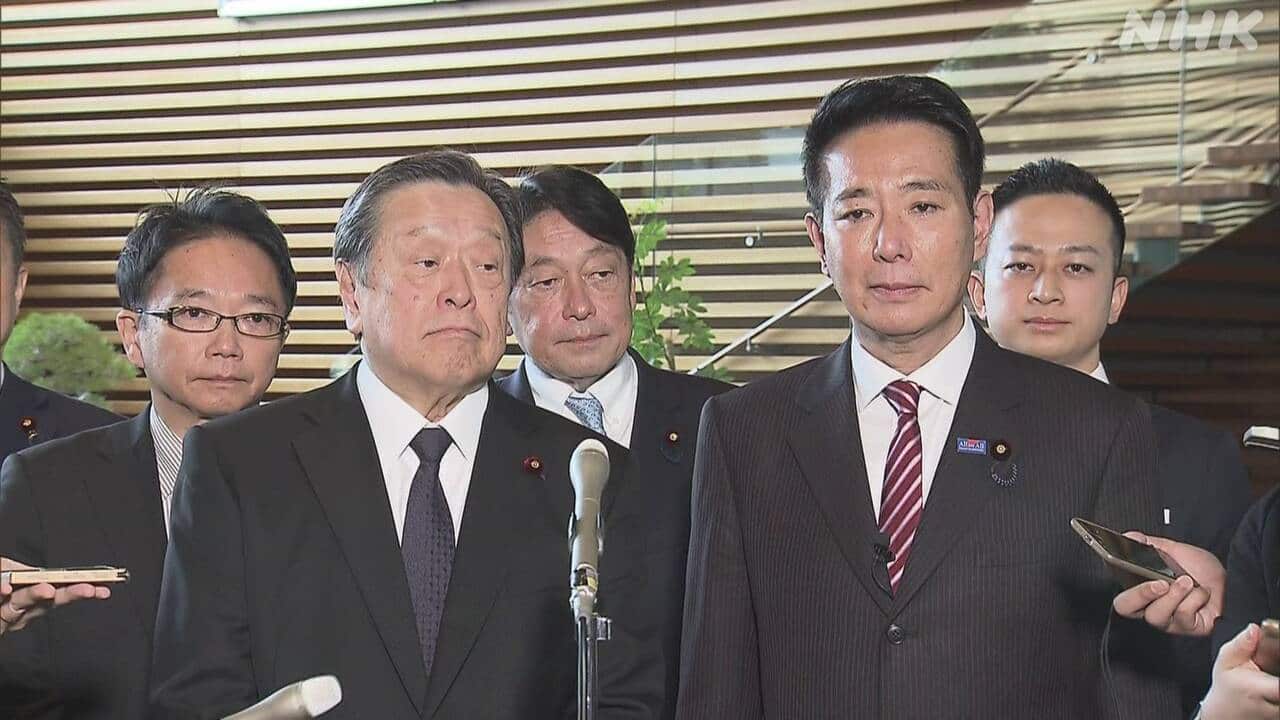
Japan’s ruling Liberal Democratic Party and the Japan Innovation Party have submitted a proposal to Prime Minister Takaichi that could significantly change how Japan handles arms exports. The proposal calls for removing current restrictions and making the transfer of weapons with lethal capability possible in principle.
Proposal to Expand Defense Transfers
The issue centers on 防衛装備品 (bouei soubihin), or defense equipment, and their 海外への移転 (kaigai e no iten), transfer overseas.
Currently, Japan limits such transfers to five categories, including areas like rescue and transport. In Japanese, this restriction is described with the verb 限定する (gentei suru), meaning “to limit” or “to restrict.”
However, the two parties are now proposing the 撤廃 (teppai), or abolition, of these five categories. In their 提言 (teigen), or formal recommendation, they state that even items with 殺傷能力 (sasshou nouryoku), “lethal capability,” should be transferable as a 原則 (gensoku), or general principle.
In other words, instead of strictly limiting exports to non-lethal categories such as rescue and transport, the proposal would redefine the rule so that weapons transfers could be allowed in principle.
The proposal has been submitted to Prime Minister Takaichi, and the government is mentioned as the next actor in the process, though further details are not provided in the source.
Understanding the Political Language
Two expressions in this article are especially common in Japanese news:
〜をめぐり
The phrase 防衛装備品の海外への移転をめぐり means “concerning the transfer of defense equipment overseas.”
The pattern 〜をめぐり (~ o meguri) is frequently used in news reports when describing debates, disputes, or major issues.
Structure:
- Noun + をめぐり
Example:
- 防衛装備品の海外への移転をめぐり、提言が提出されました。 Bouei soubihin no kaigai e no iten o meguri, teigen ga teishutsu saremashita. “A proposal was submitted concerning the transfer of defense equipment overseas.”
It often carries the nuance that different opinions or discussions exist around the topic.
〜とする
In the proposal, the parties describe making weapons transfers “possible in principle.” This uses the grammar pattern 〜とする (~ to suru), which can mean “to define as,” “to decide as,” or “to take as.”
Structure:
- Noun + とする
- Clause + とする
Example:
- 移転を原則可能とする提言 Iten o gensoku kanou to suru teigen “A proposal that defines transfers as possible in principle.”
This structure is common in formal documents and policy language, especially in politics and law.
Cultural Context: Why This Matters in Japan
Japan’s approach to exporting defense-related items has historically been cautious. Terms like 限定する (gentei suru) and 原則 (gensoku) are key in understanding how Japanese policy is often framed: rather than saying something is absolutely prohibited or absolutely free, the language defines general principles and categories.
The word 提言 (teigen) also signals something important. Unlike a casual suggestion, a teigen is a formal policy recommendation, often submitted to the prime minister or relevant authorities. Seeing this word in headlines tells you the issue has reached a high political level.
By learning these terms, you’re not just picking up vocabulary—you’re learning how political and legal discussions are structured in Japanese.
Learn Japanese from This Article
Key Vocabulary
| Japanese | Romaji | Meaning |
|---|---|---|
| 防衛装備品 | bouei soubihin | defense equipment |
| 海外への移転 | kaigai e no iten | transfer to overseas |
| 限定する | gentei suru | to limit; to restrict |
| 撤廃 | teppai | abolition; removal |
| 殺傷能力 | sasshou nouryoku | lethal capability |
| 原則 | gensoku | principle; general rule |
| 提言 | teigen | proposal; recommendation |
Try reading the headline again:
自民 維新 5類型撤廃し「武器」移転を原則可能とする提言提出 Jimin Ishin 5 ruikei teppai shi “buki” iten o gensoku kanou to suru teigen teishutsu “The LDP and Ishin submit proposal to abolish five categories and make weapons transfers possible in principle.”
Notice how compact Japanese headlines are—many particles are omitted, and verbs are stacked.
Grammar Spotlight
1. 〜をめぐり (concerning; over)
Used in news to frame an issue or debate.
- この問題をめぐり、議論が続いています。 Kono mondai o meguri, giron ga tsuzuite imasu. “Discussions are continuing over this issue.”
2. 〜とする (to define as; to decide as)
Common in formal and policy language.
- 新しい方針を原則とする。 Atarashii houshin o gensoku to suru. “To define the new policy as the general rule.”
When you see 〜とする提言, you know it’s a recommendation that formally sets something as a principle or standard.
Useful Expression from the Article
- 原則可能とする Gensoku kanou to suru “To make (something) possible in principle.”
This kind of phrasing appears frequently in legal and governmental contexts. It signals flexibility while still emphasizing a rule-based framework.
Continue Learning
To understand more about general, explore our Reading and Writing in Japanese II: Hiragana and Katakana lesson.
Working on your reading skills? Our Introduction to Kanji: Pictorial Foundations of Japanese Script lesson is a great next step.
Curious about the Japanese used here? Our Basic Vocabulary Building: Embracing Words Without Latin Ties lesson covers this in depth.
By reading real news like this, you’re training yourself to understand how modern Japan discusses policy, principles, and political change—using the same language native speakers encounter every day.
これからもよろしくお願いします。 Kore kara mo yoroshiku onegaishimasu.