
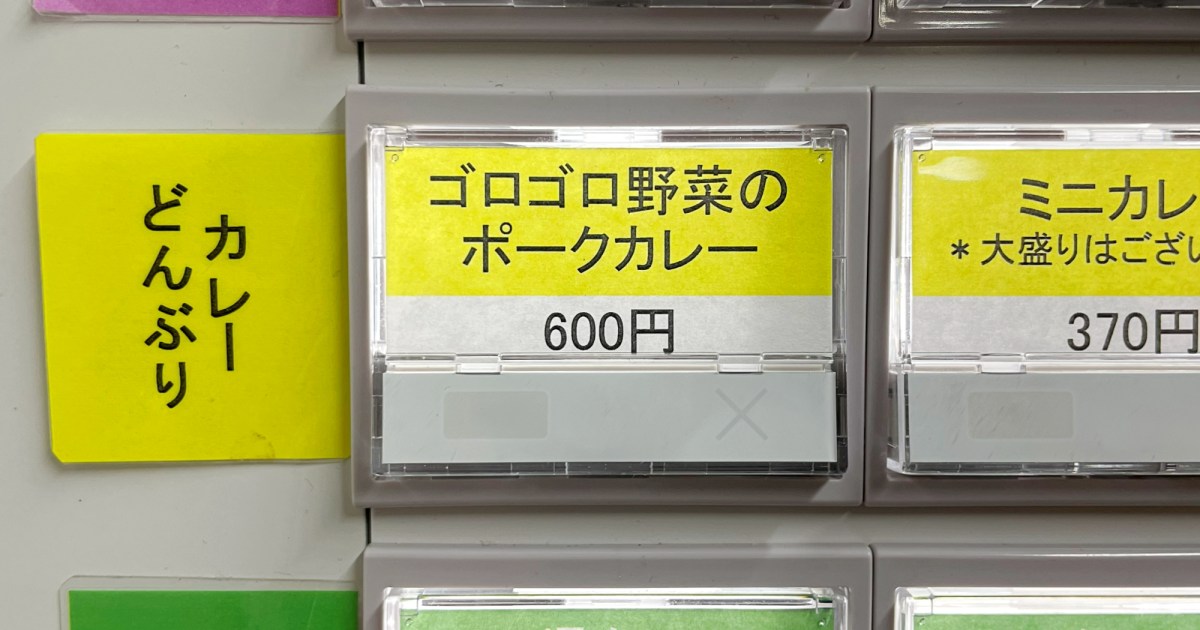
Pork curry at a Tokyo ward office used to cost 460 yen. Now it’s 600 yen — and even the once-free large serving costs extra.
As 物価高騰 (bukka kōtō) — the rapid rise in prices — continues across Japan, even the famously affordable government office cafeterias are being affected. To see what that looks like in real life, a reporter returned to the staff cafeteria at Shinjuku Ward Office for the first time in about three years.
The result? A higher bill — but the same comforting taste.
Back to “Keyaki” After Three Years
Shinjuku Ward Office stands in the middle of Kabukichō, just off Yasukuni Street. In the basement of the main building (B1F), you’ll find the staff cafeteria called 新宿区職員食堂けやき (Shinjuku-ku shokuin shokudō Keyaki).
The last visit was in February 2023. Nearly three years later, the opening hours remain the same: weekdays from 10:30 a.m. to 4:00 p.m. However, meals are only served from 11:30 a.m. to 3:00 p.m. — an important detail if you’re planning a visit.
Walking down the stairs, one familiar sight used to be the ticket machine. In Japan, many casual eateries use a 食券 (shokken) system: you buy a meal ticket from a vending machine, then hand it to the kitchen staff.
This time, though, there was a surprise. The machine had been replaced, and it now accepts transportation IC cards — a big change from the cash-only system three years ago. Even small updates like this quietly show the passage of time.
The Famous Pork Curry — Now 600 Yen
At “Keyaki,” the signature dish is ゴロゴロ野菜のポークカレー (gorogoro yasai no pōku karē) — pork curry with chunky vegetables.
Three years ago, it cost 460 yen (tax included). You could pay with a single 500-yen coin and still get change. It truly felt like a meal for ordinary people — affordable and filling.
Now? The ticket machine displays a new number:
600 yen.
That’s a 140-yen 値上げ (neage), or price increase.
Next to the machine, a notice explains the reason: due to rising costs of ingredients and materials, a 価格改定 (kakaku kaitei) — price revision — was implemented on December 1, 2025.
The cafeteria was 余儀なくされる (yogi naku sareru) — forced — to raise prices.
Another disappointing change: the once-beloved “free large serving of rice” service is gone. Before, you could order 大盛り (ōmori) at no extra cost. Now, you must purchase a separate 100-yen large-serving ticket.
In other words, if you wanted the same large curry that cost 460 yen three years ago, it would now cost 700 yen.
It’s hard not to feel the sting of inflation.
The Taste That Hasn’t Changed
After handing over the meal ticket, the curry arrives on a long, narrow plate. The staff kindly ask whether you’d like 福神漬け (fukujinzuke) — the bright red pickled vegetables that often accompany Japanese curry.
At first glance, it looks completely ordinary.
But then comes the first bite.
Pork, onions, carrots, potatoes — classic, almost overly standard ingredients. Yet somehow, that’s exactly the point.
The flavor brings an overwhelming 安心感 (anshinkan) — a sense of comfort and security. It feels like coming home. In fact, it tastes even more like “home curry” than the curry you might make at home.
There’s nothing flashy or trendy about it. No exotic spices. No modern twist. Just dependable, familiar curry rice.
And perhaps that’s why it feels special.
Cultural Context: Why Government Cafeterias Matter
In Japan, many city halls and ward offices have staff cafeterias that are also open to the public. They are known for being affordable, simple, and surprisingly tasty.
For many people, these cafeterias represent a kind of “last fortress” of cheap, reliable meals. So when even these places are affected by 物価高騰 (bukka kōtō), it makes the reality of inflation feel very close to home.
At the same time, this story reflects something deeply Japanese: even when prices rise, people value consistency, reliability, and emotional warmth in everyday life.
The curry may cost more now, but the satisfaction after finishing the plate feels unchanged — or so it seems.
Learn Japanese from This Article
Here are key words you can start using right away:
| Japanese | Romaji | Meaning |
|---|---|---|
| 物価高騰 | bukka kōtō | rapid rise in prices; inflation |
| 価格改定 | kakaku kaitei | price revision |
| 余儀なくされる | yogi naku sareru | to be forced to do something |
| 食券 | shokken | meal ticket |
| 大盛り | ōmori | large serving |
| 値上げ | neage | price increase |
| 安心感 | anshinkan | sense of comfort; security |
Grammar Spotlight ①: 〜を余儀なくされる
This formal expression is common in news writing.
Structure: Noun + を余儀なくされる
It means “to be forced to do (something).”
Example from the article:
- 価格改定を余儀なくされた。 Kakaku kaitei o yogi naku sareta. (They were forced to revise prices.)
More examples:
- 閉店を余儀なくされた。 Heiten o yogi naku sareta. (They were forced to close the shop.)
- 変更を余儀なくされた。 Henkō o yogi naku sareta. (They were forced to make changes.)
You’ll often see this in formal news reports.
Grammar Spotlight ②: 〜ように思う
This pattern expresses a personal feeling or impression: “I feel that…” or “It seems that…”
Structure: Plain form + ように思う
Example:
- 満足感は変わっていないように思う。 Manzokukan wa kawatte inai yō ni omou. (I feel that the sense of satisfaction hasn’t changed.)
It’s softer and more subjective than stating something as a fact.
Useful Expression: 大盛り
In Japan, portion sizes are often adjustable.
- 大盛りにしますか? Ōmori ni shimasu ka? (Would you like a large serving?)
Want to explore numbers and pricing more deeply? You’ll see yen amounts everywhere in daily Japanese life.
Continue Learning
- Want to learn more about 数字? Check out our lesson on Numbers and Counters: Contextual Counting Systems.
- To understand more about 時間, explore our Time and Dates: Tense-Free Expressions lesson.
The curry now costs 600 yen. The free 大盛り (ōmori) is gone. Inflation is real, and the wallet feels it.
And yet, the warmth in that simple plate of curry remains. Sometimes, that kind of comfort is worth coming back for.
これからもよろしくお願いします。 Kore kara mo yoroshiku onegaishimasu.