
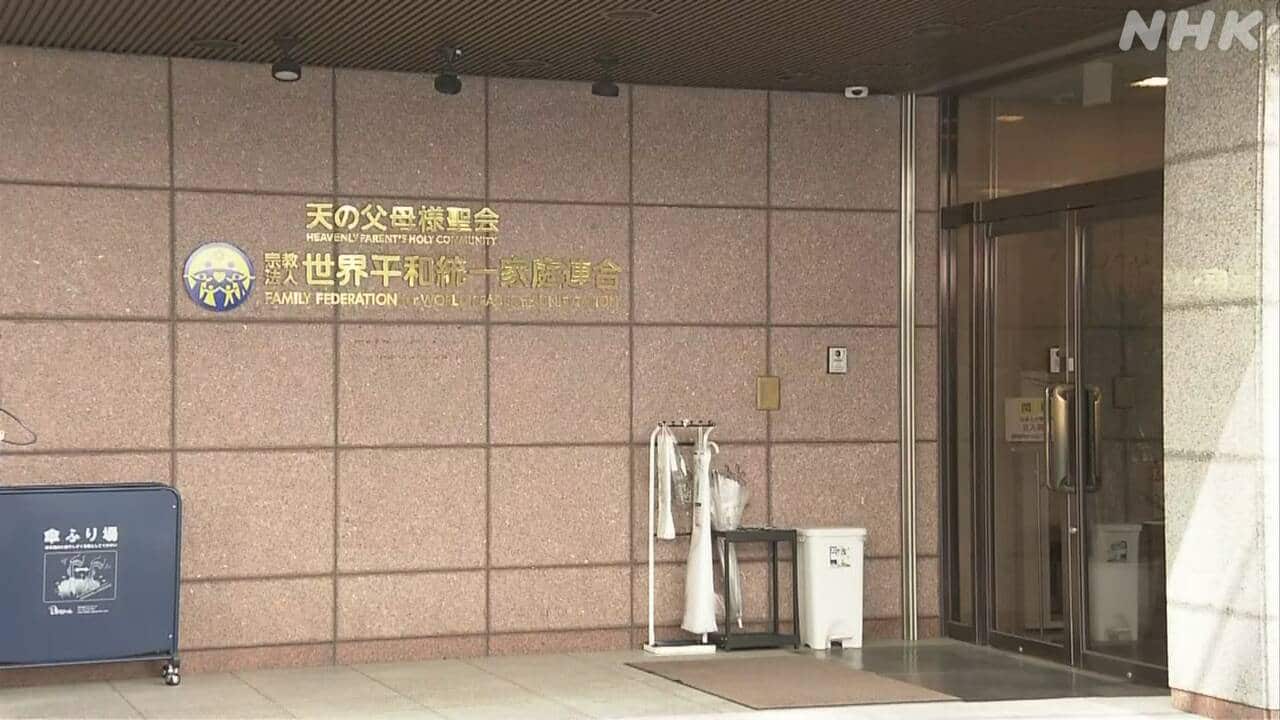
Tokyo High Court has ordered the dissolution of the former Unification Church, upholding a lower court decision and allowing liquidation procedures to begin.
The case centered on issues surrounding 高額献金 (kougaku kenkin, large monetary donations) and 霊感商法 (reikan shouhou, spiritual sales practices). In response to a formal 請求 (seikyuu, claim or request) for a 解散命令 (kaisan meirei, dissolution order), the Tokyo High Court ruled that it was difficult to expect the organization to voluntarily implement effective measures on its own.
What the Court Decided
The Tokyo High Court stated that the religious group could not be expected to take 実効性 (jikkousei, effective or practically meaningful) countermeasures 自発的に (jihatsuteki ni, voluntarily).
As a result, the court issued a formal 決定 (kettei, decision) ordering the group’s dissolution, following a similar ruling by the Tokyo District Court. With this ruling, the process of liquidation — settling the organization’s legal and financial matters — will now begin.
In Japanese legal language, the phrase 〜として (〜 toshite) is often used to present a reason or basis for a decision. In this case, the court essentially ruled “as it is difficult to expect voluntary and effective action from the group.”
Understanding the Key Issues
The article mentions problems 〜をめぐる (〜 o meguru), meaning “surrounding” or “concerning” an issue. Here, the dissolution order concerned controversies 高額献金や霊感商法の問題をめぐる — “surrounding issues such as large donations and spiritual sales practices.”
This structure is very common in Japanese news reporting. Rather than stating something directly as a single cause, Japanese often frames it as an issue “surrounding” a topic. It creates a broader sense of ongoing controversy or discussion.
Cultural Context: Religious Corporations and Court Orders
In Japan, religious organizations are legally recognized as religious corporations. A 解散命令 (kaisan meirei) is a serious legal action issued by a court. It does not simply mean closing a building — it means dissolving the legal entity itself.
When courts determine that a group has violated legal or social norms to a significant degree, dissolution can be ordered. The fact that both the Tokyo District Court and now the Tokyo High Court reached the same conclusion shows the gravity of the court’s judgment in this case.
For Japanese learners, this is also a chance to see how legal and formal language works in real news writing — precise, structured, and often indirect in tone.
Learn Japanese from This Article
Key Vocabulary
| Japanese | Romaji | Meaning |
|---|---|---|
| 解散命令 | kaisan meirei | dissolution order |
| 請求 | seikyuu | claim; formal request |
| 高額献金 | kougaku kenkin | large monetary donation |
| 霊感商法 | reikan shouhou | spiritual sales practices |
| 実効性 | jikkousei | effectiveness; practical effect |
| 自発的に | jihatsuteki ni | voluntarily; on one’s own initiative |
| 決定 | kettei | decision |
Notice how many of these are compound kanji words. Legal Japanese often combines precise Sino-Japanese vocabulary to create compact but powerful expressions.
Grammar Spotlight
1. 〜をめぐる
Meaning: concerning; surrounding (an issue)
Structure: Noun + をめぐる + Noun
Example from the article: 高額献金や霊感商法の問題をめぐる解散命令 kougaku kenkin ya reikan shouhou no mondai o meguru kaisan meirei “A dissolution order concerning issues such as large donations and spiritual sales practices”
More examples:
選挙をめぐる議論 senkyo o meguru giron Debate surrounding the election
環境問題をめぐる会議 kankyou mondai o meguru kaigi A meeting concerning environmental issues
This pattern is extremely common in news articles.
2. 〜として
Meaning: as; on the grounds that; with the view that
Example (based on the court’s reasoning):
- 教団が実効性のある対策を自発的にとることは期待しがたいとして、解散を命じました。 kyoudan ga jikkousei no aru taisaku o jihatsuteki ni toru koto wa kitai shigatai toshite, kaisan o meijimashita. “As it was difficult to expect the group to voluntarily take effective measures, the court ordered its dissolution.”
In legal and formal writing, として often introduces the reason behind an official decision.
Useful Expression
- 〜に続いて (〜 ni tsuzuite) — “following; after” In the article, the High Court ruling came 東京地裁に続いて — “following the Tokyo District Court.”
This expression is frequently used in news to describe sequential events.
Continue Learning
Curious about the Japanese used here? Our Basic Vocabulary Building: Embracing Words Without Latin Ties lesson covers this in depth.
Working on your reading skills? Our Introduction to Kanji: Pictorial Foundations of Japanese Script lesson is a great next step.
Curious about the Japanese used here? Our Reading and Writing in Japanese II: Hiragana and Katakana lesson covers this in depth.
Legal Japanese can feel dense at first, but each article you read strengthens your ability to understand how real decisions are reported in Japan. Step by step, you’re building the skills native readers use every day.
これからもよろしくお願いします。 Kore kara mo yoroshiku onegaishimasu.