
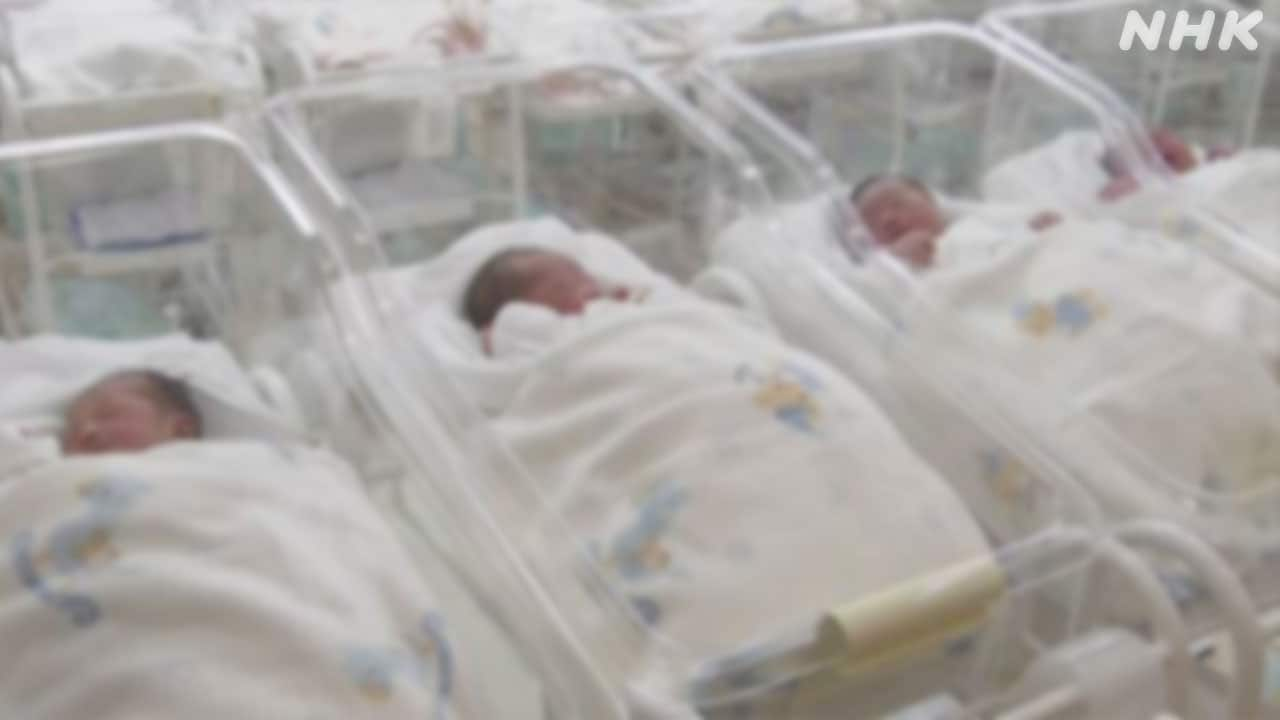
Last year, just over 700,000 babies were born in Japan. According to preliminary figures, that number is the lowest ever recorded since the government began keeping statistics — and it marks the 10th straight year of decline.
The 厚生労働省 (Kōsei Rōdōshō, Ministry of Health, Labour and Welfare) released 速報値 (sokuhōchi, preliminary figures) showing that the number of children born in one year fell by more than 15,000 compared to the previous year. The total dropped to just over 700,000.
A Record Low Since Statistics Began
The ministry’s summary revealed that the number of births has continued to 減少 (genshō, decrease). Compared to the year before (前の年), there were 15,000 fewer babies born.
Most strikingly, this is the smallest number recorded since Japan began collecting 統計 (tōkei, statistics) on births. The phrase used in the report is:
統計を取り始めて以降最も少なくなったことがわかりました。 Tōkei o tori-hajimete ikō mottomo sukunaku natta koto ga wakarimashita. “It was found that it has become the lowest number since statistics began being collected.”
Here you can see several key expressions that are very common in Japanese news reporting.
- 取り始める (tori-hajimeru) means “to begin taking/collecting.”
- 以降 (ikō) means “since” or “after.”
- 〜たことがわかりました means “it was found that…” or “it has been learned that…”
Together, they create a very formal, objective news style.
10 Years of Continuous Decline
The article also notes that this is the 10th consecutive year of decline. In Japanese, this ongoing trend is described using 減少 (genshō), a word you will frequently encounter in reports about population, economy, or employment.
Rather than using emotional language, Japanese news typically relies on numbers and neutral phrasing. The focus is on what the data shows — not speculation.
Cultural Context: Why Government Statistics Matter
In Japan, official numbers from the 厚生労働省 (Kōsei Rōdōshō) carry significant weight. This ministry oversees public health, labor conditions, and social welfare — areas directly connected to population trends.
When a report mentions 速報値 (sokuhōchi), it signals that the figures are preliminary. Final numbers may be slightly adjusted later, but the early release shows the urgency and importance of the data.
The phrase 統計を取り始めて以降 (“since statistics began being collected”) adds historical weight. It frames the news within a long timeline, emphasizing that this is not just a small fluctuation — it is historically significant.
Understanding these expressions helps you read Japanese news the way it’s written in Japan: factual, structured, and data-driven.
Learn Japanese from This Article
Key Vocabulary
| Japanese | Romaji | Meaning |
|---|---|---|
| 速報値 | sokuhōchi | preliminary figures |
| 減少 | genshō | decrease, decline |
| 統計 | tōkei | statistics |
| 取り始める | tori-hajimeru | to begin (collecting/taking) |
| 以降 | ikō | since; after |
| 厚生労働省 | Kōsei Rōdōshō | Ministry of Health, Labour and Welfare |
| 前の年 | mae no toshi | the previous year |
Try reading the original-style sentence again:
前の年より1万5000人あまり減少しました。 Mae no toshi yori ichi-man go-sen-nin amari genshō shimashita. “It decreased by a little over 15,000 people compared to the previous year.”
Notice より (yori) — it means “than” and is used for comparisons.
Grammar Spotlight
1. 〜たことがわかりました
Structure: Verb (past plain form) + ことがわかりました
Meaning: It was found that… / It became clear that…
Example from the article:
- 最も少なくなったことがわかりました。 Mottomo sukunaku natta koto ga wakarimashita. “It was found that it became the lowest.”
This pattern is extremely common in news reports because it sounds objective and factual.
2. 〜より (Comparison)
Structure: A より B
Meaning: B compared to A / than A
Example:
- 前の年より減少しました。 Mae no toshi yori genshō shimashita. “It decreased compared to the previous year.”
You’ll see より constantly in statistics-based reporting.
Useful News Expression
- 統計を取り始めて以降 Tōkei o tori-hajimete ikō “Since statistics began being collected”
This type of long, connected phrase is typical of formal Japanese writing. Learning to break it into pieces — verb + 始める, then 以降 — makes reading much easier.
Continue Learning
Ready to strengthen your reading skills?
- Reading and Writing in Japanese II: Hiragana and Katakana: Ready to dive deeper? Our lesson on Reading and Writing in Japanese II: Hiragana and Katakana will help you master these concepts.
- Introduction to Kanji: Pictorial Foundations of Japanese Script: Working on your reading skills? Our Introduction to Kanji: Pictorial Foundations of Japanese Script lesson is a great next step.
- Basic Vocabulary Building: Embracing Words Without Latin Ties: Curious about the Japanese used here? Our Basic Vocabulary Building: Embracing Words Without Latin Ties lesson covers this in depth.
これからもよろしくお願いします。 Kore kara mo yoroshiku onegaishimasu.