
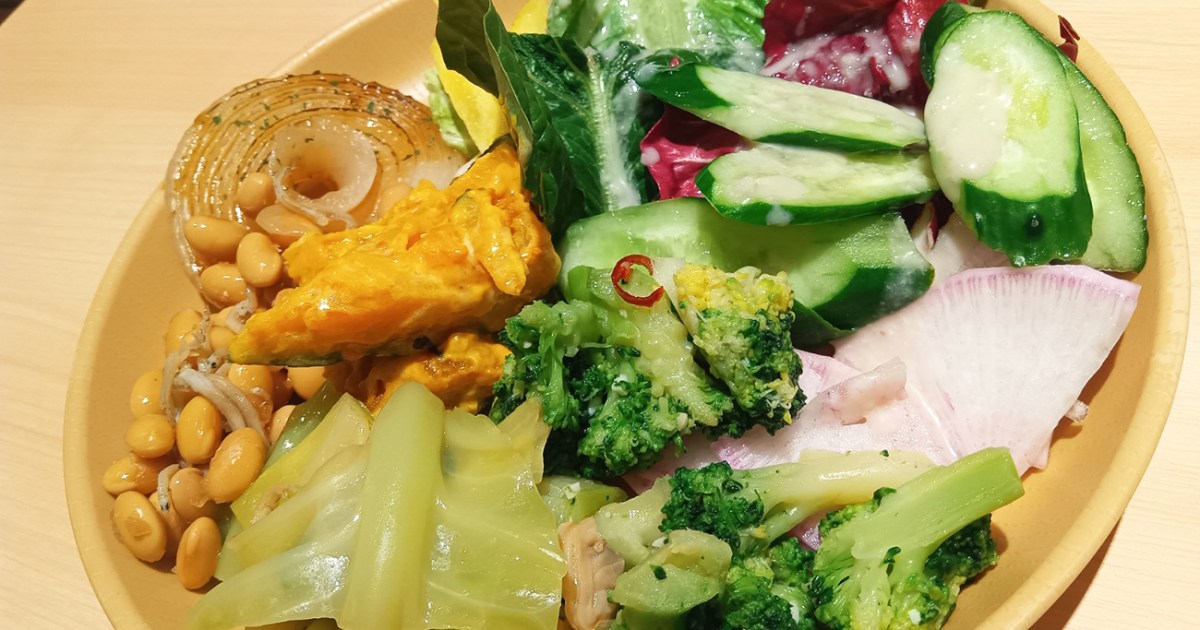
In 2019, this buffet brand had 12 locations nationwide. As of February 2026, only two remain. That’s the surprising reality behind 自然食バイキング はーべすと (shizenshoku baikingu Hābesuto), a natural-food 食べ放題 (tabehoudai, all-you-can-eat*) restaurant that left a strong impression on one Rocket News writer.
The twist? It’s actually a 系列店 (keiretsuten), an affiliated brand of the lively seafood chain Isomaru Suisan.
From Grilled Seafood to Natural Buffet
磯丸水産と言えば七輪。 Isomaru Suisan to ieba shichirin. “Speaking of Isomaru Suisan, you think of tabletop charcoal grills.”
The phrase 〜と言えば (to ieba) means “speaking of…” or “when it comes to…” It’s used to bring up something strongly associated with a topic.
Isomaru Suisan is known for its wild, energetic atmosphere: grilling fresh shellfish pulled straight from tanks, friendly and lively staff, and a hands-on dining experience.
So walking into a restaurant without realizing it belonged to the same company—and discovering it was a calm, health-focused buffet—was unexpected.
That restaurant was 自然食バイキング はーべすと (shizenshoku baikingu Hābesuto), a buffet built around the concept of 自然食 (shizenshoku), or natural food.
What Is “Shizenshoku”?
According to the article, a quick search defines 自然食 (shizenshoku) as:
- Agricultural products grown without pesticides or chemical fertilizers
- Processed foods without additives
- Traditional seasonings
- Foods that are kind to both the body and the planet
Unlike “organic,” there’s no strict legal definition. But when a restaurant uses this term, it signals a commitment to ingredients and healthy eating.
In Japan, this kind of branding communicates trust. It suggests care in sourcing and preparation—values that resonate strongly with Japanese diners.
The Salad Bar That Steals the Show
The first thing customers see upon entering is the salad bar. And it’s here that the restaurant’s philosophy becomes visible.
Panels introduce farmers with their photos. The vegetables aren’t piled high on large plates—instead, they’re kept in smaller containers filled with ice to maintain 鮮度 (sendo), freshness.
That attention to detail paid off. The writer admits filling the first plate entirely with salad—and realizing it was the right choice after tasting the vegetables’ crisp texture and gentle-flavored dressings.
The description even compares eating the vegetables to replenishing a depleted life gauge in a video game. “My body felt alive,” the writer says. “My body was happy.”
That emotional reaction to freshness is something you’ll often see in Japanese food writing. Taste isn’t just flavor—it’s vitality.
Not Just Vegetables: A Wide Variety
When you hear “natural food,” you might imagine only vegetables. But 自然食 (shizenshoku) is a broad term.
The buffet offers impressive 品数 (shinakazu), meaning variety or number of items:
- Fried chicken
- Charcoal-style grilled chicken
- Simmered Japanese dishes
- Curry
- Mapo tofu
- Napolitan pasta
- Omurice
The writer jokes that the plate quickly turned brown—a common humorous way in Japan to describe loading up on hearty dishes.
White rice is available, but so is multigrain rice, which the writer found especially satisfying.
The Price: High Quality, Reasonable Cost
Despite not being able to try every dish due to the large 品数 (shinakazu), the writer felt that only made them want to return.
Here’s the pricing:
- Weekday lunch (90 minutes): 2,307 yen (tax included)
- Weekends/holidays (90 minutes): 2,638 yen (tax included)
Considering the current buffet 相場 (souba), or market rate, the writer says even 3,000 yen wouldn’t feel expensive for this level of quality—especially since health-focused buffets often sit in a higher 価格帯 (kakakutai), or price range.
The conclusion? This is a “quality-style buffet” with excellent cost performance.
Despite Its Strengths… Only Two Locations Left
Here’s where things get surprising.
にもかかわらず (ni mo kakawarazu) means “despite” or “in spite of.” It’s a formal expression used in writing.
Despite its strong concept and reasonable pricing, the brand appears to be shrinking. According to its official Instagram and website, the chain had 12 locations nationwide in 2019—but as of February 2026, only two remain.
For someone who enjoys visiting buffets as a hobby, this felt like discovering a hidden gem in danger of disappearing.
Cultural Context: Buffets in Japan
Buffets in Japan often fall into two categories:
- Budget-heavy, large-quantity style
- Premium, ingredient-focused style
A healthy, ingredient-conscious buffet at a mid-range price is relatively rare. That’s why the writer describes it as a fresh genre.
The emphasis on freshness, producer transparency, and gentle flavors reflects broader Japanese values: seasonality, care for ingredients, and balance.
Learn Japanese from This Article
Key Vocabulary
| Japanese | Romaji | Meaning |
|---|---|---|
| 系列店 | keiretsuten | affiliated store, chain location |
| 自然食 | shizenshoku | natural food |
| 食べ放題 | tabehoudai | all-you-can-eat |
| 鮮度 | sendo | freshness |
| 品数 | shinakazu | number of items, variety |
| 価格帯 | kakakutai | price range |
| 相場 | souba | market price, going rate |
Grammar Spotlight
1. 〜と言えば (Speaking of…)
Structure: Noun + と言えば
Example: 磯丸水産と言えば七輪。 Isomaru Suisan to ieba shichirin. Speaking of Isomaru Suisan, you think of tabletop grills.
Use this when mentioning something strongly associated with a topic.
2. 〜にもかかわらず (Despite…)
Structure: Clause + にもかかわらず
Example (based on the article’s meaning): 人気があるにもかかわらず、店舗数は減っている。 Ninki ga aru ni mo kakawarazu, tenposū wa hette iru. Despite being popular, the number of locations is decreasing.
This is a more formal expression often used in written Japanese.
Useful Expression
体が喜んでいる。 Karada ga yorokonde iru. “My body is happy.”
This kind of expression reflects how Japanese often describes food in terms of how it makes the body feel—not just taste.
Continue Learning
📚 Want to understand the verb forms used here? Check out Masu Form: Mastering Polite Everyday Speech.
📚 To understand more about lifestyle, explore our Greetings and Self-Introductions: Authentic Entry Phrases lesson.
📚 To understand more about lifestyle, explore our Basic Vocabulary Building: Embracing Words Without Latin Ties lesson.
Basic Vocabulary Building: Embracing Words Without Latin Ties
これからもよろしくお願いします。 Kore kara mo yoroshiku onegaishimasu.