
“Out of all the chocolates I’ve ever eaten, this was the most shocking—surprisingly good.”
That message, sent after Valentine’s season had ended, came with a photo of something called たくあんチョコレート (takuwan chokorēto)—chocolate-coated pickled daikon. What started as a joke quickly turned into a real-life 実験 (jikken, experiment) involving six different types of Japanese pickles.
The results? One combination might actually compete with high-end chocolate.
The Original: Takuan Chocolate “Dream”
The product that started it all is called たくあんチョコレート 夢 (takuwan chokorēto yume), sold by a pickle shop in Yamagata Prefecture.
It’s made by coating 氷室沢庵 (himuro takuan), a sweetened, dried daikon pickle, in chocolate. The price? 1,188 yen for 9 pieces, plus 940 yen shipping—over 200 yen per piece.
Pretty luxurious for pickles.
Interestingly, it doesn’t look like bright yellow supermarket takuan at all. Because it’s sugar-coated and dried, it resembles dried fruit.
And the taste?
Surprisingly, it works. 意外と (igai to, unexpectedly), it tastes like chocolate-covered dried fruit. The texture is close to orange peel chocolate, and you only faintly notice the daikon flavor at the very end.
It’s not that it’s bad—まずいわけではない (mazui wake de wa nai)—but it’s not incredibly delicious either. It feels like a new kind of Japanese-Western fusion sweet. The writer wouldn’t personally order it again, but would recommend trying it once.
The Great Pickle × Chocolate Experiment
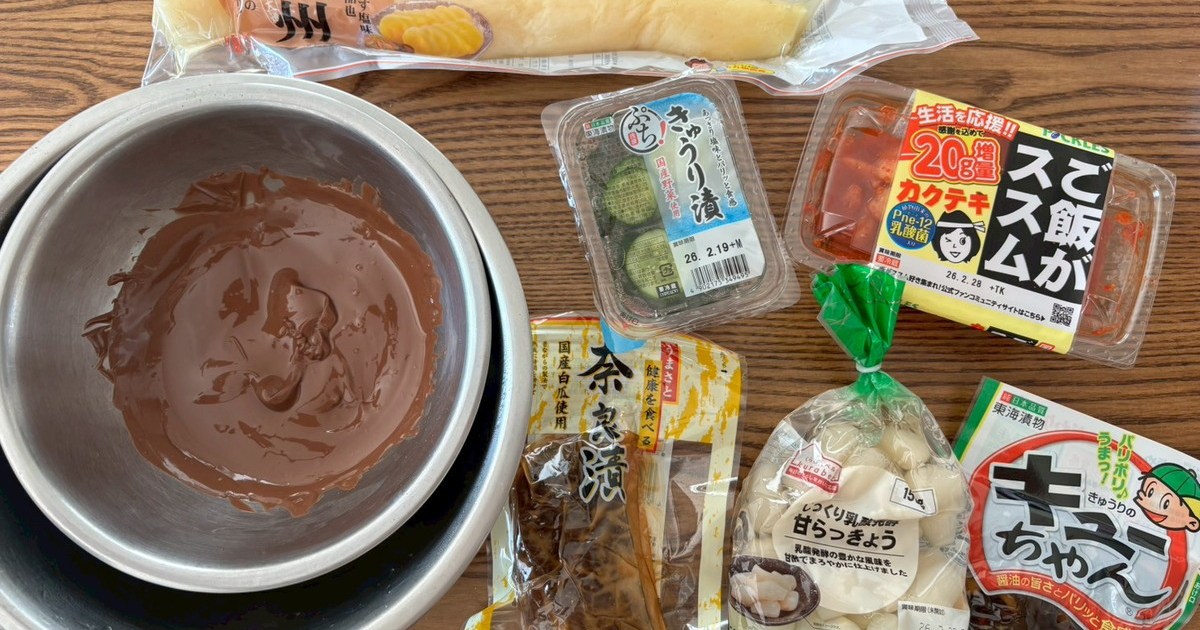
Inspired by this discovery, the writer and two friends launched a full 実験 (jikken).
They prepared six types of pickles:
- たくあん (takuwan) – yellow pickled daikon
- らっきょう (rakkyō) – pickled shallots
- きゅうりの浅漬け (kyūri no asazuke) – lightly pickled cucumber
- 奈良漬け (narazuke) – sake lees–pickled vegetables
- きゅうりのキューちゃん (kyūri no Kyū-chan) – a popular soy-sauce cucumber pickle brand
- カクテキキムチ (kakuteki kimuchi) – cubed radish kimchi
They melted chocolate over hot water, cut and drained the pickles, and dipped them directly—skipping the drying process. (The kimchi was coated from above to avoid total disaster.)
After 30 minutes in the refrigerator, the results looked surprisingly stylish. Some even resembled raisin chocolates.
But how was the taste?
Ranking the Results
Here’s the official ranking from best to worst:
| Rank | Pickle Chocolate |
|---|---|
| 1 | 奈良漬けチョコ (narazuke choko) |
| 2 | らっきょうチョコ (rakkyō choko) |
| 3 | たくあんチョコ (takuwan choko) |
| 4 | キューちゃんチョコ (Kyū-chan choko) |
| 5 | キムチチョコ (kimuchi choko) |
| 6 | 浅漬けチョコ (asazuke choko) |
The Surprise Winner: Narazuke Chocolate
The clear champion was 奈良漬けチョコ (narazuke choko), winning by 圧勝 (asshō, landslide victory).
Narazuke is pickled in sake lees, so it has a strong alcoholic aroma. That alcohol flavor blended beautifully with chocolate—like high-end liquor-filled chocolates. Even after comparing it to real luxury alcohol chocolates, it didn’t lose.
This raised an exciting possibility: maybe pickles with an alcoholic aroma have great 相性 (aishō, compatibility) with chocolate.
Middle of the Pack
- らっきょうチョコ started off strange, but the flavors gradually blended as you chewed.
- たくあんチョコ was fairly easy to eat and sweeter than expected.
The Not-So-Great Ones
- キューちゃんチョコ had a strong identity. The brain expects a certain taste, so combining it with chocolate caused confusion.
- キムチチョコ wasn’t terrible, but not appealing either. The texture didn’t help.
- 浅漬けチョコ came in last—the cucumber and chocolate seemed to fight each other.
In the end, the conclusion was simple: pickle chocolate has potential—especially if there’s an alcoholic element.
Valentine’s Day may be over, but this could make a bold 差し入れ (sashiire, small gift of food) for White Day… if you’re brave enough to try making it at home.
The writer adds one final note: “I take no responsibility.”
Cultural Context: Why Pickles?
Japanese 漬物 (tsukemono, pickles) are everyday side dishes served with rice. They range from salty and sour to sweet and fermented. Some, like 奈良漬け (narazuke), date back centuries and are deeply tied to regional food culture.
Japan also loves limited-edition and experimental sweets—especially around Valentine’s Day. It’s not unusual for creative or even bizarre flavor combinations to appear. This experiment reflects that playful spirit.
Learn Japanese from This Article
Here are key words you can start using right away:
| Japanese | Romaji | Meaning |
|---|---|---|
| 振り返る | furikaeru | to look back on, reflect |
| 注文する | chūmon suru | to order |
| 実験 | jikken | experiment |
| 意外と | igai to | surprisingly |
| 相性 | aishō | compatibility |
| 圧勝 | asshō | landslide victory |
| 差し入れ | sashiire | small food gift |
Grammar Spotlight 1: 〜わけではない
Pattern: [Plain form] + わけではない
Meaning: “It doesn’t mean that…” / “It’s not necessarily…”
Example from the article: まずいわけではない。 Mazui wake de wa nai. “It’s not that it’s bad.”
More examples:
高いわけではない。 Takai wake de wa nai. “It’s not necessarily expensive.”
嫌いなわけではない。 Kirai na wake de wa nai. “It’s not that I dislike it.”
This is a very natural way Japanese people soften opinions.
Grammar Spotlight 2: 〜てみる
Pattern: Verb (て-form) + みる
Meaning: to try doing something
Example: 試してみた。 Tameshite mita. “Tried it out.”
You’ll hear this constantly in daily life:
- 食べてみる。 (tabete miru) – I’ll try eating it.
- やってみよう。 (yatte miyō) – Let’s give it a try.
Want to understand these verb forms better? Check out our lesson below.
Continue Learning
- Masu Form: Mastering Polite Everyday Speech
- Basic Vocabulary Building: Embracing Words Without Latin Ties
- Greetings and Self-Introductions: Authentic Entry Phrases
Japanese food culture is full of surprises—some delicious, some questionable, all interesting. Why not try a small 実験 (jikken) of your own?
Just remember: we take no responsibility.
これからもよろしくお願いします。 Kore kara mo yoroshiku onegaishimasu.