
On February 16, 2026, Japan officially began accepting tax returns for 2025 income. And this year, filing your taxes—確定申告 (kakutei shinkoku)—comes with a high-tech twist: AI tools and even iPhone-based ID verification.
But before we get to taxes, last week’s most-read tech story in Japan involved something far more dramatic: a cryptocurrency exchange that accidentally sent 2,000 Bitcoin to each of 249 users.
A Crypto Mistake Worth 28 Billion Yen—Per Person
The No. 1 article in ITmedia’s weekly ranking (February 7–13) reported an astonishing transfer error at South Korea’s second-largest crypto exchange.
The company had planned a キャンペーン (kyanpēn), a promotional campaign, giving users about 2,000 won (roughly 210 yen) worth of points or ビットコイン (bitto koin).
It was supposed to be small.
But instead of sending 2,000 won, they sent 2,000 Bitcoin to each of 249 people—about 28 billion yen per person.
In Japanese, this kind of mix-up is perfectly captured by the grammar pattern:
「2000ウォンずつ支給」のはずが「2000ビットコインずつ支給」 “It was supposed to be 2,000 won each, but it ended up being 2,000 Bitcoin each.”
We’ll look at that grammar more closely later.
Of course, money transferred by mistake is considered 不当利得 (futō ritoku, unjust enrichment) in both Japan and Korea, meaning it must be returned.
The article reminds readers of a similar Japanese incident in 2022, when a local government mistakenly sent 46.3 million yen in COVID relief funds to one household. The recipient spent it on online gambling and was arrested. Even if the balance appears in your account, you can’t keep it.
Still… many readers probably understand the writer’s feeling: at least one night of dreaming while staring at that bank balance would be nice.
Tax Filing Season Begins
Now, back to reality.
February 16 marks the start of 確定申告 (kakutei shinkoku) for 2025 income. In Japan, this applies to:
- Self-employed individuals
- People with side income of 200,000 yen or more
- Others who meet certain reporting requirements
The article’s author is self-employed and describes the process as exhausting—sorting through a year’s income and expenses, carefully categorizing transactions.
Office workers whose taxes are handled automatically by their employers often don’t need to file, which can make freelancers a little envious.
But technology is changing things.
AI Makes Tax Filing Less Stressful
In recent years, 電子申告 (denshi shinkoku, electronic filing) has become increasingly convenient.
The author uses the accounting software freee and often struggled with:
- Categorizing transactions
- Finding specific features in the ユーザーインタフェース(UI) (yūzā intafēsu)
- Waiting for チャットサポート (chatto sapōto) during busy tax season
This year, however, they started asking external AI tools like Gemini and ChatGPT for help.
Surprisingly, the answers were accurate—even for detailed, service-specific questions like where a certain function is located in freee. The software itself also offers AI chat support, which users say has improved.
Instead of getting stuck, the writer made a conscious effort to ask AI right away.
This reflects the grammar pattern:
〜ようにする “Make an effort to do” / “Try to do regularly”
For example:
- 今年からは外部のAIに聞くようにしてみた。 Kotoshi kara wa gaibu no AI ni kiku yō ni shite mita. “From this year, I made an effort to ask external AI.”
This small shift made the entire process smoother.
“One-Click” Filing with My Number
More dramatically, tax filing itself has transformed.
Over 10 years ago, the author physically delivered paper forms to the tax office or mailed them.
Now, using a マイナンバーカード (mainanbā kādo, Japan’s national ID card), you can complete 電子申告 with what the writer calls:
ワンポチ (wan pochi) — “one click.”
The word ポチ (pochi) mimics the sound of pressing a button. Add ワン (wan, “one”), and you get a very Japanese way of saying “one-click.”
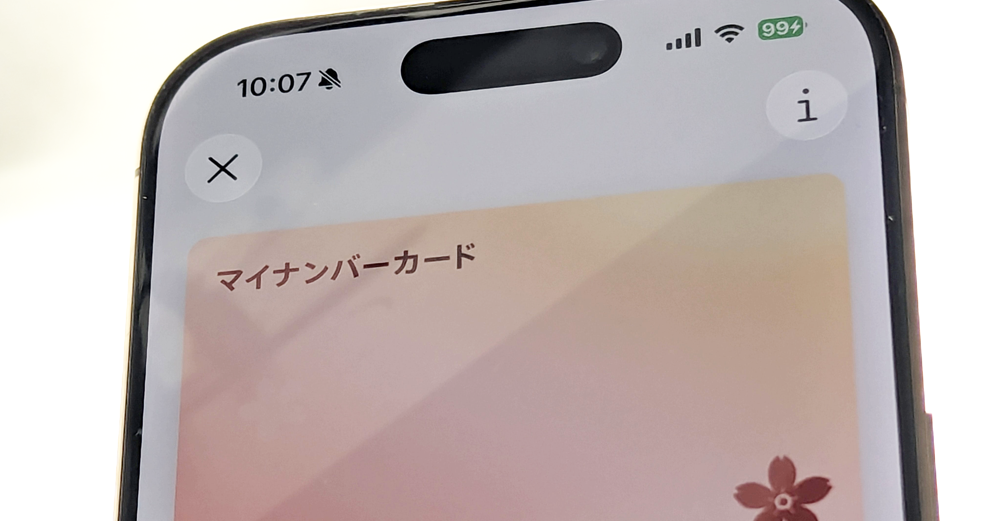
This year introduces another upgrade: filing using your iPhone’s My Number functionality. Previously, even with smartphone filing, you had to physically tap your My Number card to the phone for authentication. Now, if your iPhone has the card’s digital certificate registered, you don’t need to take the physical card out at all.
(Android phones already supported this.)
The author hasn’t finished filing yet—but feels confident it will be completed faster than ever.
“Thank you, IT evolution,” they conclude.
Cultural Context: Why My Number Matters
Japan’s マイナンバーカード (mainanbā kādo) system has expanded gradually over the past decade. Originally controversial, it’s now increasingly integrated into everyday services—tax filing, health insurance, and more.
The move from paper forms to digital “one-click” filing reflects a broader shift in Japan’s bureaucracy. Traditionally paper-heavy and stamp-dependent, government procedures are slowly becoming more digital—often with great public interest.
That’s why a tech site like ITmedia ranks tax filing alongside crypto exchange scandals and Blu-ray market news. In Japan, digital transformation is headline-worthy.
Learn Japanese from This Article
Key Vocabulary
| Japanese | Romaji | Meaning |
|---|---|---|
| 確定申告 | kakutei shinkoku | final tax return |
| 暗号資産 | angō shisan | crypto assets |
| ビットコイン | bitto koin | Bitcoin |
| キャンペーン | kyanpēn | promotional campaign |
| 電子申告 | denshi shinkoku | electronic tax filing |
| マイナンバーカード | mainanbā kādo | My Number ID card |
| ユーザーインタフェース | yūzā intafēsu | user interface (UI) |
| チャットサポート | chatto sapōto | chat support |
| ワンポチ | wan pochi | one-click (casual expression) |
Notice how many of these are written in katakana. Japanese tech vocabulary is full of adapted English words.
Grammar Spotlight
1️⃣ 〜はずが〜
Meaning: “Was supposed to…, but…”
Structure: A はずが B
Example from the article:
- 2000ウォンずつ支給のはずが、2000ビットコインずつ支給してしまった。 2000 won zutsu shikyū no hazu ga, 2000 bitto koin zutsu shikyū shite shimatta. “It was supposed to be 2,000 won each, but they ended up giving 2,000 Bitcoin each.”
This pattern is perfect for expressing unexpected outcomes.
2️⃣ 〜ようにする
Meaning: Make an effort to do; try to do regularly
Structure: Verb (dictionary form) + ようにする
Example:
- AIにすぐ聞くようにする。 AI ni sugu kiku yō ni suru. “I make an effort to ask AI right away.”
It implies a habit or conscious change in behavior.
Useful Expression
- ガッツリ対象だ。 Gattsuri taishō da. “I’m completely subject to it.”
A casual way of emphasizing that something fully applies to you.
Continue Learning
Working on your reading skills? Our Katakana Essentials: Adapting Global Words to Japanese lesson is a great next step.
To understand more about tech vocabulary, explore our Basic Vocabulary Building: Embracing Words Without Latin Ties lesson.
Ready to dive deeper? Our lesson on Reading and Writing in Japanese II: Hiragana and Katakana will help you master these concepts.
Technology may not make taxes fun—but in Japan, it’s definitely making them faster.
これからもよろしくお願いします。 Kore kara mo yoroshiku onegaishimasu.