
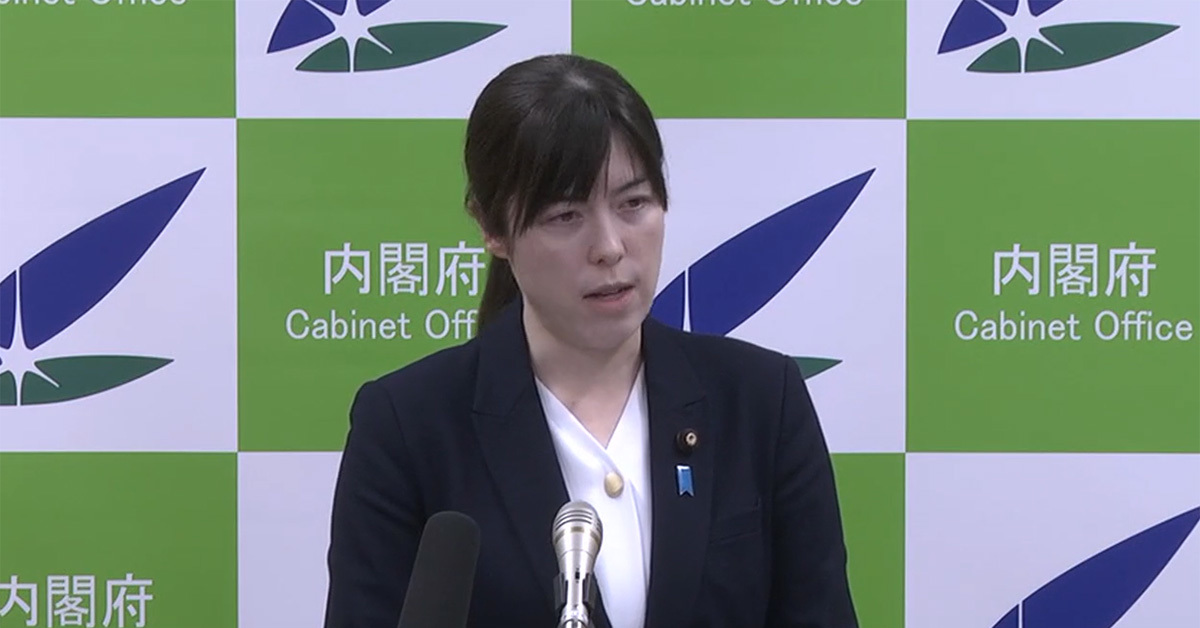
On February 13, Japan’s Minister in charge of AI strategy, Onoda Kimi, announced that the government would “urgently grasp the actual situation” surrounding AI-generated videos that appear to use famous Japanese characters without permission.
The issue centers on a new video-generating AI(エーアイ) (ee-ai) tool called Seedance 2.0, developed by Chinese tech company ByteDance, which operates TikTok.
What Is Seedance 2.0?
Seedance 2.0 was released in early February as a β版(ベータばん) (beeta-ban), meaning a test version. The tool can generate videos up to 15 seconds long using combinations of audio, images, video, and text.
According to the announcement:
- Up to 9 images can be input at once
- Up to 3 videos and 3 audio clips can be used simultaneously
- Users can combine these with text instructions
For example, a user can:
- Specify only the first frame with an image and let the AI generate the rest
- Input two videos and describe via text how they should connect
- Guide camera movement based on a written プロンプト (puromputo), or AI instruction
The tool is said to excel at maintaining consistent character facial expressions, visual texture, and camera work that closely follows prompts or reference videos.
Viral Videos on SNS
On SNS(エスエヌエス) (esu-enu-esu), or social networking services, many short videos believed to have been generated using Seedance 2.0 have spread widely.
Examples include:
- Ultraman fighting Prime Minister Sanae Takaichi
- Detective Conan characters appearing in battle scenarios
- Son Goku from Dragon Ball fighting Doraemon
- Characters from Frieren: Beyond Journey’s End fishing together
These characters are part of major Japanese franchises with strong copyright protections. Their appearance in AI-generated videos has raised concerns about possible copyright infringement.
The Government’s Response
Minister Onoda emphasized:
“If existing copyrighted works are being used without the permission of the rights holders, this is something that cannot be overlooked.”
She also reminded users that images and illustrations created by others are protected not only by copyright but also by intellectual property rights and privacy rights such as portrait rights. She warned that users must act with proper リテラシー (riterashii), meaning digital and media literacy, because misuse could potentially result in criminal responsibility.
The minister stated that she has instructed administrative officials to:
- Quickly examine the details of the case in cooperation with related ministries
- Maintain コミュニケーション (komyunikeeshon) with ByteDance
- Work toward improving the situation
Under Japan’s AI law, guidance or recommendations can only be made after gathering information and understanding the facts. Therefore, the government says it will first focus on fact-finding.
Not the First AI Copyright Controversy
This is not Japan’s first experience with AI-generated content controversies.
In October 2025, OpenAI released “Sora 2,” another video-generation AI tool. After its release, many videos resembling Japanese anime characters were created and spread online.
In response:
- The Content Overseas Distribution Association (CODA) submitted a formal request to OpenAI
- Seventeen publishers, including Kodansha and KADOKAWA, issued a joint statement
- The Japan Cartoonists Association and the Association of Japanese Animations also participated
- The Japanese government asked OpenAI not to engage in copyright-infringing activities
Japan’s animation and manga industries are major cultural and economic forces. As AI technology advances, the protection of creative コンテンツ (kontentsu) has become an increasingly urgent issue.
Cultural Context: Why Anime Copyright Matters in Japan
Anime and manga are not just entertainment in Japan—they are key exports and part of the country’s global identity.
Characters like ウルトラマン (Urutoraman, Ultraman) and 名探偵コナン (Meitantei Konan, Detective Conan) are supported by large production companies, publishers, and licensing systems. Unauthorized use can affect:
- Merchandise sales
- International distribution rights
- Brand value
Because of this, Japan takes copyright issues involving anime and manga very seriously, especially when new technologies like AI are involved.
Learn Japanese from This Article
Key Vocabulary
| Japanese | Romaji | Meaning |
|---|---|---|
| AI(エーアイ) | ee-ai | Artificial Intelligence |
| β版(ベータばん) | beeta-ban | beta version (test release) |
| SNS(エスエヌエス) | esu-enu-esu | social networking service |
| プロンプト | puromputo | prompt (AI instruction) |
| リテラシー | riterashii | literacy; competency |
| コミュニケーション | komyunikeeshon | communication |
| コンテンツ | kontentsu | digital/media content |
Notice how many of these words are written in katakana. Japan often adapts global tech vocabulary directly into Japanese sounds. Mastering katakana is essential for reading modern tech news.
Grammar Spotlight
1. 〜を巡り(〜をめぐり)
Meaning: “regarding,” “surrounding,” often used for controversies or issues.
Structure: Noun + を巡り
Example from this topic:
- 動画生成AIを巡り、問題が起きている。 Douga seisei AI o meguri, mondai ga okite iru. Problems are occurring surrounding video-generation AI.
This pattern is common in news headlines.
2. 〜ように指示する
Meaning: “to instruct someone to do something”
Structure: Verb (dictionary form) + ように指示する
Example:
- 事案を精査するように指示した。 Jian o seisa suru you ni shiji shita. (She) instructed officials to carefully examine the case.
You’ll often see this in government or corporate reporting.
Useful Expression
実態把握を急ぐ(じったいはあくをいそぐ) Jittai haaku o isogu “To urgently grasp the actual situation”
This formal expression is frequently used in political and legal contexts when authorities begin investigating an issue.
Continue Learning
Working on your reading skills? Our Katakana Essentials: Adapting Global Words to Japanese lesson is a great next step.
Ready to dive deeper? Our lesson on Basic Vocabulary Building: Embracing Words Without Latin Ties will help you master these concepts.
To understand more about tech, explore our Reading and Writing in Japanese II: Hiragana and Katakana lesson.
AI technology is evolving quickly—and so is the Japanese used to talk about it. By reading real news like this, you're learning the language the way it’s actually used in Japan today.
これからもよろしくお願いします。 Kore kara mo yoroshiku onegaishimasu.