
Discover Myanmar Cuisine in Tokyo: A 1500-Yen Buffet Adventure in Otsuka
Have you ever wandered through Tokyo, hungry and curious, only to stumble upon a hidden gem that completely surprises you? If you’ve ever dreamed of exploring Japan’s lesser-known neighborhoods and tasting flavors from far-off lands, this story is for you. Today, we’re diving into an unforgettable experience at フレンドシップレストラン (Furendoshippu Resutoran - Friendship Restaurant) in Tokyo’s Otsuka area, where a mere 1500 yen (about $10 USD) unlocked an all-you-can-eat buffet of authentic Myanmar cuisine. Along the way, we’ll pick up some practical Japanese vocabulary and grammar to help you navigate similar adventures. Let’s step into this culinary journey together!
An Unexpected Find in Otsuka
Picture yourself in Otsuka, a quieter corner of Tokyo near the bustling Ikebukuro. You’re feeling a bit フラフラ (furafura - wandering aimlessly) after your planned lunch spot turns out to be closed. That’s exactly where I found myself one day, roaming the streets of this evolving 界隈 (kaiwai - neighborhood, area) with hunger setting in. Then, a simple sign caught my eye: “BUFFET 1500 yen.” No hints about the cuisine, just a promise of 食べ放題 (tabehoudai - all-you-can-eat). Intrigued, I climbed to the third floor of a nondescript building and stepped into フレンドシップレストラン.
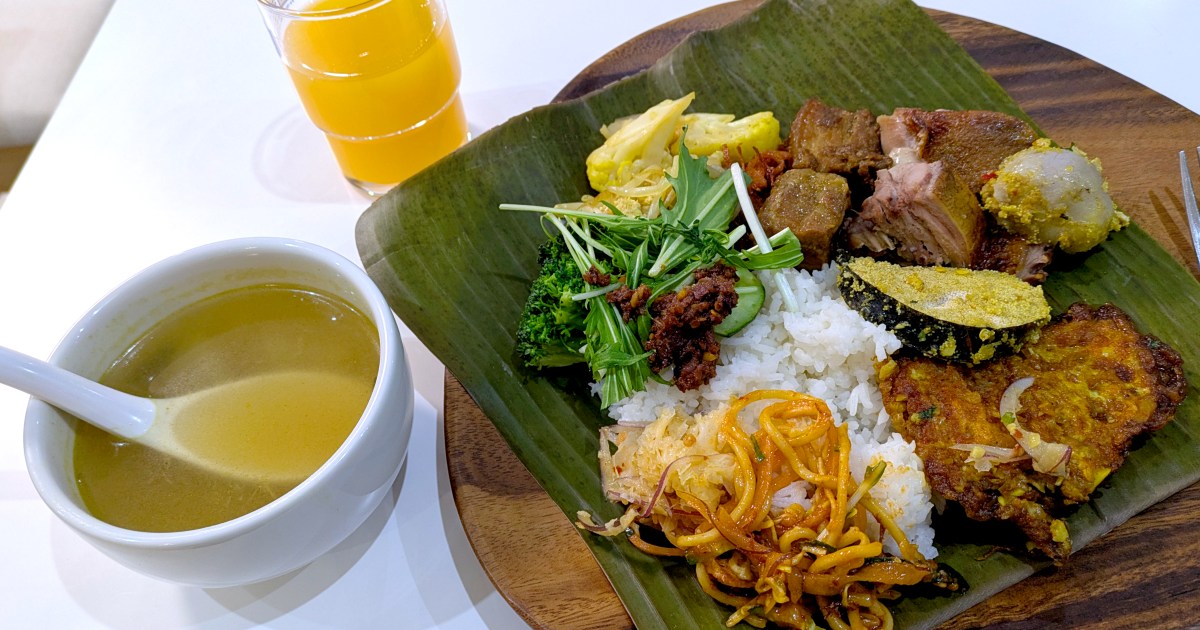
The moment I walked in, I was greeted with a shy いらっしゃいませ (irasshaimase - welcome) from the staff. The atmosphere had a distinct 異国情緒 (ikoku joucho - exotic atmosphere, foreign vibe), and I quickly realized I was the only Japanese diner among a small group of international guests. After confirming the buffet deal, I was handed a plate lined with a banana leaf—a subtle clue of the unique experience ahead. The 品揃え (shinazoroe - assortment, lineup of dishes) was a mystery: unfamiliar dishes with no labels. Was it Indian? Thai? I had no idea, so I loaded up my plate and dug in.
A Taste of Myanmar’s Bold Flavors
The first spoonful of soup was a gentle burst of vegetable umami—until a sneaky 辛味 (karami - spiciness, spicy flavor) hit me a few seconds later! That delayed heat was thrilling, though I couldn’t quite place its origin. Then I tried a strange paste near some raw veggies, later revealed as ンガピ (ngapi - a fermented fish or shrimp paste). Its pungent, fishy kick reminded me of Thai nam pla, but with a unique twist. I couldn’t help but think it’d taste amazing with a glass of sake.
Every dish was a surprise. What looked like zucchini turned out to be fish roe wrapped in seaweed, popping with flavor and sparking memories of my mom’s cooking. A dish I assumed was fried fish was actually a curry-seasoned fried egg—simple yet delightful. By my second round, the fish roe became my favorite. For dessert, I tried モンクェーテー (monkwete - a steamed rice and tapioca flour sweet) and コッポッ (koppok - a black sticky rice dessert with coconut), both offering a mild sweetness. The milk coffee, though, was shockingly sugary, balancing the subtler flavors. The space itself had a certain 居心地 (igokochi - comfort, coziness of a place), making the meal even more enjoyable.
At checkout, I finally asked the staff about the cuisine. Their answer blew me away: Myanmar food! I had no prior exposure to it, but for just 1500 yen, I’d not only satisfied my hunger but also discovered a whole new culinary world.
Cultural Context: Otsuka’s Diversity and Myanmar in Japan
Otsuka might not be on every tourist’s radar, but this neighborhood in Tokyo’s Toshima Ward is a hidden treasure of diversity. Much like nearby Ikebukuro, which is becoming known for its “Chinatown,” Otsuka is home to a growing number of international eateries and shops. This reflects Tokyo’s broader multicultural evolution, where small immigrant communities and businesses share their heritage through food.
Myanmar cuisine, however, is still a rarity in Japan. With a relatively small Myanmar population—around 50,000 people in recent estimates—dishes like ンガピ or モンクェーテー aren’t as familiar as Thai or Vietnamese flavors. Myanmar food often blends influences from India, China, and Thailand, featuring bold spices, fermented ingredients, and rice-based staples. Finding a spot like フレンドシップレストラン feels like uncovering a secret, offering a window into a culture rarely highlighted in Japan. It’s a reminder that food can bridge distant worlds, right in the heart of Tokyo.
Learn Japanese from This Article
If you’re inspired to explore Japan’s hidden gems like Otsuka, let’s equip you with some useful Japanese words and grammar from this adventure. These are terms and patterns you’ll hear and use in real-life situations, just as native speakers do.
Essential Vocabulary
| Japanese | Romaji | Meaning |
|---|---|---|
| 食べ放題 | tabehoudai | all-you-can-eat |
| 居心地 | igokochi | comfort, coziness (of a place) |
| 異国情緒 | ikoku joucho | exotic atmosphere, foreign vibe |
| 界隈 | kaiwai | neighborhood, area, vicinity |
| フラフラ | furafura | wandering aimlessly, staggering |
| 品揃え | shinazoroe | assortment, lineup (of dishes) |
| 辛味 | karami | spiciness, spicy flavor |
These words are incredibly practical for describing food experiences or exploring new places in Japan. Imagine walking into a restaurant and asking about their 食べ放題 (tabehoudai) deal or commenting on the 居心地 (igokochi) of a cozy spot!
Grammar Spotlight: 〜っぽい and 〜ままに
Let’s look at two useful grammar patterns that capture impressions and states, often used in casual conversation.
〜っぽい (-ppoi): Seems like, looks like
This suffix adds a casual sense of “seems like” or “feels like” to a noun or stem, often used to describe an impression.
- Structure: Noun/Verb Stem + っぽい
Examples:
- この料理、タイっぽいね。(Kono ryouri, Tai-ppoi ne.
- This dish seems kinda Thai, doesn’t it?)
- 彼、疲れたっぽいよ。(Kare, tsukareta-ppoi yo.
- He looks tired, huh?)
- インドっぽい味がする。(Indo-ppoi aji ga suru.
- It tastes kind of Indian.)
- この料理、タイっぽいね。(Kono ryouri, Tai-ppoi ne.
Usage Note: It’s informal and often used when you’re guessing or describing a vibe. I could’ve said the buffet dishes felt インドっぽい (Indo-ppoi
- Indian-like) before learning they were Myanmar cuisine!
〜ままに (-mama ni): As it is, while remaining in a certain state
This pattern describes doing something while keeping a state unchanged or as it is.
- Structure: Verb (plain past/non-past) + ままに
Examples:
- ドアを開けたままにしないで。(Doa o aketa mama ni shinaide.
- Don’t leave the door open as it is.)
- 靴を履いたままに家に入る。(Kutsu o haita mama ni ie ni hairu.
- Enter the house while still wearing shoes.)
- わからないままに進む。(Wakaranai mama ni susumu.
- Move forward without understanding.)
- ドアを開けたままにしないで。(Doa o aketa mama ni shinaide.
Usage Note: It’s useful for describing actions in a specific state. At the buffet, I could’ve said I tried dishes わからないままに (wakaranai mama ni
- without understanding what they were).
Useful Expression
Here’s a bonus phrase you’ll hear often in restaurants or shops in Japan:
- いらっしゃいませ (irasshaimase
- Welcome): A polite greeting used by staff to welcome customers. It’s a staple of Japanese hospitality, and you’ll hear it everywhere from convenience stores to high-end restaurants.
Continue Learning
Ready to expand your Japanese skills further? Check out these lessons from “Japanese from Japan” to dive deeper into practical language use:
- Want to learn more about food? Check out our lesson on Basic Vocabulary Building: Embracing Words Without Latin Ties.
- To understand more about time, explore our Time and Dates: Tense-Free Expressions lesson.
- Ready to dive deeper into navigating places like Otsuka? Our lesson on Ni, De, and E: Mapping Directions and Locations will help you master these concepts.
Learning Japanese the way it’s taught in Japan means picking up these real-world phrases and patterns naturally, just as native speakers do. Keep exploring, and you’ll be chatting about your own buffet adventures in no time!
これからもよろしくお願いします。 Kore kara mo yoroshiku onegaishimasu.